Pest Control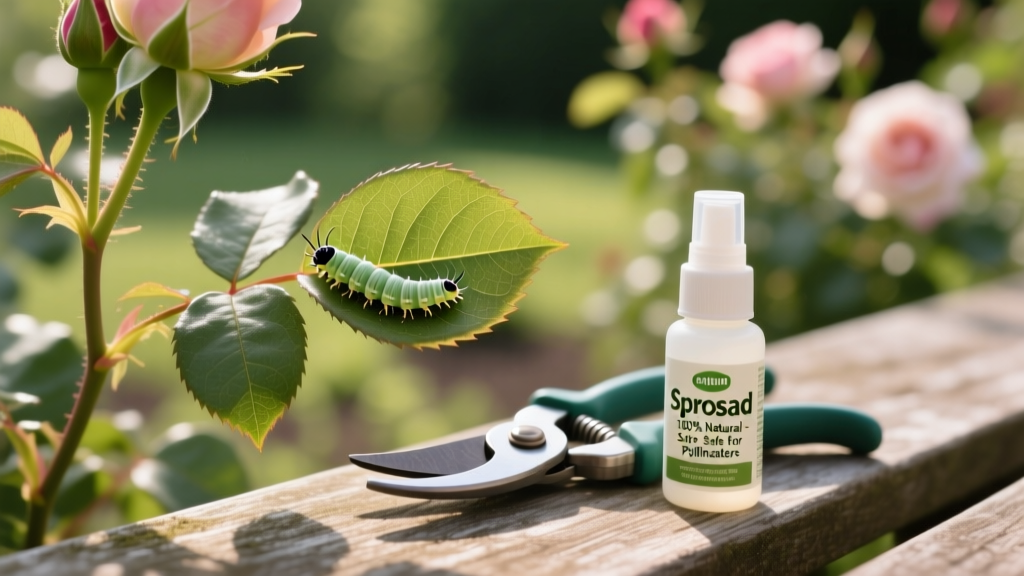
Rose Sawfly Control 2026: Pruning Timing & Spinosad Guide
Emily WatsonPublished
The Intersection of Pruning and Pest Control in 2026
As we navigate the 2026 growing season, rose enthusiasts and commercial growers alike are once again battling the notorious rose sawfly (commonly known as the rose slug). While many gardeners instinctively reach for broad-spectrum chemical sprays at the first sign of skeletonized leaves, modern Integrated Pest Management (IPM) demands a more nuanced approach. The most effective, eco-friendly strategy for managing sawfly larvae on roses relies heavily on strategic pruning methods and precise timing, combined with targeted biological treatments like Spinosad. By understanding the life cycle of the sawfly and how it interacts with rose stem tissue, you can use your pruning shears as your first line of defense, drastically reducing the need for chemical interventions while keeping your roses vigorous and beautiful.
Identifying Rose Sawfly Larvae vs. Caterpillars
Before you can prune or spray, accurate identification is critical. Sawfly larvae are not true caterpillars; they are the immature stage of a wasp-like insect belonging to the order Hymenoptera. In 2026, the most common species affecting roses are the bristly roseslug (Cladius difformis), the curled rose sawfly (Allantus cinctus), and the European rose slug (Endelomyia aethiops). According to the University of Minnesota Extension, these larvae are typically pale green, translucent, and possess a slug-like appearance, often covered in a slimy secretion that deters predators.
To distinguish them from true caterpillars, examine their prolegs (the fleshy legs on their abdomen). True caterpillars have tiny hooks called crochets on the ends of their prolegs, whereas sawfly larvae have smooth, unhooked prolegs. Furthermore, sawfly larvae typically have six or more pairs of prolegs, while true caterpillars never have more than five pairs. The damage they inflict is also distinctive: early instar larvae feed on the lower leaf epidermis, leaving a transparent, window-pane effect, while older larvae chew entirely through the leaf, leaving only the veins behind in a classic skeletonized pattern.
The Pruning Connection: How Sawflies Use Rose Stems
To understand why pruning is so vital to sawfly control, you must understand their reproductive behavior. Female sawflies do not simply lay eggs on the surface of rose leaves. Instead, they use a specialized, saw-like appendage called an ovipositor to slit the soft, green, newly forming rose stems (the cambium layer) and insert their eggs individually inside the plant tissue. This evolutionary adaptation protects the eggs from topical sprays, predatory insects, and harsh weather.
Because the eggs are hidden deep within the stem, no amount of Spinosad or horticultural oil will reach them. The only mechanical way to remove these hidden eggs and break the life cycle before the destructive larvae even hatch is through targeted pruning. Recognizing the subtle vertical slits or slightly swollen, discolored nodes on new spring growth is the key to identifying egg-laden stems before they become a full-blown infestation.
Strategic Pruning Methods for Sawfly Management
Effective sawfly management requires a shift in how you view pruning. It is no longer just about shaping the plant or encouraging blooms; it is a surgical pest-removal technique. Here are the core pruning methods to employ in 2026 for optimal IPM:
- The 6-Inch Excision Rule: When you spot oviposition scars (the tiny slits on the stem) or early clusters of hatched larvae on the terminal growth, do not just pinch off the very tip. Prune the stem at least 6 inches below the visible damage. Sawfly eggs are often laid sequentially down the stem, and a deeper cut ensures you remove the entire clutch.
- Angled Cuts for Canopy Airflow: Always make your pruning cuts at a 45-degree angle, approximately 1/4 inch above an outward-facing bud. This directs the subsequent flush of new growth away from the center of the plant. An open, vase-shaped canopy allows for better sunlight penetration and airflow, which naturally deters the humid microclimates that sawflies and secondary fungal diseases favor. It also ensures that when you do apply Spinosad, the spray can reach the inner foliage rather than just coating the outer canopy.
- Sanitation and Disposal: Never compost pruned stems that contain sawfly eggs or larvae. The heat of a standard home compost pile is rarely sufficient to kill the pupating insects. Immediately bag infested prunings in sealed plastic and dispose of them in the municipal trash to prevent the larvae from dropping into the soil to pupate.
- Tool Hygiene: The slits made by female sawflies are prime entry points for bacterial and fungal pathogens, such as rose canker. Wipe your bypass pruners with 70% isopropyl alcohol or a 10% bleach solution between every single cut when removing infested wood to prevent cross-contamination.
Pruning Timing: Aligning Cuts with the 2026 Life Cycle
Climate shifts have altered the traditional emergence schedules of many garden pests. In 2026, many regions are experiencing earlier spring warm-ups, causing the first generation of sawflies to emerge and lay eggs weeks ahead of historical averages. Timing your pruning to intercept these generations is crucial.
Early Spring (Dormant to Bud Break)
While dormant pruning is primarily for shaping and removing dead wood, it plays a role in sawfly IPM. Sawflies overwinter as prepupae in the soil or leaf litter directly beneath the rose bush. When performing your late-winter/early-spring hard pruning, take the time to rake away and replace the top layer of mulch and debris around the base of the plant. This physically removes a significant portion of the overwintering population before they can emerge.
Late Spring (The First Flush)
This is the most critical window for pruning-based pest control. As the first major flush of soft, new growth appears, female sawflies are actively seeking these tender stems for oviposition. Inspect your roses every three days. Prune out any stems showing the characteristic slits or early window-paning damage. By removing this first generation before they mature and drop to the soil, you prevent the massive, overlapping population explosions that occur in mid-summer.
Summer (Deadheading and Cycles 2 & 3)
Sawflies can produce up to three generations in a single season, depending on your hardiness zone. When deadheading spent blooms in early summer, you are naturally removing the soft terminal growth where the second generation prefers to lay eggs. Make your deadheading cuts slightly lower than usual, removing the top two leaf nodes along with the flower head to eliminate hidden eggs.
Spinosad Treatment: The Post-Pruning Biological Strike
Spinosad is a highly effective, naturally derived insecticide produced by the soil bacterium Saccharopolyspora spinosa. It is a cornerstone of organic and IPM rose care because it is exceptionally lethal to sawfly larvae but exhibits low toxicity to mammals and most beneficial insects once it has dried. According to research highlighted by the University of Kentucky Entomology Department, Spinosad works through both contact and ingestion, causing rapid nervous system failure in chewing insects like sawflies.
However, the timing of your Spinosad application relative to your pruning schedule is what separates amateur gardeners from IPM experts.
The Post-Pruning Application Window
Heavy pruning stimulates a rose bush to push out a massive, synchronized flush of soft, vulnerable new growth. This tender tissue acts as a beacon for egg-laying female sawflies. The optimal strategy is to apply your Spinosad spray 3 to 5 days after a major pruning or deadheading session. This allows the pruning cuts to callous over (reducing the risk of phytotoxicity or disease entry) while ensuring that the newly emerging, highly attractive foliage is coated in a protective biological barrier before the next wave of sawflies arrives.
Pollinator Safety and Application Rules
Spinosad is highly toxic to bees and other pollinators when wet. To protect vital garden ecosystems, you must strictly apply Spinosad in the late evening or at dusk, after bees have returned to their hives. Once the spray dries (typically within 2 to 3 hours), the toxicity to pollinators drops to virtually zero. Furthermore, Spinosad breaks down rapidly in direct sunlight, losing its efficacy within 5 to 7 days. By pruning out heavily infested, shaded inner branches first, you open the canopy, allowing the evening spray to coat the remaining foliage evenly and dry quickly in the evening breeze.
2026 IPM Schedule: Pruning and Spinosad Integration
Use the following structured schedule to synchronize your pruning methods with Spinosad treatments for maximum efficacy throughout the 2026 growing season.
| Season / Growth Stage | Pruning Action | Spinosad Application | IPM Goal |
|---|---|---|---|
| Early Spring (Dormant) | Hard structural pruning; remove base mulch/debris. | Dormant horticultural oil on soil surface (optional). | Remove overwintering prepupae from soil. |
| Mid-Spring (First Flush) | Inspect for oviposition slits; excise 6 inches below scars. | Apply Spinosad 4 days post-pruning at dusk. | Eliminate Gen 1 eggs; protect new tender growth. |
| Early Summer (Bloom) | Deadhead spent blooms; remove 2 leaf nodes below flower. | Spot-treat with Spinosad only if larvae are visible. | Remove Gen 2 egg sites; minimize spray during heavy bloom. |
| Mid-Summer (Heat Flush) | Light shaping; remove crossing/suckling canes for airflow. | Full canopy Spinosad spray 5 days after shaping. | Control Gen 3; ensure spray penetration into open canopy. |
| Autumn (Pre-Dormancy) | Remove all fallen leaves and diseased wood; do not compost. | No Spinosad needed; apply neem oil for fungal prevention. | Break the life cycle; deny overwintering sites. |
Top Spinosad Formulations for 2026
When selecting a Spinosad product for your post-pruning spray regimen, look for formulations that include a UV protectant or a sticking agent, as summer rains can wash the biological compound off the leaves before the larvae ingest it. In 2026, two of the most trusted and widely available formulations for home gardeners include:
- Monterey Garden Insect Spray: A liquid concentrate containing 0.5% Spinosad. It is highly regarded for its ease of mixing and rapid knockdown of sawfly larvae. The standard dilution rate is 2 fluid ounces per gallon of water.
- Bonide Captain Jack's Deadbug Brew: Available in both liquid concentrate and ready-to-spray formats, this product is OMRI-listed for organic gardening. It is particularly effective when applied immediately following a summer deadheading and pruning session.
Expert Tip: Always rotate your biological controls. While Spinosad is incredible for sawflies, using it exclusively for every garden pest can lead to resistance. Alternate Spinosad treatments with Bacillus thuringiensis (Bt) for true caterpillars, or horticultural oils for soft-bodied insects like aphids, to maintain a balanced, resistant-free IPM program.
Conclusion
Managing rose sawfly larvae in 2026 requires moving beyond the reactive "see a bug, spray a bug" mentality. By leveraging strategic pruning methods—such as the 6-inch excision rule, angled canopy-opening cuts, and rigorous sanitation—you physically remove the hidden eggs that chemicals cannot reach. When you pair these precise pruning techniques with the timed, post-pruning application of Spinosad, you create an impenetrable defense system. This synergistic approach not only saves time and money on chemical treatments but also ensures your roses remain a safe haven for pollinators while producing flawless, skeleton-free blooms all season long.