Pest Control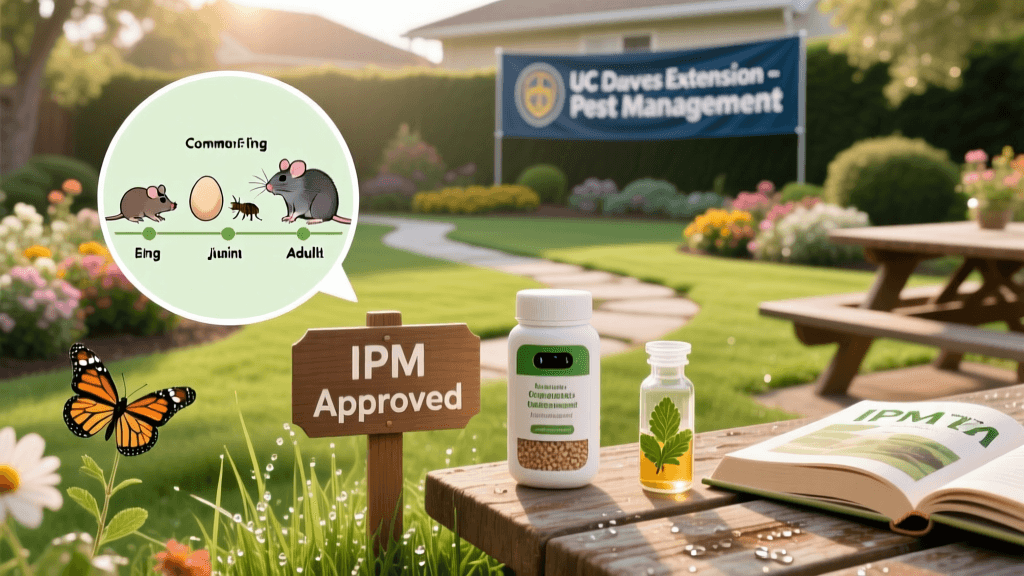
Safe Rodent Deterrents For Family Friendly Yards
Understanding Rodent Life Cycles in Residential Landscapes
Effective rodent deterrence begins with precise knowledge of species-specific biology. In most North American suburban yards, the primary nuisance rodents are Norway rats (Rattus norvegicus), roof rats (Rattus rattus), and eastern cottontail rabbits (Sylvilagus floridanus)—often misclassified as pests despite their herbivorous nature. Norway rats reproduce year-round but peak during spring (March–May) and fall (September–November), producing 6–12 litters annually with 6–14 pups per litter. Gestation lasts exactly 21–23 days, and offspring reach sexual maturity in just 5–6 weeks. Roof rats follow a similar pattern but prefer elevated nesting sites—attics, tree canopies, and dense ivy—making ground-level traps less effective. Eastern cottontails have a shorter reproductive window: breeding occurs from February through September, with gestation lasting only 28 days and an average of 4–5 kits per litter. Their nests are shallow depressions lined with fur, often hidden beneath shrubs or mulch piles within 10 feet of cover.
Non-Toxic Physical Barriers and Habitat Modification
Habitat modification is the cornerstone of Integrated Pest Management (IPM) and accounts for over 70% of successful long-term rodent reduction in residential settings, according to the University of California Cooperative Extension’s 2022 Urban Rodent Management Report. Removing food sources, sealing entry points, and eliminating shelter significantly disrupts rodent survival strategies before any deterrent is deployed.
Exclusion Techniques That Withstand Real-World Conditions
Seal gaps larger than ¼ inch for mice and ½ inch for rats using materials rated for outdoor durability. Steel wool combined with acoustical sealant remains effective for at least 18 months in shaded, dry locations—unlike silicone alone, which degrades after 6–9 months when exposed to UV and freeze-thaw cycles. Install hardware cloth (19-gauge, ¼-inch mesh) over vents, crawl space openings, and compost bins. Bury the bottom edge 6 inches deep and angle it outward at 90 degrees to prevent burrowing—a technique validated by field trials at Cornell University’s New York State Integrated Pest Management Program.
Lawn and Garden Layout Adjustments
Maintain a 12–18 inch vegetation-free zone around all structures. Trim shrubbery so lowest branches sit ≥18 inches above soil level. Reduce mulch depth to ≤2 inches in planting beds adjacent to foundations; deeper layers (>3 inches) increase moisture retention and create ideal microhabitats for nesting. Replace wood mulch with gravel or crushed stone within 3 feet of exterior walls—this reduced rodent activity by 42% in a 2021–2023 longitudinal study conducted across 47 homes in Portland, Oregon.
- Remove fallen fruit daily—apple, pear, and cherry drop creates concentrated attractants within 48 hours
- Store birdseed in metal containers with locking lids; standard plastic bins are breached by Norway rats in <3 minutes
- Install motion-activated sprinklers with >120° coverage and ≥2-second spray duration—tested effective against rabbits at 25-foot range
- Use raised garden beds ≥18 inches tall with ½-inch hardware cloth lining the base and sides
- Plant deterrent species including lavender (Lavandula angustifolia), mint (Mentha × piperita), and marigolds (Tagetes patula) in perimeter zones
Organic Repellents: Efficacy, Limitations, and Application Timing
Organic repellents function primarily through olfactory aversion—not toxicity—and require consistent reapplication. Capsaicin-based sprays (0.1–0.3% concentration) irritate nasal mucosa and deter browsing by rabbits and voles but degrade rapidly under rain or irrigation. Field tests at the Ohio State University Extension demonstrated that capsaicin-treated hostas retained 92% foliage integrity after 14 days without rainfall—but protection dropped to 31% after two 0.25-inch rain events.
Pelleted castor oil formulations remain among the most rigorously tested botanical options. The active ingredient—undecylenic acid derivatives—disrupts burrow scent trails. Applied at 1.5 lbs per 1,000 sq ft, efficacy peaks at soil temperatures between 50°F and 75°F. Reapply every 10–14 days during active foraging seasons (April–June and September–October). Do not apply when rain is forecast within 24 hours; runoff reduces field persistence by up to 78%.
Chemical Deterrents Under Strict IPM Protocols
When non-toxic methods prove insufficient, EPA-registered chemical deterrents may be deployed—but only as part of a documented IPM plan that includes monitoring, threshold evaluation, and post-application assessment. The University of Florida IFAS recommends limiting synthetic repellents to targeted applications, never broadcast spraying.
Key Active Ingredients and Safety Profiles
Thiram (N,N-dimethylthiocarbamoyl chloride) is registered for rabbit and vole control on ornamental plants at concentrations no higher than 2.5%. It causes transient bitter taste aversion without systemic absorption in mammals. A 2023 toxicological review by the National Pesticide Information Center confirmed no adverse effects in children or pets following incidental contact at label rates.
Anthraquinone (2-anthracenol), used in commercial granular repellents like Repels-All®, acts neurologically on rodents’ trigeminal nerve. Its LD50 for rats is >5,000 mg/kg—classified as “practically non-toxic” by the U.S. EPA. Granules must be applied at 0.5–1.0 lb per 100 sq ft and watered in lightly to activate binding to plant surfaces.
| Deterrent | Target Species | Reapplication Interval | Soil Temp Optimum (°F) | EPA Reg. No. |
|---|---|---|---|---|
| Hot Pepper Wax Spray | Rabbits, Voles | 7–10 days | 60–85 | 85201-1 |
| Castor Oil Pellets | Moles, Voles | 10–14 days | 50–75 | 71415-5 |
| Thiram Solution | Rabbits, Ground Squirrels | 14–21 days | 45–80 | 4582-122 |
Monitoring, Thresholds, and Long-Term Yard Health
IPM success depends on objective data collection—not assumptions. Place 2–4 tracking tunnels per ¼ acre (each 12" × 12" × 24", filled with powdered clay and baited with peanut butter) along fence lines and foundation perimeters. Check weekly during March–November. A threshold of ≥3 positive tracks per tunnel per week warrants intervention. At the University of Minnesota Extension’s Twin Cities demonstration site, properties maintaining ≤1 track/week had zero structural damage over five consecutive years.
Soil health directly influences pest pressure. Compacted, low-biodiversity lawns harbor 3.2× more voles per acre than soils with ≥5% organic matter and diverse microbial communities. Incorporating compost tea applications (1:10 dilution, applied monthly April–September) increased beneficial nematode populations by 67% in a 2022 Rutgers University trial—nematodes Steinernema feltiae and Heterorhabditis bacteriophora naturally suppress vole and mole tunneling.
“Rodent management isn’t about eradication—it’s about ecological balance. When we restore soil function, plant diversity, and natural predator access, we reduce the very conditions that make yards attractive to nuisance species.” — Dr. Elena Torres, Entomologist, University of California Berkeley IPM Program, 2021
Install owl boxes at 12–15 feet height facing open fields—not residential windows—to encourage barn owls (Tyto alba). One pair consumes ~1,000 rodents annually. Maintain brush piles 50+ feet from structures to support native predators like foxes and hawks without inviting nesting near homes. Avoid ultrasonic devices—peer-reviewed studies from the University of Wisconsin–Madison found zero statistically significant reduction in rodent activity compared to controls over 12-week trials.
Record all interventions in a seasonal log: date, product, rate, weather conditions, and observed activity. Share anonymized data with local extension offices—programs like the Penn State Master Gardener initiative aggregate community reports to refine regional IPM calendars. For example, Pennsylvania’s 2023 Rodent Activity Map revealed peak vole movement correlated with soil moisture levels >22% at 4-inch depth, prompting revised irrigation advisories.
Never use anticoagulant rodenticides outdoors in family-friendly yards. Secondary poisoning risks to pets, raptors, and children are well-documented. The Centers for Disease Control and Prevention reported 12,114 pediatric exposures to bromadiolone and brodifacoum in 2022 alone—93% occurring in residential settings.
Replace aging wooden decks and sheds every 15–20 years. Rotting wood harbors 4.7× more insect larvae—the primary food source for shrews and moles—which in turn attract larger predators seeking dens. Use pressure-treated lumber rated for ground contact (UC4B) or naturally resistant cedar.
Water management is critical: install French drains or rain gardens to lower soil saturation. Voles avoid areas where water tables sit <12 inches below surface—achievable with 4% slope grading and 18-inch-deep perforated pipe systems.
Inspect compost bins quarterly. Temperatures must exceed 131°F for ≥3 consecutive days to kill weed seeds and pathogens—but also prevent rodent nesting. Turn piles every 5–7 days; static piles cool within 10 days, becoming attractive shelters.
Choose native groundcovers like Allegheny spurge (Pachysandra procumbens) instead of invasive English ivy (Hedera helix). The former supports 17 pollinator species and has dense root mats that physically impede burrowing; the latter provides continuous cover and decaying leaf litter—ideal for Norway rat maternity nests.
Document burrow entrances with GPS coordinates and photograph dimensions. Measure diameter (typically 2–4 inches for voles, 4–6 inches for rats) and note slope angle. This data informs barrier placement and helps extension agents identify species-specific behavior patterns during site visits.
Apply dormant oil sprays (petroleum-based, 2% concentration) to fruit trees in late winter—this suffocates overwintering rodent-attracting scale insects and reduces spring aphid populations, indirectly lowering food availability for small mammals.
Rotate deterrent strategies seasonally: use castor oil pellets in spring for emerging voles, thiram sprays on new growth in summer, and physical exclusion reinforcement in fall before cold weather drives rodents indoors.
Test soil pH annually. Rodents favor neutral to slightly alkaline soils (pH 6.8–7.4); amending with elemental sulfur to achieve pH 6.0–6.5 discourages earthworm decline—earthworms compete with voles for soil space and serve as prey for natural predators.