Lawn Care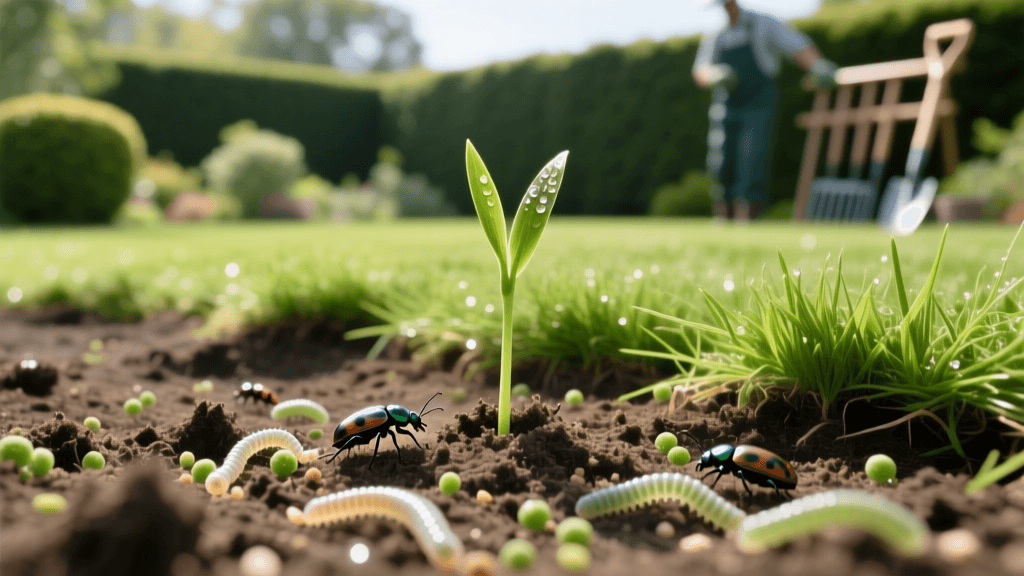
2026 Scalped Lawn Recovery: Bio-Control Topdressing & Reseeding
The Ecological Collapse of a Scalped Lawn
Scalping your lawn—mowing it so severely that the grass crowns and bare soil are exposed—is one of the most damaging mistakes a homeowner can make. In 2026, advanced turfgrass science has moved beyond simply viewing a scalped lawn as an aesthetic issue; it is now recognized as a localized ecological collapse. When you remove the protective grass canopy, you instantly destroy the humid, shaded micro-habitat required by essential bio-control agents like ground beetles, predatory mites, and wandering spiders. Furthermore, the exposed, compacted, and UV-baked soil becomes a prime breeding ground for destructive pests like white grubs, chinch bugs, and sod webworms.
Recovering a scalped lawn requires much more than broadcasting generic grass seed and applying synthetic nitrogen. To truly restore the turf and prevent future pest outbreaks, you must utilize a strategic reseeding and topdressing method focused on rebuilding the soil food web and reintroducing beneficial insects and microbes. According to the Environmental Protection Agency (EPA), leveraging biological pest control and maintaining a healthy soil ecosystem significantly reduces the need for chemical interventions, creating a resilient, self-regulating lawn.
Step 1: Core Aeration to Create Bio-Highways
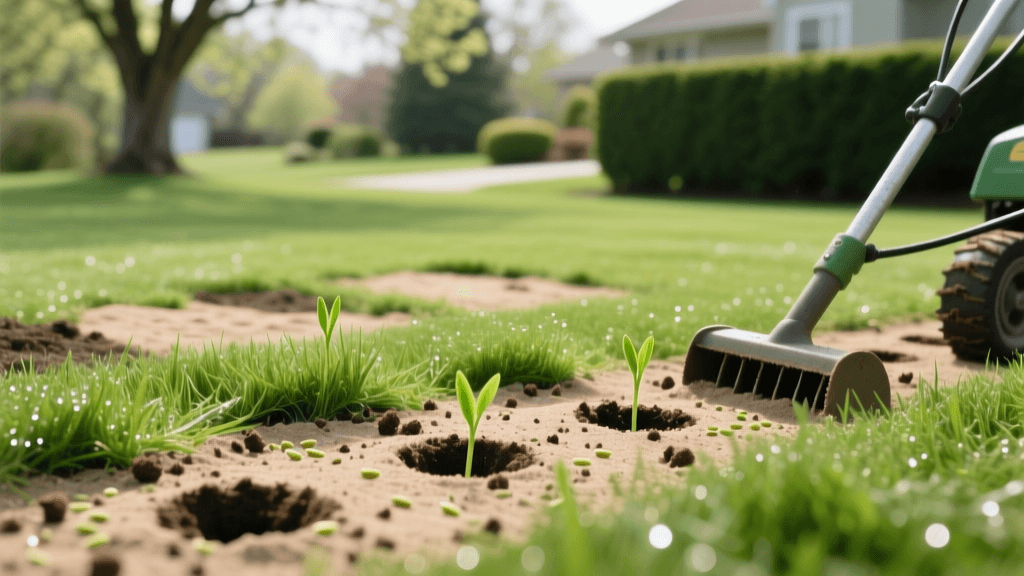
Before any seed or topdressing touches the soil, you must address the compaction that inevitably accompanies a scalped, stressed lawn. However, in 2026, we view core aeration not just as a way to relieve compaction, but as a method to create "bio-highways" for predatory organisms.
- Depth and Spacing: Set your aerator to pull 3-inch cores with a 2-inch spacing. This specific depth reaches the primary root zone where beneficial nematodes hunt for grub larvae.
- Leave the Cores: Do not rake away the soil cores. As they break down over the next two weeks, they inoculate the surrounding thatch layer with indigenous soil microbes and fungi, which serve as the foundational food source for detritivores and predatory mites.
Step 2: Selecting Bio-Active Topdressing Materials
Topdressing a scalped lawn protects the vulnerable grass crowns, retains moisture for germinating seeds, and provides a physical habitat for beneficial insects. The material you choose in 2026 will dictate the success of your bio-control strategy. Avoid sterile materials that offer no biological value.
| Topdressing Material | Impact on Beneficial Insects & Microbes | Moisture Retention | 2026 Estimated Cost (per cu. yd.) |
|---|---|---|---|
| Sterile Peat Moss | Negative (Highly acidic, lacks microbial life, repels water when dry) | High (initially) | $65 - $80 |
| Mason Sand | Neutral (No habitat value, drains too fast for seedling survival) | Low | $40 - $55 |
| Screened Organic Compost | Positive (Feeds soil food web, attracts detritivores and earthworms) | Medium-High | $45 - $60 |
| Compost + Biochar Blend | Highly Positive (Porous biochar provides permanent refuge for predatory mites and mycorrhizal fungi) | High | $85 - $110 |
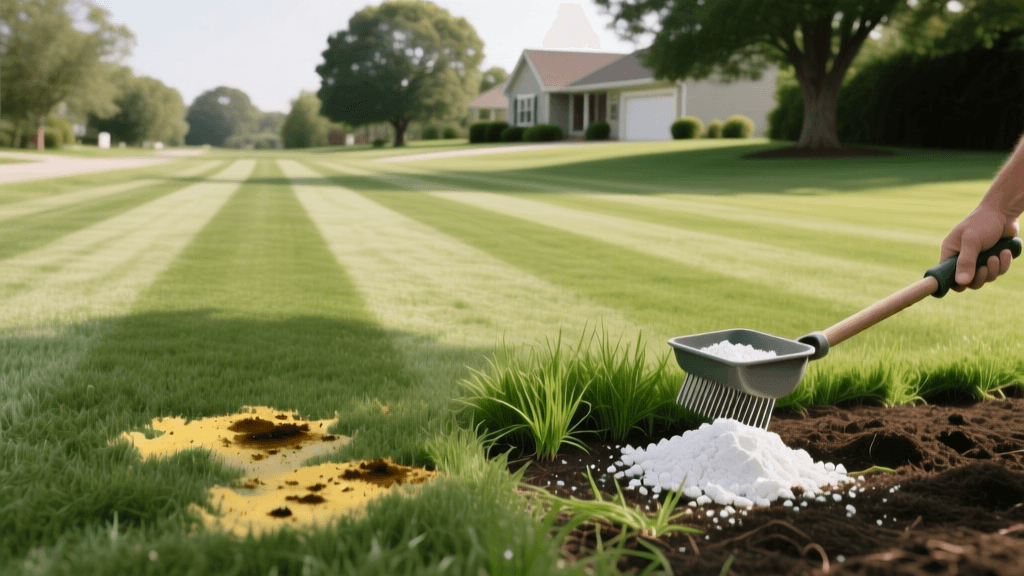
The 2026 Recommendation: Use a 70/30 blend of screened organic compost and horticultural biochar. The biochar acts as a microscopic reef, providing permanent, UV-protected housing for beneficial fungi and predatory nematodes, ensuring your bio-control army survives the harsh summer sun while the grass canopy recovers.
Step 3: Reseeding with Endophyte-Enhanced Turfgrass
As outlined by Penn State Extension's lawn renovation guidelines, proper seed-to-soil contact is vital, but the type of seed you choose is your first line of biological defense. A scalped lawn is highly susceptible to surface-feeding insects. To combat this, utilize endophyte-enhanced grass varieties.
Endophytes are beneficial fungi that live symbiotically inside the grass plant (specifically in Tall Fescues, Perennial Ryegrasses, and Fine Fescues). They produce natural alkaloids that make the grass blades highly unpalatable and toxic to surface-feeding pests like chinch bugs, billbugs, and sod webworms, without harming humans, pets, or beneficial soil insects.
Top 2026 Endophytic Seed Categories for Recovery:
- Turf-Type Tall Fescue (TTTF) Blends: Look for 2026 releases featuring dual-endophyte coatings. These seeds are pre-inoculated with both insect-deterring endophytes and mycorrhizal fungi to accelerate root growth in damaged soil.
- Creeping Red Fescue: Ideal for shaded areas of a scalped lawn. It naturally harbors endophytes that deter above-ground pests while its fine texture allows light to reach the soil microbiome.
Note: Endophytes are toxic to grazing livestock like horses and cattle, but perfectly safe for residential lawns frequented by dogs and children.
Step 4: Inoculating with Beneficial Nematodes
Because a scalped lawn has lost its natural predator population, you must manually reintroduce them before destructive pests take advantage of the weakened turf. The University of California Integrated Pest Management (UC IPM) program heavily emphasizes the use of entomopathogenic nematodes for sustainable grub and larva control.
Immediately after topdressing and seeding, apply a liquid or water-soluble bio-pod formulation of Steinernema carpocapsae and Heterorhabditis bacteriophora.
- Application Rate: 25,000 to 35,000 nematodes per square foot. For a standard 5,000 sq. ft. lawn, you will need approximately 125 million nematodes.
- Timing: Apply at dusk or on a heavily overcast day. UV light destroys nematodes in minutes. The topdressing layer you applied in Step 2 will act as a shield, keeping the nematodes moist and protected as they migrate into the soil profile to hunt overwintering grubs and pupating lawn moths.
- 2026 Product Formats: Look for "hydro-gel encapsulated" nematode sponges, which have largely replaced older clay-powder formulations, ensuring a 95%+ survival rate during shipping and application.
Step 5: Irrigation and Post-Recovery Bio-Maintenance
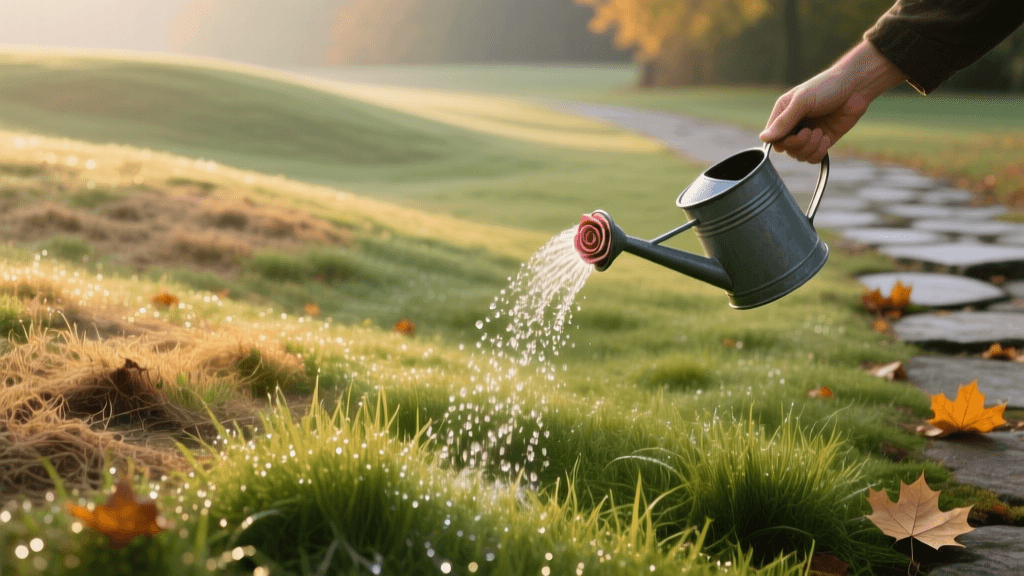
Watering a recovering, scalped lawn is a delicate balancing act. You must keep the seed and topdressing moist for germination, but overwatering will drown the aerobic soil microbes and flush your newly applied beneficial nematodes out of the root zone.
The 30-Day Bio-Recovery Watering Schedule:
- Days 1-14 (Germination Phase): Water lightly 3 to 4 times a day for just 5-10 minutes. The goal is to keep the top 1/2 inch of the compost topdressing consistently damp. This shallow watering protects the deeper-dwelling nematodes from being displaced.
- Days 15-21 (Establishment Phase): Reduce frequency to once daily, but increase the duration to 20 minutes. This encourages the new grass roots to chase the moisture downward, interacting with the mycorrhizal fungi in the biochar topdressing.
- Days 22-30 (Deep Root & Bio-Control Phase): Transition to deep, infrequent watering (1 inch of water twice a week). This creates the dry surface / moist sub-surface environment that ground beetles and predatory mites prefer for hunting, while discouraging fungal diseases like Pythium blight.
2026 Cost Breakdown for a 5,000 Sq. Ft. Scalped Lawn Recovery
Investing in a bio-control-focused recovery is slightly more expensive upfront than using synthetic chemicals and sterile dirt, but it pays dividends by eliminating the need for seasonal pesticide applications.
- Core Aeration (Rental or Service): $85 - $150
- Compost/Biochar Topdressing (approx. 3 cu. yds.): $250 - $330 (plus delivery)
- Endophyte-Enhanced TTTF Seed (50 lbs): $90 - $130
- Beneficial Nematode Bio-Pods (125M count): $65 - $85
- Total Estimated Investment: $490 - $695
Conclusion
A scalped lawn is a vulnerable landscape, but it also presents a blank canvas for ecological restoration. By abandoning outdated, sterile recovery methods and embracing the 2026 bio-control topdressing and reseeding protocol, you do more than just grow new grass. You rebuild a thriving, microscopic ecosystem. The combination of biochar topdressing, endophytic seeds, and predatory nematodes ensures that your lawn will not only recover from the trauma of scalping but will emerge vastly more resilient to pests, drought, and disease in the seasons to come.