Lawn Care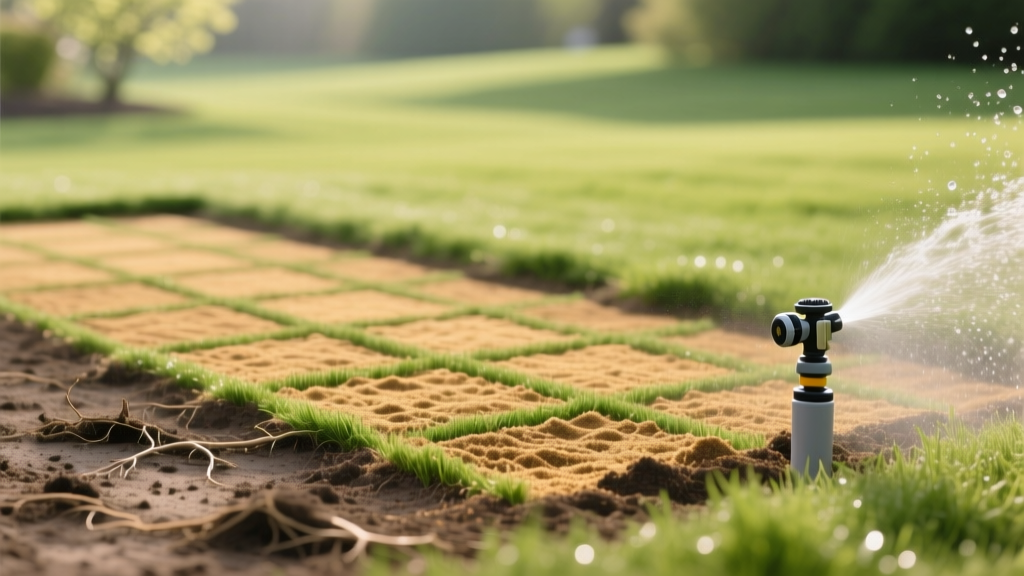
2026 Scalped Lawn Recovery: Irrigation & Reseeding Guide
David ParkPublished
The 2026 Guide to Scalped Lawn Recovery via Irrigation and Topdressing
Scalping a lawn is one of the most stressful events a turfgrass ecosystem can endure. It occurs when the mower deck is set too low, slicing off the leaf canopy and cutting directly into the crown and stolons of the grass. The result is a patchy, brown, and vulnerable landscape that exposes bare soil to the harsh elements. In 2026, with increasingly erratic spring and summer temperature fluctuations, recovering a scalped lawn requires a precise, science-backed approach. The most effective protocol is the reseeding and topdressing method. However, the physical application of seed and soil amendments is only half the battle. The true make-or-break factor in your lawn’s recovery is how you program and manage your sprinkler and irrigation systems during the critical germination window.
Why Irrigation is the Make-or-Break Factor
When a lawn is scalped, the natural shade provided by the grass blades is eliminated. Soil temperatures spike, moisture evaporates rapidly, and weed seeds are given a prime opportunity to invade. To counteract this, homeowners apply a high-quality grass seed followed by a thin layer of topdressing—typically a mix of screened compost, biochar, and fine sand. This topdressing layer protects the seed, retains moisture, and ensures vital seed-to-soil contact.
Herein lies the irrigation challenge: standard sprinkler heads often deliver water with too much kinetic force. Heavy droplets from outdated rotary heads can easily wash away your carefully applied topdressing and displace the seed, pooling them in low spots and leaving high spots bare. Furthermore, bare soil lacks the root structure to absorb deep water, meaning heavy irrigation will simply result in runoff. To successfully execute the scalped lawn recovery method in 2026, you must transition your irrigation system from a deep-soaking machine into a delicate, high-frequency misting system.
Preparing Your Sprinkler System for Delicate Watering
Before you drop a single seed, you must audit your irrigation zones. According to the EPA WaterSense program, ensuring your irrigation system is optimized for efficiency and proper distribution is the first step in any sustainable landscaping project. For a scalped lawn recovery, follow these hardware adjustments:
- Swap to Low-Precipitation Nozzles: If you are using standard spray nozzles, consider upgrading to rotary nozzles (like the MP Rotator) or specialized misting nozzles. These deliver water at a slower precipitation rate, allowing the topdressing to absorb the moisture without causing surface crusting or seed displacement.
- Check for Uniform Coverage: Perform a catch-can test. Place identical flat-bottomed containers across the scalped zones and run the system for 10 minutes. Measure the water in each can to ensure there are no dry spots. Seed that fails to receive consistent moisture will die within hours of germinating.
- Adjust Arc and Radius: Ensure that no sprinkler heads are overspraying onto driveways or sidewalks. Every drop of water must be directed solely at the recovering topdressing layer.
Programming Smart Controllers for Seed Germination
In 2026, smart irrigation controllers like the Rachio 4, Hunter Pro-HC, and Orbit B-hyve XR are standard for serious lawn care enthusiasts. These devices connect to hyper-local weather stations and soil moisture sensors. However, their default "smart" algorithms are designed for established lawns, which require deep, infrequent watering to encourage deep root growth. This is the exact opposite of what a scalped, reseeded lawn needs.
During the first three weeks of recovery, you must override the smart scheduling and utilize a manual, high-frequency program. The goal is to keep the top 1/2 inch of the soil and topdressing consistently moist, but never saturated. The University of Minnesota Extension emphasizes that newly seeded areas require light, frequent watering to prevent the delicate new roots from drying out and dying. If the topdressing dries out and forms a crust, the germinating seed will suffocate and fail to penetrate the soil.
The 4-Week Scalped Lawn Irrigation Schedule
Below is the definitive 2026 irrigation schedule for a scalped lawn undergoing the reseeding and topdressing method. This schedule assumes a standard loam or clay-loam soil profile. If you have heavily compacted clay or extremely fast-draining sand, you will need to adjust the run times accordingly.
| Recovery Phase | Timeline | Watering Frequency | Run Time per Zone | Primary Goal |
|---|---|---|---|---|
| Phase 1: Imbibition | Days 1 to 7 | 3 to 4 times daily | 3 to 5 minutes | Keep topdressing constantly damp; trigger seed swelling. |
| Phase 2: Germination | Days 8 to 14 | 2 to 3 times daily | 5 to 8 minutes | Support radicle emergence; prevent soil surface crusting. |
| Phase 3: Seedling Growth | Days 15 to 21 | 1 to 2 times daily | 10 to 12 minutes | Encourage shallow root establishment into the native soil. |
| Phase 4: Transition | Days 22 to 30 | 1 time daily (early AM) | 15 to 20 minutes | Harden off the turf; begin pushing roots deeper. |
Pro Tip: Schedule your Phase 1 and Phase 2 watering cycles for early morning (6:00 AM), late morning (10:00 AM), and mid-afternoon (2:00 PM). Avoid watering in the late evening, as prolonged moisture on the vulnerable, scalped soil overnight invites devastating fungal pathogens like Pythium blight and damping-off disease.
Transitioning to Deep-Root Establishment
Once the new grass reaches a height of about 2.5 to 3 inches and has been mowed for the first time, it is time to transition your irrigation system back to a deep-watering schedule. As noted by the Texas A&M AgriLife Extension, established lawns thrive on deep and infrequent watering, which trains the roots to chase moisture deeper into the soil profile, creating a drought-resistant turf.
At this stage in 2026, you can re-engage the smart features of your Wi-Fi irrigation controller. Activate the seasonal shift and weather intelligence features. If your system is equipped with a soil moisture sensor, set the threshold to trigger irrigation only when the volumetric water content drops below 20%. This prevents overwatering, which is a common mistake homeowners make when they anxiously try to "baby" their newly recovered lawn.
Common Irrigation Mistakes During Recovery
Even with the best topdressing materials and premium 2026 seed blends, poor irrigation management will ruin your recovery efforts. Avoid these critical mistakes:
- The "Flood and Forget" Method: Running your sprinklers for 30 minutes once a day will wash away your topdressing, drown the seed, and cause massive runoff. Seeds need oxygen to germinate; waterlogged soil cuts off the oxygen supply.
- Ignoring Microclimates: South-facing slopes and areas near concrete driveways dry out much faster than shaded areas. You may need to manually adjust the precipitation rates or add a secondary drip-irrigation line to these high-evaporation zones to keep the topdressing uniformly moist.
- Skipping the Catch-Can Audit: Assuming your sprinkler system is perfectly calibrated is a recipe for patchy recovery. Wind drift and clogged nozzles can create dry spots that will kill germinating seed in a matter of hours during a summer heatwave.
Conclusion
Recovering a scalped lawn using the reseeding and topdressing method is a highly rewarding process that restores the health, density, and beauty of your turf. However, the success of this method hinges entirely on your mastery of your sprinkler and irrigation systems. By auditing your hardware, swapping to low-precipitation nozzles, and strictly adhering to a high-frequency, low-volume watering schedule, you will create the perfect microclimate for seed germination. Embrace the smart irrigation technology available in 2026, monitor your soil moisture closely, and watch your damaged lawn transform into a lush, resilient landscape.