Lawn Care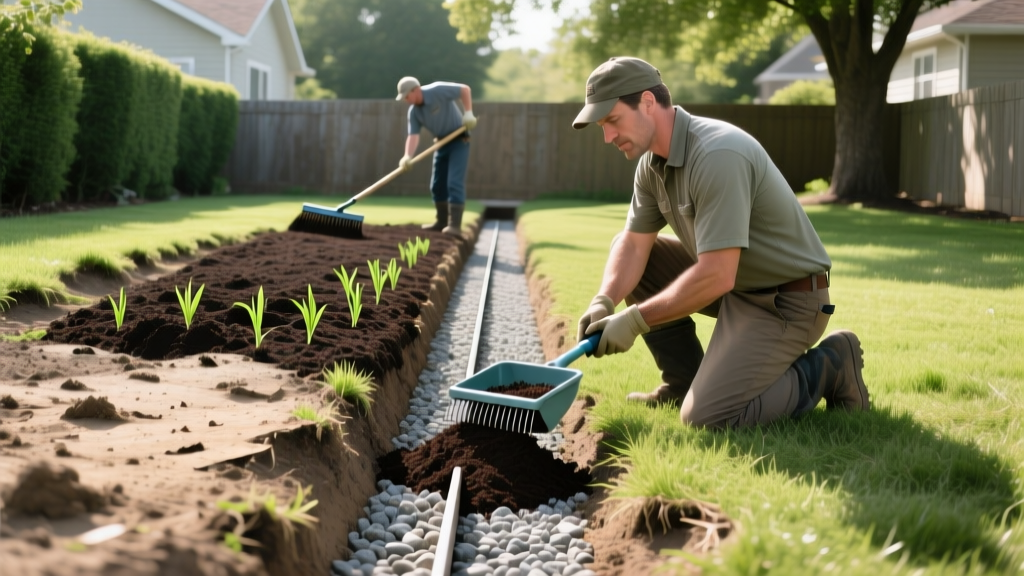
Scalped Lawn Recovery After French Drain Install: 2026
Robert HayesPublished
The Hidden Cost of French Drain Installation: Severe Lawn Scalping
Installing a French drain is one of the most effective ways to protect your home’s foundation and eliminate yard pooling. However, the heavy machinery required for the job—such as mini-excavators, walk-behind trenchers, and skid steers—leaves behind a devastating footprint. The result is often a 2-to-4-foot wide scar of severely compacted, completely scalped subsoil running directly through your once-pristine turf. In 2026, with landscaping contractors charging premium rates for drainage solutions, homeowners are increasingly looking for DIY methods to restore the trench line without hiring a full-scale landscaping crew.
Recovering a scalped lawn over a French drain trench is not as simple as throwing down generic topsoil and sprinkling grass seed. The very nature of a French drain relies on rapid water percolation. If you use the wrong topdressing materials or the wrong seed variety, you risk creating a water barrier that defeats the purpose of your expensive drainage system. This comprehensive guide covers the specialized topdressing and reseeding methods required to recover a scalped trench line while preserving the hydraulic integrity of your newly installed French drain.
Why Trench-Line Scalping Requires a Specialized Approach
When a trencher tears through your yard, it doesn't just remove the grass; it destroys the soil structure. The tracks of the machinery compress the subsoil, creating a hardpan layer that repels water. Furthermore, the backfill material used directly over the drain pipe is typically washed drainage gravel, which lacks the organic matter and water-retention capabilities necessary to support turfgrass roots.
According to drainage guidelines published by the Texas A&M AgriLife Extension, the success of a subsurface drainage system depends heavily on the permeability of the soil profile above it. If you attempt to recover the scalped lawn by dumping heavy, clay-based topsoil over the gravel trench, you will create a 'perched water table.' This means water will pool in the topsoil layer rather than percolating down into the French drain, leading to a perpetually soggy, muddy trench line that will eventually rot your new grass roots.
The 2026 Topdressing Method for Drainage Zones
To successfully recover a scalped lawn over a French drain, you must use a highly permeable topdressing mix. In 2026, turfgrass scientists and drainage experts recommend a custom blend of coarse washed sand and high-quality screened compost. This mixture bridges the gap between the drainage gravel below and the turfgrass above, providing enough organic matter to sustain grass while allowing surface water to easily reach the drain pipe.
Choosing the Right Topdressing Mix
Avoid bagged 'lawn soil' or 'garden mix' from big-box stores, as these often contain high percentages of peat and clay that retain too much moisture. Instead, source materials from a local landscape supply yard. The ideal ratio for a French drain trench line is 70% coarse washed concrete sand and 30% finely screened leaf compost. The Penn State Extension notes that incorporating compost into sandy soils drastically improves nutrient retention and microbial activity without sacrificing the critical drainage rates required over a French drain system.
| Material | Permeability | Nutrient Value | Suitability Over French Drains |
|---|---|---|---|
| Heavy Clay Topsoil | Very Low | Moderate | Poor (Causes water pooling) |
| Pure Peat Moss | Low (when wet) | Low | Poor (Becomes hydrophobic) |
| 70/30 Sand-Compost Mix | Very High | High | Excellent (Ideal percolation) |
| Pure Washed Sand | Extreme | None | Fair (Requires heavy fertilization) |
Reseeding the Scalped Trench Line
Once you have prepared the base and applied your 70/30 sand-compost topdressing mix to a depth of about 2 inches above the gravel, it is time to reseed. The grass growing over a French drain faces unique stresses: it must tolerate periods of high moisture when the drain is actively flowing, but it must also survive dry spells because the sandy topdressing drains rapidly.
Seed Selection for High-Moisture Drainage Areas
For cool-season lawns in 2026, Rhizomatous Tall Fescue (RTF) is the undisputed champion for trench-line recovery. RTF produces underground rhizomes that knit the sandy topsoil together, preventing erosion over the trench without sending aggressive taproots deep enough to penetrate the drain fabric and clog the gravel. For warm-season zones, Zoysia grass plugs or Bermudagrass seed are preferred due to their dense, mat-forming root systems that stabilize the soil profile above the drain.
When purchasing seed, look for 2026 formulations featuring advanced biodegradable tackifiers. Products like Jonathan Green Black Beauty Ultra or Scotts Turf Builder Rapid Grass now include moisture-retaining seed coatings that are particularly beneficial when planting in highly permeable, sand-heavy topdressing mixes. The University of Minnesota Extension recommends applying tall fescue blends at a rate of 8 to 10 pounds per 1,000 square feet for complete renovation of scalped areas.
Step-by-Step Recovery Timeline
Follow this precise timeline to ensure your scalped trench line recovers into a seamless part of your lawn.
Week 1: Soil Prep and Topdressing
- De-compact the Subsoil: Use a garden fork or a manual core aerator to break up the hardpan created by the excavator tracks. Do not dig deeper than 4 inches to avoid damaging the drain pipe or fabric.
- Apply the Mix: Spread your 70/30 sand-compost mix over the trench line. Rake it smooth, ensuring it sits about half an inch higher than the surrounding lawn to account for natural settling.
- Pre-Irrigate: Water the topdressing deeply to wash out any fine dust and initiate the settling process.
Week 2: Seeding and Fertilizing
- Sow the Seed: Broadcast your RTF or warm-season seed evenly over the damp topdressing.
- Starter Fertilizer: Apply a 2026-approved phosphorus-rich starter fertilizer (e.g., 18-24-12) to encourage rapid root development in the sandy medium.
- Light Raking: Gently drag a leaf rake upside down over the seed to ensure soil-to-seed contact without burying the seed deeper than 1/8 inch.
Weeks 3 to 5: The Critical Watering Phase
Because your topdressing is sand-heavy, it will dry out much faster than the rest of your lawn. You must water the trench line lightly 3 to 4 times a day for 5 minutes per session. The goal is to keep the top half-inch of the topdressing consistently moist, not soggy. Once the grass reaches 2 inches in height, transition to deep, infrequent watering to encourage roots to stretch downward toward the moisture near the drain gravel.
Week 6: First Mow
Wait until the new grass reaches 3.5 inches before the first mow. Ensure your mower blades are freshly sharpened to avoid tearing the young, tender grass blades. Set your mower deck to 3 inches. Never scalp the lawn again, especially over the drain line, as taller grass shades the sandy soil and reduces rapid evaporation.
2026 Cost Breakdown for Trench-Line Recovery
Recovering a standard 50-foot long, 3-foot wide French drain trench (150 square feet) is highly cost-effective when done as a DIY project. Here is what you can expect to spend in 2026:
- Washed Coarse Sand (1/2 ton): $35 - $50 (local quarry delivery)
- Screened Leaf Compost (1/2 cubic yard): $25 - $40
- Premium RTF Grass Seed (5 lbs): $35 - $45
- Starter Fertilizer (small bag): $20
- Total Estimated Material Cost: $115 - $155
Compare this to hiring a professional landscaping crew, which typically charges between $400 and $800 just for post-trenching sod installation and soil grading.
Long-Term Maintenance Over the Drain Line
Once your scalped lawn has fully recovered and the new grass is established, you must adjust your long-term maintenance routines to protect the French drain beneath. Never use a solid-tine spike aerator over the trench line, as the metal spikes can puncture the geotextile fabric wrapping your drain pipe, allowing soil to infiltrate and clog the gravel. Instead, rely on liquid aeration products or shallow core aeration (no deeper than 2 inches) to maintain soil structure. By utilizing the proper permeable topdressing method and selecting the right moisture-tolerant seed, your French drain will function flawlessly while remaining completely invisible beneath a thick, healthy carpet of grass.