Lawn Care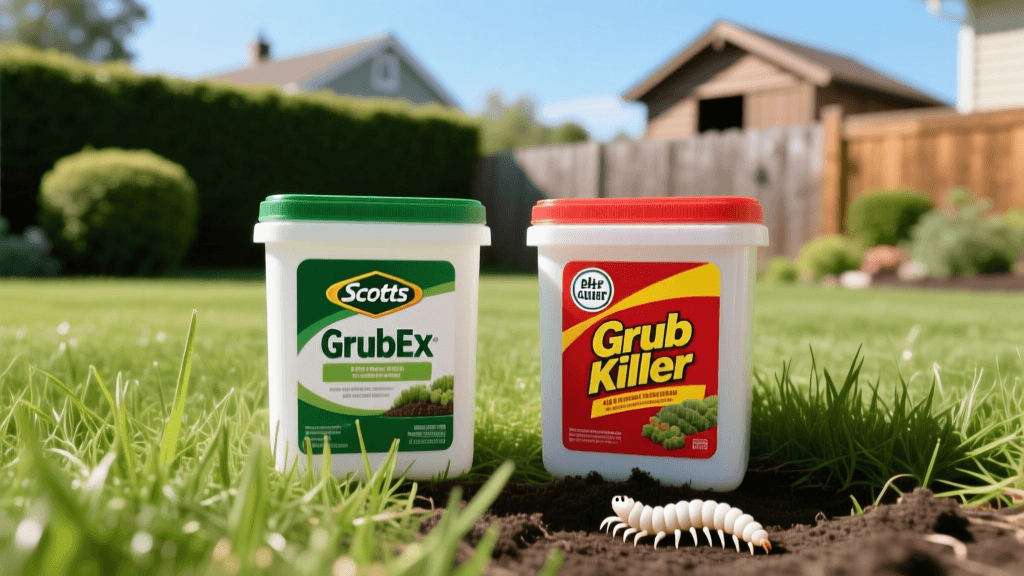
Scotts GrubEx vs Bayer Advanced 24-Hour Grub Killer 2026 Review
The Wildlife-Grub Connection: Why Animals Dig Up Your Lawn
If you have ever walked out to your lawn on a late summer morning only to find large patches of sod peeled back like a carpet, you have experienced the frustrating intersection of lawn care and wildlife management. Skunks, raccoons, crows, and armadillos are not digging up your yard out of malice; they are following their noses to a high-protein buffet hiding just beneath the soil surface: white grubs. In the 2026 lawn care season, managing these destructive yard animals requires a strategic approach to grub control, as eliminating their food source is the most effective, long-term method of wildlife deterrent.
When it comes to eliminating grubs, homeowners generally choose between two dominant market leaders: Scotts GrubEx and Bayer Advanced 24-Hour Grub Killer (now widely distributed under the BioAdvanced brand name, though still universally recognized by its Bayer Advanced legacy). Both products are highly effective at killing grubs, but they operate on entirely different chemical timelines, possess distinct wildlife safety profiles, and require different application strategies to keep foraging animals at bay.
Understanding the Contenders in 2026
To effectively manage wildlife damage, you must understand the life cycle of the Japanese Beetle, June Bug, and European Chafer. As detailed by the University of Kentucky Entomology Department, white grubs hatch in mid-summer, feed aggressively on grassroots through late summer and fall, and burrow deep into the soil to overwinter. It is during this late-summer feeding frenzy that grubs are largest, most nutritious, and most attractive to nocturnal wildlife.
Choosing the right chemical intervention depends entirely on whether you are trying to prevent the wildlife from arriving, or trying to stop them from actively destroying your lawn right now.
Scotts GrubEx (Chlorantraniliprole): The Preventative Wildlife Shield
Scotts GrubEx utilizes the active ingredient Chlorantraniliprole, a highly targeted, reduced-risk insecticide. It is a preventative treatment, meaning it must be applied in late spring or early summer (typically May through July) before grubs hatch and begin feeding. The chemical binds to the soil and creates a toxic barrier for newly hatched larvae.
Wildlife Management Perspective: From a wildlife management standpoint, GrubEx is the ultimate long-term deterrent. By eliminating the grub population before they grow large enough to attract skunks and raccoons, you effectively remove the food source that draws these animals to your property. Furthermore, Chlorantraniliprole is exceptionally safe for non-target wildlife. According to the National Pesticide Information Center (NPIC), this active ingredient has very low toxicity to birds, mammals, and earthworms. Once watered in and dried, it poses virtually no risk of secondary poisoning to a bird or mammal that might ingest a treated grub.
The Drawback: GrubEx is entirely ineffective as a curative treatment. If you apply it in September when raccoons are already tearing up your lawn, it will not kill the mature grubs, and the wildlife damage will continue.
Bayer Advanced 24-Hour Grub Killer (Trichlorfon): The Curative Rescue
Bayer Advanced 24-Hour Grub Killer relies on Trichlorfon (often known by the trade name Dylox). This is a fast-acting, curative insecticide designed to kill large, mature grubs within 24 hours of application. It is the go-to emergency rescue treatment for late summer and early fall when wildlife damage is actively occurring.
Wildlife Management Perspective: If your lawn is currently being destroyed by skunks and crows, Bayer Advanced 24-Hour is your best tool to stop the bleeding immediately. By rapidly eliminating the mature grubs, you cut off the food supply, forcing foraging wildlife to move on to other hunting grounds within a day or two. However, Trichlorfon has a broader spectrum of toxicity and a shorter residual life in the soil. It breaks down quickly in alkaline soils, meaning timing and immediate watering are critical.
The Drawback: Because Trichlorfon is a broader-spectrum nerve agent, it carries a higher acute toxicity profile for non-target organisms. It can be harmful to earthworms and poses a slight risk to foraging birds if they consume granules or treated insects before the product has been thoroughly watered into the soil and the surface has dried completely.
Head-to-Head Comparison Chart
| Feature | Scotts GrubEx | Bayer Advanced 24-Hour |
|---|---|---|
| Active Ingredient | Chlorantraniliprole (0.08%) | Trichlorfon (Dylox) |
| Primary Use | Preventative (Spring/Early Summer) | Curative (Late Summer/Fall) |
| Speed of Kill | Slow (Weeks to take full effect) | Fast (24 Hours) |
| Wildlife Deterrent Strategy | Prevents food source from establishing | Removes active food source immediately |
| Bird & Mammal Toxicity | Very Low / Practically Non-Toxic | Moderate (Requires strict drying time) |
| Impact on Earthworms | Safe / No significant impact | Can be harmful to beneficial earthworms |
| 2026 Avg. Cost (10k sq ft) | $38 - $42 | $26 - $30 |
Wildlife Safety and Secondary Poisoning Risks
When managing yard animals, a common concern among homeowners is secondary poisoning—the fear that a skunk, raccoon, or backyard bird will eat a poisoned grub and suffer toxic effects. In 2026, modern lawn care science has heavily mitigated this risk, but the choice of product still matters.
Scotts GrubEx is widely considered the gold standard for eco-conscious wildlife management. Because Chlorantraniliprole targets specific calcium channels found only in the muscle tissues of certain insects, it simply does not affect the biological systems of mammals, birds, or reptiles. A raccoon eating a dozen grubs treated with GrubEx will experience no adverse health effects, though it will eventually stop digging because the grub population will be eradicated.
Conversely, Trichlorfon (Bayer Advanced) is an organophosphate-like compound that inhibits acetylcholinesterase, an enzyme essential for nervous system function in insects, but also present in vertebrates. While the concentration in a single grub is unlikely to be fatal to a large mammal like a skunk, it can cause localized illness in smaller birds or pets if they ingest the granules directly. To protect local wildlife, Bayer Advanced must be watered in immediately (at least 1/2 inch of water) to wash the chemical off the grass blades and into the soil, and all pets and wildlife should be kept off the lawn until the grass is completely dry.
Impact on Non-Target Organisms: Earthworms and Pollinators
Healthy soil relies on earthworms to aerate the ground and break down thatch. As noted by Michigan State University Extension, preserving soil biology is a top priority for modern turf management. Scotts GrubEx is highly selective and leaves earthworm populations completely unharmed, maintaining the natural aeration of your lawn.
Bayer Advanced 24-Hour, due to its fast-acting and broader-spectrum nature, can cause significant die-offs in earthworm populations if applied heavily or without proper irrigation. While this won't destroy your lawn, it temporarily reduces the natural biological activity of your soil. Furthermore, neither product should be applied to lawns that are actively blooming with clover or dandelions, as foraging bees can be exposed to the chemicals during application. Always mow down flowering weeds before applying any grub control to protect vital pollinator populations.
Strategic Application for Wildlife Management in 2026
To effectively manage wildlife damage using these two products, lawn care professionals recommend a two-pronged, calendar-based strategy:
- Step 1: The Spring Prevention (May - June). Apply Scotts GrubEx to your lawn before the summer heat sets in. Water it in thoroughly. This ensures that when Japanese Beetles and June Bugs lay their eggs in July, the hatching larvae will be eliminated before they can grow large enough to attract the attention of neighborhood skunks and raccoons.
- Step 2: The Emergency Rescue (August - October). If you missed the spring window, or if a neighboring property's grub population has migrated into your yard and animals are actively digging, deploy Bayer Advanced 24-Hour Grub Killer. Apply it in the late evening to minimize bird exposure, water it in deeply immediately after spreading, and keep pets indoors until the lawn is dry. Within 48 hours, the grubs will be dead, and the foraging wildlife will abandon your yard in search of better hunting grounds.
- Step 3: Repair and Deterrence. After the grubs are eliminated, repair the torn sod by pressing it back down and watering it heavily. Consider using natural, non-toxic wildlife repellents, such as castor oil-based sprays, to deter moles and skunks from returning to the freshly turned soil.
Conclusion
Winning the war against lawn-destroying wildlife requires outsmarting their food supply. In 2026, both Scotts GrubEx and Bayer Advanced 24-Hour Grub Killer remain essential tools in the turf management arsenal, but they serve entirely different phases of the wildlife conflict. Use Scotts GrubEx as your primary, eco-friendly shield to prevent the buffet from ever opening. Keep Bayer Advanced 24-Hour on standby as your rapid-response curative to evict active foragers. By aligning your chemical applications with the biological rhythms of both the grubs and the animals that hunt them, you can maintain a pristine, intact lawn while safely coexisting with local wildlife.