Lawn Care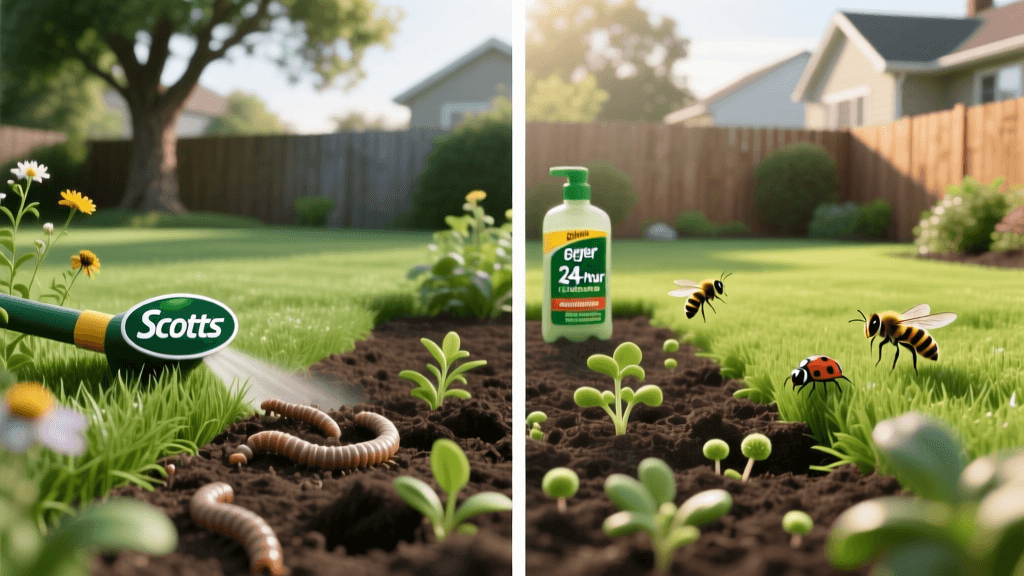
Scotts GrubEx vs Bayer Advanced 2026: Beneficial Insect Safety
The 2026 Paradigm Shift: Grub Control Meets Soil Ecology
As we navigate the 2026 lawn care season, the paradigm of turfgrass management has fundamentally shifted. Homeowners and turf professionals alike are moving away from the "scorched earth" chemical approaches of the past, embracing Integrated Pest Management (IPM) strategies that prioritize soil health and beneficial insects. White grubs—the larval stages of Japanese beetles, June bugs, and European chafers—remain one of the most destructive lawn pests. However, how we manage them now heavily considers the collateral damage to the soil food web.
When an active grub infestation threatens to destroy your turf's root system, two chemical heavyweights often come to mind: Scotts GrubEx (a preventative) and Bayer Advanced 24-Hour Grub Killer (a curative, now frequently branded under the BioAdvanced umbrella). But how do these synthetic options interact with the beneficial insects and bio-control agents that naturally keep your lawn resilient? Understanding the biochemical impact of these products on non-target organisms is critical for making an informed, ecologically responsible choice in 2026.
Scotts GrubEx (Chlorantraniliprole): The Preventative Approach
Scotts GrubEx relies on the active ingredient chlorantraniliprole, an anthranilic diamide insecticide. Unlike older classes of chemicals, chlorantraniliprole works by binding to ryanodine receptors in the insect's muscle cells, causing an uncontrolled release of calcium ions that leads to paralysis and death. Because it is highly selective for the specific receptor structures found in target lepidopteran and coleopteran pests, it exhibits remarkably low toxicity to mammals, birds, and crucially, beneficial insects.
From a bio-control perspective, GrubEx is a game-changer for preserving soil ecology. According to the EPA's Chlorantraniliprole Overview, this active ingredient poses minimal risk to pollinators, earthworms, and predatory soil arthropods. When applied preventatively in late spring (May to early June), it creates a protective zone in the upper soil profile just as grub eggs are hatching. Because it does not decimate earthworm populations or predatory ground beetles (Carabidae), your lawn's natural aeration and biological pest predation remain intact throughout the summer.
Bayer Advanced 24-Hour Grub Killer (Trichlorfon): The Curative Strike
Conversely, Bayer Advanced 24-Hour Grub Killer utilizes trichlorfon (often known by the trade name Dylox). Trichlorfon is an organophosphate insecticide that acts as an acetylcholinesterase inhibitor. It disrupts the nervous system of the grub, leading to rapid paralysis and death, often within 24 hours of application and watering. This makes it the go-to "rescue" treatment in late summer or early fall when grubs are large, actively feeding, and causing visible brown patches in your turf.
However, this rapid knockdown power comes at a steep ecological cost. Organophosphates are broad-spectrum neurotoxins. While highly effective at eliminating the grub threat, trichlorfon is notoriously harsh on non-target soil biology. Applications of Dylox will significantly reduce populations of earthworms, beneficial predatory mites, and the very ground beetles that naturally prey on grubs. Furthermore, it can negatively impact the viability of entomopathogenic nematodes if you attempt to use bio-controls concurrently. Using Bayer Advanced 24-Hour is essentially a biological reset button; it solves the immediate crisis but leaves your soil ecology vulnerable and depleted, requiring a dedicated post-application soil recovery plan.
True Bio-Controls: Nematodes and Parasitic Wasps
To truly view grub control through a bio-control lens, we must look beyond synthetic chemicals to living organisms. In 2026, the gold standard for biological grub management is the application of beneficial nematodes, specifically Heterorhabditis bacteriophora (Hb nematodes). These microscopic roundworms actively hunt grubs in the soil, penetrating the host and releasing symbiotic bacteria that kill the grub within 48 hours. The nematodes then reproduce inside the carcass and release a new generation of hunters into the soil.
Another vital, naturally occurring bio-control agent is the Tiphia vernalis (spring Tiphia wasp). These wasps parasitize Japanese beetle grubs, and establishing a diverse, flowering landscape border around your lawn can encourage their presence. For a comprehensive look at how biological and chemical controls intersect, Penn State Extension's guide on White Grubs in Turfgrass provides excellent data on preserving these natural predators while managing severe outbreaks.
Head-to-Head Comparison: Chemical vs. Bio-Control Impact
| Feature | Scotts GrubEx (Preventative) | Bayer Adv. 24-Hour (Curative) | Hb Nematodes (Bio-Control) |
|---|---|---|---|
| Active Agent | Chlorantraniliprole (Synthetic) | Trichlorfon / Dylox (Synthetic) | Heterorhabditis bacteriophora |
| Application Timing | Spring / Early Summer | Late Summer / Early Fall | Late Summer / Early Fall |
| Speed of Control | Slow (Prevents maturation) | Rapid (24 to 48 hours) | Moderate (48 to 72 hours) |
| Impact on Earthworms | Minimal / Safe | High / Toxic | None / Safe |
| Impact on Predatory Beetles | Safe | Harmful | Safe |
| Soil Ecology Footprint | Low Disruption | High Disruption | Enhances Soil Food Web |
The 2026 IPM Strategy: Integrating Chemicals and Beneficials
How do you reconcile the need for rapid grub elimination with the desire to maintain a biologically active, beneficial-rich soil environment? The answer lies in a phased 2026 IPM (Integrated Pest Management) schedule that utilizes synthetic chemicals only when absolutely necessary, while prioritizing biological health.
Phase 1: Spring Prevention (May - June)
If your lawn has a historical record of severe grub damage, apply Scotts GrubEx in late spring. Because chlorantraniliprole is safe for beneficial organisms, you are protecting your turf without sterilizing the soil. Earthworms will continue to aerate the thatch layer, and predatory ground beetles will continue to patrol the surface.
Phase 2: Late Summer Biological Strike (August - September)
If you skipped spring prevention and discover active grubs in late summer, resist the urge to immediately reach for the Bayer Advanced 24-Hour killer. Instead, order a fresh shipment of Hb nematodes. Apply them in the early evening when soil temperatures are between 60°F and 85°F, and water them in immediately to wash them into the root zone. Nematodes will target the grubs without harming your soil's biological infrastructure.
Phase 3: The Emergency Curative (September - October)
If grub populations have exceeded the damage threshold (typically more than 5-10 grubs per square foot) and your turf is rolling back like a carpet, you may have no choice but to use Bayer Advanced 24-Hour Grub Killer to save the lawn from total collapse. Acknowledge that this is a rescue mission. Following a trichlorfon application, you must commit to a robust soil recovery program. In the spring of 2027, apply high-quality compost top-dressings, use organic kelp-based fertilizers, and inoculate the soil with mycorrhizal fungi and fresh nematodes to rebuild the beneficial insect and microbial populations that the organophosphate eradicated.
Conclusion: Choosing the Right Tool for the Ecosystem
In 2026, effective lawn care is no longer just about killing pests; it is about managing an ecosystem. Scotts GrubEx offers a highly targeted, ecologically forgiving preventative shield that respects the complex web of beneficial insects living beneath your turf. Bayer Advanced 24-Hour remains a potent, necessary weapon for emergency curative strikes, but its broad-spectrum toxicity demands respect and a subsequent commitment to soil rehabilitation. By understanding the biochemical realities of these products and integrating true bio-controls like Hb nematodes, you can maintain a lush, grub-free lawn that thrives in harmony with nature.