Lawn Care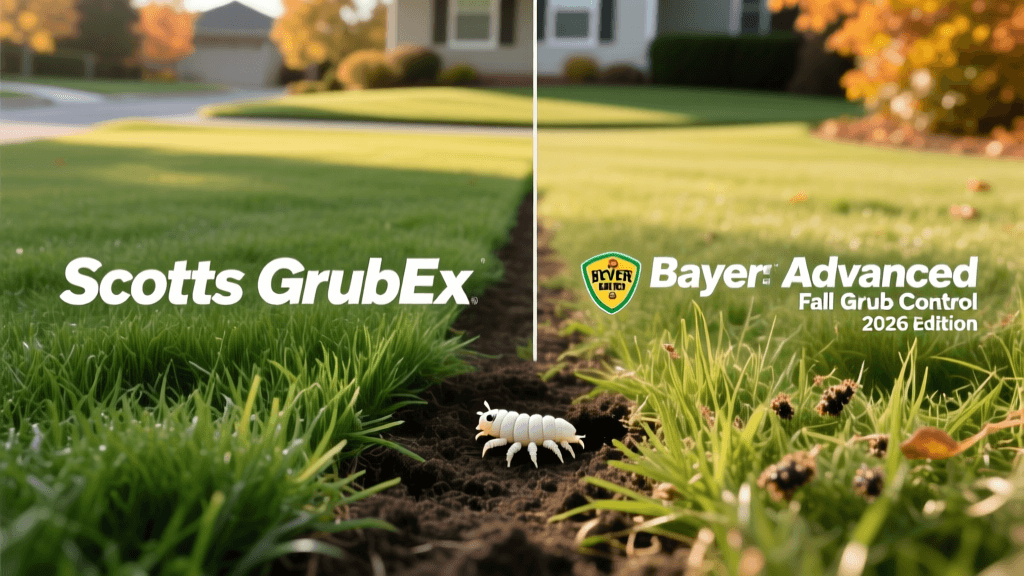
Fall Grub Control 2026: Scotts GrubEx vs Bayer Advanced 24-Hour
The Fall Grub Dilemma in 2026
As the crisp autumn air settles in and lawns across the country transition into their final growth phases of the year, a hidden threat is actively destroying root systems beneath the soil surface. Fall lawn care in 2026 requires a strategic approach to pest management, particularly when dealing with white grubs. These C-shaped larvae of Japanese beetles, European chafers, and June bugs are currently in their third and final larval instar. Unlike the tiny, newly hatched grubs of early summer, autumn grubs are large, aggressive, and ravenously consuming the turf roots your lawn desperately needs to survive the upcoming winter. When homeowners discover patches of brown, dying grass that peels back like a loose carpet, the immediate instinct is to rush to the garden center. However, choosing the wrong product for the fall season can result in wasted money and a dead lawn. The two most prominent names in turf pest management are Scotts GrubEx and Bayer Advanced 24 Hour Grub Killer. While both are exceptional products, they serve entirely different purposes in the lawn care calendar. Understanding the critical distinction between preventative and curative grub control is the key to saving your autumn turf.
How to Identify a Fall Grub Infestation
Before applying any chemical treatment, you must confirm that grubs are actually the culprit. Drought stress, fungal diseases like brown patch, and dog urine spots can mimic grub damage. To verify an infestation, perform the standard turf peel test. Using a flat-edged shovel, cut a one-foot by one-foot square of turf about two inches deep and peel it back. Count the number of white grubs wriggling in the topsoil and root zone. According to turfgrass entomologists at the University of Minnesota Extension, a healthy lawn can tolerate a few grubs without showing damage. However, if you count more than five to seven grubs per square foot in the fall, immediate curative action is required to prevent catastrophic root loss before the ground freezes.
The Core Difference: Preventative vs. Curative Control
The fundamental rule of grub management revolves around timing and active ingredients. Preventative grub controls are designed to be applied before the eggs hatch, creating a toxic barrier in the soil that kills young, vulnerable first-instar grubs. Curative grub controls, on the other hand, are fast-acting contact and stomach poisons designed to hunt down and eliminate large, mature grubs that are actively feeding and causing visible damage. Applying a preventative product in the middle of autumn is a common and costly mistake. Conversely, applying a fast-acting curative in early spring is a waste of resources, as the grubs are not actively feeding near the surface at that time.
Scotts GrubEx: The Spring Preventative
Scotts GrubEx is widely considered the gold standard for preventative grub control. Its active ingredient, Chlorantraniliprole, is a highly effective anthranilic diamide that targets the calcium channels in the insect's muscles, causing paralysis and death. Because it is exceptionally safe for beneficial insects, earthworms, and pets, it has become a staple in organic-leaning and traditional lawn care programs alike. However, Chlorantraniliprole is a slow-acting compound. It requires 60 to 90 days to fully break down in the soil and become biologically active. For this reason, Scotts GrubEx must be applied in late spring or early summer (typically May through early July). If you apply Scotts GrubEx in September or October to fight an active fall infestation, the product will not activate in time to stop the large, third-instar grubs from devouring your lawn's root system. Furthermore, by the time it does activate, the grubs will have already migrated deep into the soil profile to overwinter, rendering the treatment largely ineffective. In 2026, a standard 14-pound bag of Scotts GrubEx covering 5,000 square feet retails for approximately $34.98, making it a cost-effective insurance policy for spring, but a poor rescue remedy for fall.
Bayer Advanced 24 Hour Grub Killer: The Fall Curative Hero
When autumn arrives and your lawn is under active siege by mature grubs, you need a curative rescue treatment. Bayer Advanced 24 Hour Grub Killer (often sold under the BioAdvanced brand umbrella in recent years) utilizes the active ingredient Dylox (Trichlorfon). Dylox is an organophosphate insecticide that acts as a rapid knockdown agent. Upon contact or ingestion, it disrupts the nervous system of the grub, resulting in mortality within 24 to 48 hours. Research from Ohio State University Extension highlights that curative insecticides like trichlorfon are the only reliable chemical option for late summer and early fall applications when grubs are large and actively feeding near the surface. Dylox has a very short residual life, breaking down in the soil within one to two weeks. This means it will not provide long-term protection into the following spring, but it will immediately stop the bleeding in your autumn lawn. A 10-pound bag covering 3,000 square feet typically costs around $27.98 in 2026.
Head-to-Head Comparison Chart
| Feature | Scotts GrubEx | Bayer Advanced 24 Hour |
|---|---|---|
| Active Ingredient | Chlorantraniliprole | Dylox (Trichlorfon) |
| Control Type | Preventative | Curative |
| Best Application Time | Late Spring / Early Summer | Late Summer / Early Fall |
| Speed of Kill | 60-90 Days | 24-48 Hours |
| Residual Activity | Up to 4 Months | 1-2 Weeks |
| Target Grub Stage | 1st & 2nd Instar (Young) | 2nd & 3rd Instar (Mature) |
| Approx. Cost (2026) | $34.98 / 5,000 sq. ft. | $27.98 / 3,000 sq. ft. |
Step-by-Step Fall Application Guide for Bayer Advanced
To maximize the efficacy of Dylox in the fall, precise application is non-negotiable. Trichlorfon is highly susceptible to alkaline hydrolysis, meaning it will break down rapidly and lose its effectiveness if left on the surface of high-pH soils or thick thatch layers. Follow these steps for a successful fall rescue application:
- Mow the Lawn: Mow your turf slightly shorter than usual to allow the granules to reach the soil surface and thatch layer without being trapped by tall grass blades.
- Calibrate Your Spreader: Apply the Bayer Advanced 24 Hour granules at the rate specified on the 2026 product label for your specific grass type and spreader model.
- Water Immediately: This is the most critical step. You must water the lawn with at least 0.5 inches of irrigation immediately after application. This washes the active ingredient off the grass blades and into the root zone where the grubs are feeding.
- Keep Pets and Children Away: While Dylox is safe once fully watered in and dried, keep all foot traffic off the lawn until the grass blades are completely dry to the touch.
Post-Treatment Fall Lawn Recovery
Once the grubs have been eliminated, your lawn will still need help recovering from the root damage. As noted in the Rutgers University fact sheet on white grubs, turfgrass with severed roots cannot absorb water or nutrients, making it highly susceptible to winter desiccation. Fortunately, because Dylox lacks pre-emergent herbicide properties, you can safely overseed your lawn immediately after the curative treatment. In fact, combining a fall aeration, a heavy overseeding with a turf-type tall fescue or Kentucky bluegrass blend, and a late-season winterizer fertilizer application is the ultimate protocol for rebuilding a grub-damaged lawn before the first hard frost of 2026. Ensure the new seed is kept consistently moist for the next 14 to 21 days to guarantee germination and establishment before winter dormancy sets in.