Lawn Care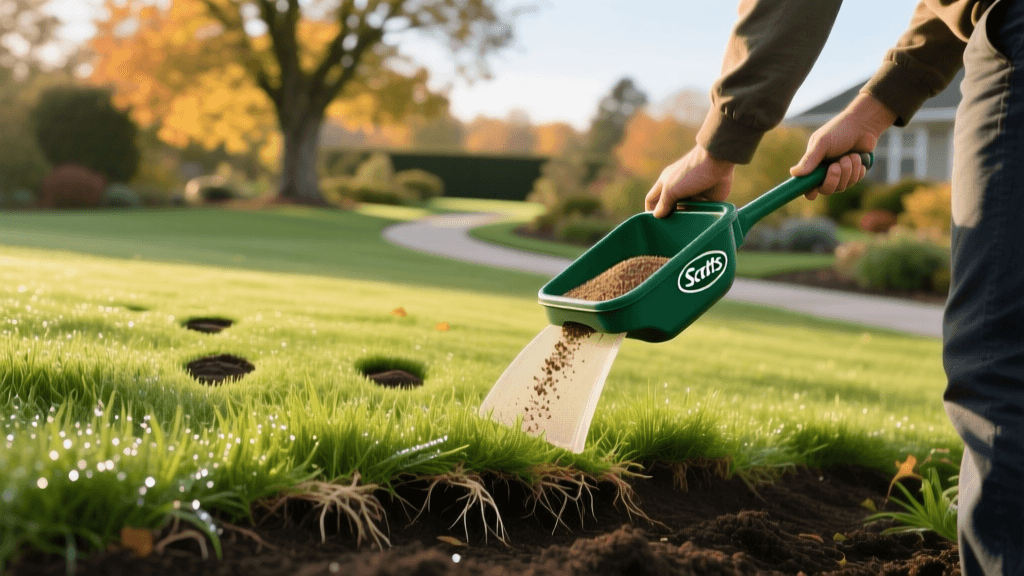
Scotts Turf Builder Winterizer 2026: Photo Documentation Guide
The Intersection of Lawn Care and Visual Documentation
As we navigate the 2026 lawn care season, the modern homeowner is no longer just a gardener; they are a citizen scientist and a visual archivist. Applying a fall winterizer like Scotts Turf Builder WinterGuard Fall Lawn Food is one of the most critical steps for cool-season grasses, but without proper documentation, it is impossible to truly measure its efficacy. By combining precise agronomic practices with garden photography and documentation, you can create a comprehensive visual journal that tracks your turf's health, root development, and color retention from autumn through the following spring.
This guide will walk you through the exact protocol for applying Scotts Turf Builder WinterGuard in 2026 while simultaneously setting up a photographic grid to capture the hidden, subterranean, and seasonal benefits of your fertilization efforts. Whether you are using a high-end mirrorless camera or the latest 2026 smartphone with computational macro-lenses, documenting your lawn transforms guesswork into empirical, visual data.
The Science of Scotts WinterGuard in 2026
Before we set up our tripods, we must understand the subject we are photographing. Scotts Turf Builder WinterGuard Fall Lawn Food is engineered with a specific nutrient profile—typically a 32-0-10 N-P-K ratio—designed to feed the roots of cool-season grasses like Kentucky Bluegrass, Tall Fescue, and Perennial Ryegrass. According to the University of Minnesota Extension, fall is the most important time to fertilize because the grass is actively storing carbohydrates in its root system to survive winter dormancy and fuel spring green-up.
The high nitrogen content promotes deep root growth and carbohydrate storage, while the potassium (the '10' in the ratio) acts as an antifreeze, strengthening cell walls against freezing temperatures and winter desiccation. As the Environmental Protection Agency (EPA) notes, proper timing and application of fall fertilizers also prevent nutrient runoff, ensuring that the nitrogen stays in the root zone where it belongs. Our photographic goal is to document this root expansion and the resulting turf density.
Setting Up Your Lawn Photography Grid
To accurately document the effects of the Scotts Winterizer, you need consistency. A single photograph tells a story, but a grid of time-lapse photographs tells the truth. In 2026, setting up a permanent photography grid in your yard is easier than ever thanks to LiDAR-equipped smartphones and affordable landscaping stakes.
Step 1: Establish Fixed Focal Points
Drive three small, unobtrusive landscaping stakes into the ground in a triangular formation across your lawn. These will serve as your tripod anchor points. Every time you document the lawn—whether it is the day of application, mid-winter, or the spring green-up—your camera lens must be positioned at the exact same height and angle relative to these stakes.
Step 2: Color Calibration
Autumn light is notoriously tricky. The golden hour in October casts heavy yellow and orange hues that can falsely represent the health of your turf. Place a standard color calibration card (like an X-Rite ColorChecker) on the grass before taking your baseline shots. This allows you to white-balance your images in post-processing, ensuring that the deep, dark green of a well-fertilized fescue lawn is accurately represented in your 2026 journal.
Application Day: Capturing the Process
The ideal time to apply Scotts Turf Builder WinterGuard is when soil temperatures drop to around 55°F, usually between late October and mid-November, depending on your hardiness zone. The grass should still be green and actively growing roots, even if top-growth has slowed.
Spreader Calibration and Coverage
For the 2026 formulation of Scotts WinterGuard, the recommended application rate is roughly 2.5 pounds of product per 1,000 square feet. A standard 12.5-pound bag covers 5,000 square feet and retails for approximately $38. If you are using a Scotts Rotary Spreader, the dial setting is typically 5.5.
Document your spreader settings with a close-up macro photograph. This is a crucial piece of data for your journal. If you experience fertilizer burn or uneven greening next spring, you can refer back to your photos to verify your calibration.
Photographing the Granules
After spreading, use a macro lens or your smartphone's macro mode to photograph the granules resting on the soil surface and thatch layer. Scotts WinterGuard utilizes a proprietary granule technology designed to break down efficiently with morning dew and rainfall. Capturing the initial distribution helps you verify that your spreader overlap was accurate and that there are no missed stripes.
Visual Data: Camera Settings & Documentation Checklist
Maintaining a structured approach to your photography ensures your data is usable. Below is the recommended checklist and camera setting guide for documenting your Scotts Winterizer application.
| Documentation Phase | Camera/Lens Setup | Key Subject Focus | Lighting Condition |
|---|---|---|---|
| Pre-Application Baseline | Wide-angle (24mm), f/8 | Overall turf density, existing bare spots | Overcast (soft, even light) |
| Spreader Calibration | Macro (100mm), f/4 | Spreader dial settings, hopper gate | Daylight, use flash if shaded |
| Granule Distribution | Macro (100mm), f/5.6 | Granule spacing on soil/thatch | Golden hour for texture shadows |
| Soil Core Sampling | Macro with ring flash | Root depth, soil moisture, crown health | Indoor studio light / Lightbox |
| Spring Green-Up | Wide-angle (24mm), f/8 | Color uniformity, frost recovery | Overcast (for true green color) |
Capturing the Hidden Benefits: Soil and Root Photography
The true magic of Scotts Turf Builder WinterGuard happens underground. The nitrogen and potassium are driving deep root expansion and carbohydrate storage, which you cannot see from the surface. To document this, you must become a subterranean photographer.
Invest in a standard 12-inch soil probe. Before applying the winterizer, extract three soil cores from different areas of your lawn. Place them on a white backdrop or inside a portable photography lightbox. Use a macro lens to photograph the root mass, measuring the depth of the primary roots and the density of the fibrous root hairs. Label the photo with the date and soil temperature.
Six months later, in the spring of 2027, extract cores from the exact same GPS-marked locations. The visual difference in root depth, soil structure, and crown thickness will be staggering. This side-by-side photographic comparison is the ultimate proof of your winterizer's ROI, far exceeding any simple visual assessment of the grass blades.
Winter Dormancy and Frost Documentation
Many lawn care enthusiasts put their cameras away when the first snow falls, but winter offers unique documentation opportunities. Potassium, heavily featured in the Scotts WinterGuard formula, increases the osmotic pressure within plant cells, effectively lowering the freezing point of the plant's internal fluids.
During the first hard frosts of late 2026, head out at dawn to photograph the frost patterns on your turf. A lawn with excellent internal health and proper potassium levels will often exhibit more uniform frost melting and less cellular damage (which appears as grey, water-soaked lesions on the blades). Documenting these frost patterns provides visual evidence of your turf's cold-hardiness.
'A well-documented lawn is a well-understood lawn. Photography transforms guesswork into empirical data, allowing you to see the microscopic and macroscopic impacts of your agronomic decisions.'
Creating a 2026 Time-Lapse and Visual Journal
To bring your documentation to life, compile your images into a time-lapse video or a digital visual journal. Modern applications available in 2026 allow you to align images based on the landscaping stakes we established earlier, automatically correcting for slight shifts in perspective.
Pair your time-lapse with a spreadsheet tracking environmental data: daily high/low temperatures, rainfall totals, and the exact date of your Scotts WinterGuard application. According to turfgrass researchers at the University of Nebraska-Lincoln Turfgrass Science program, correlating visual turf quality with environmental data is the gold standard for advanced lawn management. By merging your photographic grid with local meteorological data, you create a master document that will inform your lawn care strategies for decades to come.
Conclusion: The Archival Lawn
Applying Scotts Turf Builder WinterGuard Fall Lawn Food is an investment in the future vitality of your turf. By adopting the mindset of a garden photographer and documenting every stage of the process—from spreader calibration and granule distribution to subterranean root profiling and frost resistance—you elevate your lawn care from a weekend chore to a rewarding scientific pursuit. Grab your camera, calibrate your spreader, and start building your 2026 visual lawn journal today.