Lawn Care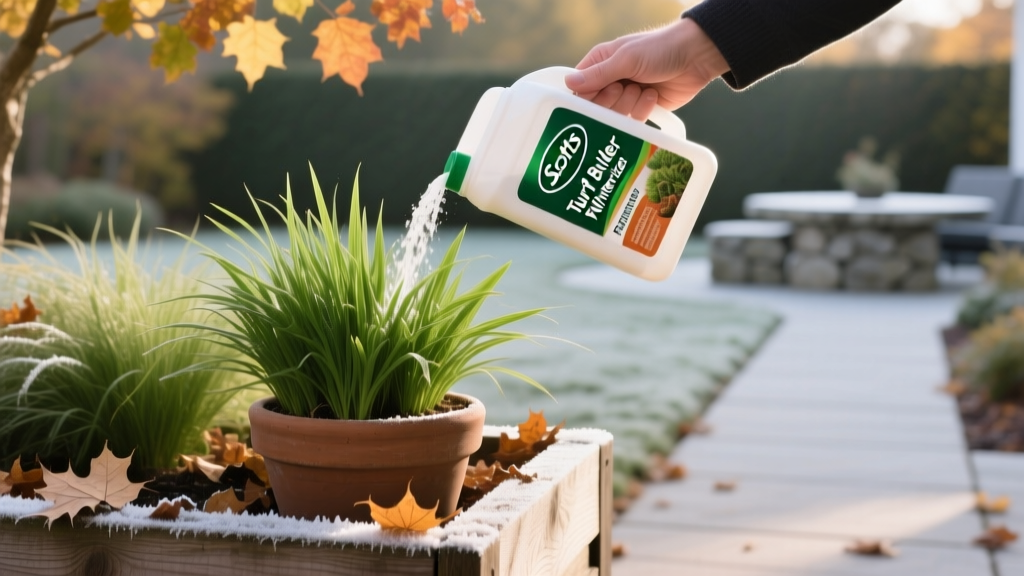
Scotts Turf Builder Winterizer for Container Grass 2026
Lisa ThompsonPublished
Introduction to Container Grass Winterization in 2026
As urban landscaping and patio design continue to evolve in 2026, container gardening has expanded far beyond seasonal annuals and vegetable planters. Homeowners and landscape architects are increasingly cultivating potted ornamental grasses, dwarf bamboos, sedges (Carex), and even miniature turfgrass lawns in large architectural planters. While these container-grown grasses provide stunning vertical interest, privacy screens, and textural contrast, they face a unique and severe vulnerability during the colder months: the root zone is entirely exposed to ambient air temperatures. Unlike in-ground lawns that benefit from the earth's natural geothermal insulation, potted grasses can freeze solid from the outside in, leading to severe root desiccation and crown death.
To combat this, building robust root carbohydrate reserves before dormancy is absolutely essential. This is where the careful, calibrated application of Scotts Turf Builder Fall Winterizer comes into play. Originally formulated for expansive in-ground cool-season lawns, this specific fertilizer can be a secret weapon for container grasses—if applied with precise modifications to prevent root burn and salt toxicity in confined soil volumes.
The Science: Why Use Scotts Turf Builder Winterizer in Pots?
Scotts Turf Builder Winterizer typically boasts a high-nitrogen, zero-phosphorus, and moderate-potassium N-P-K ratio (such as 32-0-10 or 22-0-14, depending on your regional 2026 formulation and local phosphorus regulations). In traditional lawn care, the goal of a fall winterizer is not to promote immediate, lush top growth, but to fuel late-season photosynthesis that gets stored as complex carbohydrates in the root system. Potassium (the third number in the N-P-K ratio) plays a critical role in regulating stomatal opening, improving cellular drought tolerance, and thickening plant cell walls to resist frost damage and ice crystal formation.
For potted ornamental grasses like Miscanthus sinensis, Pennisetum alopecuroides, and Festuca glauca, the confined soil volume means nutrients leach out rapidly during late summer rains and frequent container watering. By early autumn, container potting soil is often completely depleted of soluble potassium and nitrogen. Applying a customized, container-safe dose of Scotts Winterizer replenishes these vital reserves, ensuring the grass crown survives the brutal freeze-thaw cycles of winter.
The Risks of Standard Lawn Rates in Containers
You cannot simply set a broadcast spreader to the standard "Scotts Lawn Rate" and walk over your patio planters. In-ground soils possess a massive buffering capacity, allowing excess mineral salts to dissipate, bind to clay particles, or wash safely into the deep water table. Container potting mixes, which are heavily reliant on peat moss, coco coir, and pine bark, have a very low cation exchange capacity (CEC). If you apply the standard 1 pound of nitrogen per 1,000 square feet directly to a 20-gallon pot, the resulting salt concentration will spike dramatically, causing severe osmotic stress. This essentially pulls water out of the grass roots, resulting in fertilizer burn, rapid browning, and fatal winter desiccation. Therefore, the 2026 best practice for container application involves either severe micro-dosing of the granular product or dissolving it into a liquid drench for uniform distribution.
Identifying Grass Types and Their Specific Winterizer Needs
Before reaching for the fertilizer bag, you must identify the type of grass thriving in your containers, as their metabolic timelines differ drastically.
- Cool-Season Potted Grasses: Species like hard fescues, Kentucky bluegrass (often used in decorative micro-lawns), and most Carex sedges actively grow in cool weather. They benefit immensely from late fall nitrogen applications, which sustain their green color well into winter and promote early spring emergence.
- Warm-Season Potted Grasses: Ornamentals like Muhly grass (Muhlenbergia capillaris), Switchgrass (Panicum virgatum), and Zoysia plugs go fully dormant much earlier. For these, the winterizer application must happen in early September 2026. The focus should be strictly on the potassium benefits to harden off the plant, avoiding high nitrogen that could force tender, frost-susceptible new growth right before the first autumn freeze.
Step-by-Step Application Guide for 2026
Step 1: Calculate Container Surface Area
Most fertilizer rates are based on square footage. A standard 24-inch diameter round pot has a surface area of roughly 3.14 square feet (using the formula Area = π × r²). A large rectangular planter measuring 48 inches by 24 inches equals 8 square feet. You must map out the exact square footage of your containers to calculate the micro-dose accurately.
Step 2: The Liquid Drench Calibration Method
Instead of broadcasting dry granules, which can clump and burn localized spots in a small pot, create a liquid winterizer drench. For a safe container application, dissolve 1 tablespoon of Scotts Turf Builder Winterizer granules into 1 gallon of warm water. Stir until completely dissolved. This creates a mild, uniform nutrient solution that penetrates the entire root ball without creating toxic salt pockets.
Step 3: Timing the Application
Timing is everything. According to experts at Penn State Extension, winter preparation should begin when plants are transitioning into dormancy but the soil is still warm enough for root uptake. In most northern and transition zones, this means applying your container winterizer between late October and mid-November 2026, ideally when soil temperatures hover around 55°F. Stop fertilizing completely once the grass has browned and entered full dormancy.
Step 4: The Watering-In Protocol
After applying the liquid drench to the soil surface, water the container lightly with plain water. The goal is to move the nutrients into the lower two-thirds of the pot where the active root mass resides, rather than letting it sit on the dry surface or evaporate.
Comparison Chart: In-Ground vs. Container Application Rates
| Container Type & Size | Surface Area (Sq Ft) | Standard Lawn Rate (Forbidden for Pots) | Safe 2026 Container Rate (Liquid Drench) |
|---|---|---|---|
| 15-Gallon Round Pot (20" Diameter) | 2.18 sq ft | ~0.8 oz granular (High Burn Risk) | 1/2 Gallon Dissolved Drench |
| 25-Gallon Round Pot (24" Diameter) | 3.14 sq ft | ~1.2 oz granular (High Burn Risk) | 3/4 Gallon Dissolved Drench |
| Large Rectangular Planter (48" x 24") | 8.00 sq ft | ~3.2 oz granular (High Burn Risk) | 2 Gallons Dissolved Drench |
Companion Winterizing Practices for Potted Grasses
Fertilizer is only one piece of the winterization puzzle. As noted by researchers at UMass Extension, ornamental grasses in containers require physical insulation to survive extreme cold. Once you have applied your Scotts Winterizer and the ground begins to freeze, group your pots together in a sheltered location, such as an unheated garage, against a south-facing wall, or in a protected courtyard. Wrap the exterior of ceramic and terracotta pots with bubble wrap or burlap to prevent the material from cracking and to insulate the root ball.
Elevate the pots using "pot feet" or wooden blocks to ensure drainage holes do not freeze to the ground, which would trap water and cause the roots to rot and freeze simultaneously. Finally, do not cut back the dead foliage of ornamental grasses until early spring 2027; the standing blades act as a natural thatch layer, protecting the vulnerable crown from ice and snow accumulation.
Conclusion
Adapting lawn care products for container gardening requires a shift in mindset from broad coverage to precise, calculated horticulture. By understanding the unique soil dynamics of patio planters and utilizing a liquid drench method, you can safely leverage the root-building power of Scotts Turf Builder Fall Winterizer. Follow these 2026 guidelines, and your potted ornamental grasses will emerge from winter with robust root systems, ready to deliver vibrant, lush growth when the new season arrives.