Pest Control
Seasonal Grub Control: Spring vs Fall Lawn Treatment
The Hidden Threat Beneath Your Turf
There are few things more frustrating for a homeowner than watching a lush, green lawn suddenly develop large, irregular brown patches that roll back like a freshly laid carpet. The culprit is almost always white grubs—the soil-dwelling larvae of scarab beetles, including Japanese beetles, June bugs, and European chafers. These voracious pests feed on the roots of turfgrass, severing the plant's ability to take up water and nutrients. However, successfully managing a grub infestation is not a one-size-fits-all endeavor. It requires a deep understanding of seasonal maintenance and the specific lifecycle of the pest. Applying the wrong product at the wrong time of year is a waste of money and can harm beneficial soil organisms. In this comprehensive guide, we break down the critical differences between spring and fall grub treatments, providing actionable advice, product recommendations, and organic alternatives to keep your lawn pristine year-round.
Understanding the Seasonal Grub Lifecycle
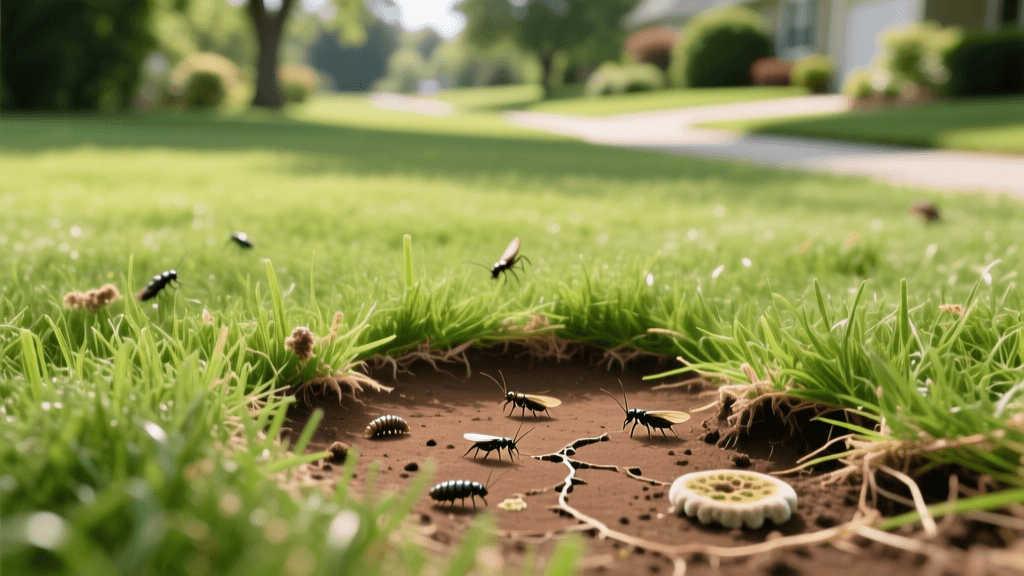
To effectively time your seasonal maintenance, you must understand the enemy. According to Penn State Extension, white grubs undergo a complete metamorphosis: egg, larva (grub), pupa, and adult beetle. The larval stage is the only phase that damages your lawn. Adult beetles typically emerge from the soil in early summer to mate and lay eggs in the turf. These eggs hatch in late July through August, releasing tiny, first-instar grubs that immediately begin feeding on grassroots. As autumn approaches, the grubs grow rapidly, causing the most severe root destruction. When soil temperatures drop in late fall, they burrow deep below the frost line to overwinter, only to return to the surface in early spring for a final, brief feeding bout before pupating into adults.
Spring Grub Treatment: Curative vs. Preventative
One of the most common mistakes in lawn care is applying preventative grub control in early spring (March or April) with the expectation that it will kill the grubs currently in the soil. This is a fundamental misunderstanding of how these chemicals work. Preventative insecticides target newly hatched, young grubs, not the large, overwintered grubs feeding in the spring.
Curative Spring Treatments
If you notice severe lawn damage in early spring, or if local wildlife like skunks and crows are tearing up your turf looking for a protein-rich breakfast, you are dealing with mature, overwintered grubs. At this stage, you need a curative insecticide with a short residual life but fast knockdown power. Products containing Trichlorfon (such as Dylox) or Carbaryl are highly effective. Apply these at a rate of 2 to 3 pounds per 1,000 square feet. Because spring soils are often naturally moist from snowmelt and rain, the chemical will easily reach the root zone. Expect to spend around $15 to $25 per 5,000 square feet for curative spring treatments.
Preventative Spring Treatments
If your goal is to protect your lawn from the upcoming generation of grubs that will hatch in late summer, you can apply a long-residual preventative in late spring (May to early June). Products containing Chlorantraniliprole (such as Scotts GrubEx) are excellent choices. They take several weeks to translocate into the root system but remain active in the soil for months, safely waiting for the eggs to hatch. This is a cornerstone of proactive seasonal lawn maintenance.
Fall Grub Treatment: The Critical Window
Fall is arguably the most critical season for grub management. The grubs hatched in late summer are now in their second or third instar, meaning they are larger, eating more aggressively, and causing visible turf death just before the lawn goes dormant for winter.
Early Fall Curative Control
If you missed the preventative window in early summer and spot brown, dying patches in late August or September, you must act quickly. The grubs are still relatively close to the surface and highly susceptible to curative treatments. Trichlorfon remains the gold standard here. It is crucial to irrigate the lawn with at least 0.25 to 0.5 inches of water immediately after application to wash the granules off the grass blades and into the soil where the grubs are feeding. According to Ohio State University Extension, treating in early fall is highly effective because the grubs are actively feeding and the soil temperatures are still warm enough to facilitate chemical movement.
Winterizing and Lawn Recovery
After a fall grub treatment, your lawn needs help to recover before winter dormancy. Core aeration followed by overseeding with a resistant turfgrass blend (such as tall fescue or endophyte-enhanced perennial ryegrass) will help fill in the dead patches. Apply a winterizer fertilizer high in potassium to strengthen the remaining grassroots against freeze damage.
Seasonal Grub Control Comparison Chart
Use the following table to plan your seasonal maintenance calendar and budget accordingly. Timing is everything; applying these products even a few weeks outside their ideal windows can result in total failure.
| Season | Target Grub Stage | Treatment Type | Recommended Active Ingredients | Expected Cost (per 5,000 sq ft) |
|---|---|---|---|---|
| Spring (April - May) | Overwintered Mature Larvae | Curative | Trichlorfon, Carbaryl | $15 - $25 |
| Late Spring (May - June) | Eggs / Early Instar Larvae | Preventative | Chlorantraniliprole | $18 - $22 |
| Early Summer (June - July) | Eggs / Early Instar Larvae | Preventative | Imidacloprid, Clothianidin | $12 - $18 |
| Fall (August - September) | Young / Mid-size Larvae | Curative | Trichlorfon, Beneficial Nematodes | $15 - $45 |
Organic and Biological Seasonal Controls
For homeowners practicing Integrated Pest Management (IPM) or those with pets and children who prefer to avoid synthetic chemicals, biological controls offer a highly effective, seasonal alternative.
Beneficial Nematodes
Microscopic, soil-dwelling worms known as beneficial nematodes are lethal to white grubs. The most effective species for grub control is Heterorhabditis bacteriophora (Hb). According to the University of California IPM, nematodes must be applied when grubs are young and actively feeding, making late summer and early fall the ideal seasonal window.
- Application Rate: 1 to 2 billion nematodes per acre (roughly 25,000 to 50,000 per square foot).
- Cost: $40 to $60 per 1/4 acre.
- Critical Timing: Apply in the late evening or on an overcast day. UV light will kill nematodes instantly.
- Moisture Requirement: You must water the lawn with 0.25 inches of water immediately after application and keep the soil consistently moist for the next 10 to 14 days to allow the nematodes to hunt and reproduce.
Milky Spore Disease
Milky Spore (Paenibacillus popilliae) is a naturally occurring bacterium that specifically targets Japanese beetle grubs. It is applied to the lawn in a grid pattern using a drop spreader or specialized applicator tube. While it is an excellent long-term organic solution, it is not a quick fix. Milky spore takes two to three years of seasonal applications to build up to effective levels in the soil, but once established, it can provide control for 10 to 15 years without reapplication.
Cultural Practices and Lawn Recovery
Chemical and biological treatments are only one pillar of seasonal pest management. Cultural practices dictate how much damage your lawn can actually tolerate. A healthy, deeply rooted lawn can sustain a population of 5 to 10 grubs per square foot without showing any visible signs of stress.
'Lawns mowed at a height of 3.5 to 4 inches develop much deeper root systems, which act as a buffer against grub feeding. Taller grass also shades the soil, making it less attractive to adult female beetles looking for warm, bare spots to lay their eggs.'
To support your seasonal grub treatments, adjust your mower deck to the highest setting during the peak summer months. Water deeply and infrequently (1 to 1.5 inches per week) to encourage roots to grow downward, away from the shallow feeding zones of young grubs. If you experience an outbreak, avoid heavy nitrogen fertilization in late summer, as this promotes lush, succulent top growth at the expense of root development, making the turf even more susceptible to being detached by feeding larvae.
By aligning your lawn care calendar with the natural lifecycle of scarab beetles, you can transition from reactive, panic-driven pest control to proactive, seasonal maintenance. Whether you choose a synthetic preventative in early summer, a curative knockdown in the fall, or a biological approach with nematodes, precise timing and proper soil preparation will ensure your turf remains thick, green, and grub-free.