Pest Control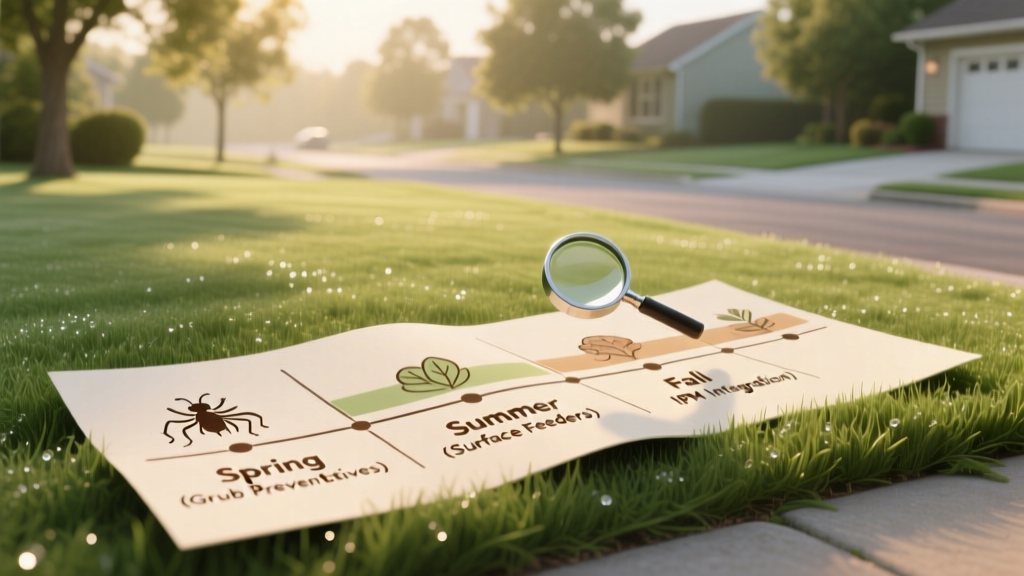
The Ultimate Seasonal Lawn Pest Control Schedule & Checklist
Mike RodriguezPublished
Why a Seasonal Pest Control Schedule is Crucial
Managing lawn pests is not a one-and-done task; it requires a strategic, calendar-based approach rooted in Integrated Pest Management (IPM) principles. Pests do not follow the human calendar; instead, their life cycles are dictated by soil temperatures, moisture levels, and plant phenology—the study of cyclic and seasonal natural phenomena. For instance, the emergence of Japanese beetle adults often coincides with the blooming of linden trees or the ripening of early grapes. By aligning your lawn care checklist with these biological clocks, you can target pests during their most vulnerable life stages, saving money, reducing chemical usage, and protecting the local ecosystem. A proactive schedule shifts your strategy from reactive damage control to proactive prevention, ensuring your turf remains dense, vigorous, and naturally resistant to severe infestations.
Early Spring (March - April): Soil Prep and Early Preventatives
As soil temperatures begin to rise above fifty degrees Fahrenheit at a depth of two inches, your lawn awakens from winter dormancy, and so do overwintering pests. Early spring is the ideal time to perform a thorough lawn inspection and execute cultural controls that disrupt pest habitats. Begin by dethatching your lawn if the thatch layer exceeds half an inch. Thatch provides an insulated, moist environment where pests like chinch bugs and sod webworms overwinter and lay their eggs. Removing this layer exposes them to natural predators and harsh environmental conditions. Additionally, early spring is the application window for certain long-residual preventative grub control products containing chlorantraniliprole. Unlike older chemicals that require precise timing right before egg hatch, chlorantraniliprole binds tightly to soil organic matter and remains active for months. Applying this product in April or early May ensures that the active ingredient is fully integrated into the root zone by the time Japanese beetle and European chafer eggs hatch in mid-summer. Always remember to water in granular applications with at least a quarter inch of irrigation to move the product past the thatch layer and into the soil profile where it is needed.
Late Spring to Early Summer (May - June): The Preventative Window
This period represents the most critical window for traditional preventative grub control. If you missed the early spring chlorantraniliprole window, June is the time to apply products containing imidacloprid or thiamethoxam. These neonicotinoids are systemic, meaning they are absorbed by the grass roots and translocated through the plant tissue. When young, newly hatched grubs feed on the treated roots in late July and August, they ingest the active ingredient and perish. Timing is everything here: apply these preventatives just as adult beetles begin their mating flights and lay eggs in your turf. However, because these chemicals can be toxic to foraging bees if left on the surface, it is absolutely vital to use granular formulations and water them in immediately with half an inch of irrigation. This washes the product off the grass blades and into the soil, protecting vital pollinators. Alongside chemical preventatives, maintain a mowing height of at least three inches. Taller grass shades the soil, keeping it cooler and less inviting for female beetles looking for warm, exposed soil to deposit their eggs.
Mid-to-Late Summer (July - August): Surface Feeders and Curative Options
While subterranean grubs are developing beneath the soil, surface feeders are actively destroying the grass blades above ground. Mid-summer is the peak season for chinch bugs and sod webworms, particularly in hot, dry conditions. Chinch bugs thrive in stressed, sun-baked turf and inject a toxin into the grass as they feed, causing irregular yellow and brown patches that mimic drought stress. To confirm a chinch bug infestation, perform the coffee can test: remove both ends of a metal can, push it into the soil at the edge of a damaged area, fill it with water, and wait ten minutes. If chinch bugs are present, they will float to the surface. For surface feeders, liquid applications of bifenthrin or deltamethrin are highly effective. Apply these treatments in the late evening when the grass is dry and bees are no longer foraging. If you skipped preventative grub control and notice sudden, localized brown patches that peel back like loose carpet, you have an active grub infestation. At this stage, preventative chemicals will not work. You must switch to a fast-acting curative treatment like trichlorfon, which degrades quickly but kills active grubs within twenty-four hours.
Fall (September - November): Nematodes and Lawn Recovery
Autumn is the season for lawn recovery, organic interventions, and preparing the turf for winter. If you prefer to avoid synthetic chemicals, fall is the optimal time to apply beneficial nematodes, specifically the Heterorhabditis bacteriophora strain, which actively hunts and parasitizes white grubs. Nematodes are living organisms that require specific conditions to survive and infect their hosts. Apply them only when soil temperatures are between sixty and eighty-five degrees Fahrenheit, and ensure the soil is moist before and after application. It is best to apply nematodes on an overcast day or in the early evening to protect them from lethal UV radiation. Following any curative treatments or organic applications, focus on lawn recovery by core aerating compacted soil and overseeding bare patches with a resistant turfgrass blend. A thick, dense lawn is your best natural defense against future pest invasions, as it leaves no physical space for weeds or pests to establish themselves.
Comprehensive Lawn Pest Control Schedule and Product Table
| Season | Target Pest | Active Ingredient | Application Notes | Est. Cost (5k sq ft) |
|---|---|---|---|---|
| Early Spring | Grubs (Preventative) | Chlorantraniliprole | Apply when soil reaches 50F. Water in lightly. | $60 - $80 |
| Early Summer | Grubs (Preventative) | Imidacloprid | Apply in June. Requires 0.5 inches of irrigation. | $40 - $55 |
| Mid-Summer | Chinch Bugs / Webworms | Bifenthrin | Apply in late evening to protect pollinators. | $30 - $45 |
| Late Summer | Grubs (Curative) | Trichlorfon | Fast-acting rescue treatment. Water in immediately. | $50 - $70 |
| Fall | Grubs (Organic Curative) | Heterorhabditis Nematodes | Apply to moist soil in overcast conditions. | $35 - $60 |
Scouting and Integrated Pest Management (IPM) Thresholds
Before applying any chemical or organic treatment, you must confirm the presence of pests and evaluate the severity of the infestation. Integrated Pest Management (IPM) relies on action thresholds rather than calendar-based spraying. The most effective way to scout for grubs is the tug test and the shovel test. Grab a handful of brown grass and pull; if it rolls up easily with no roots attached, grubs have likely severed the root system. Next, use a shovel to cut a one-foot by one-foot square of turf, peel it back, and count the number of grubs in the top three inches of soil. According to the Environmental Protection Agency (EPA), IPM focuses on long-term prevention and only using pesticides when monitoring indicates they are needed. For detailed biological thresholds, Penn State Extension recommends treating only when you find more than five to ten grubs per square foot in a healthy, well-watered lawn, as robust turf can easily outgrow minor root pruning. Furthermore, the University of Minnesota Extension highlights the importance of proper lawn watering and fertilization to help grass recover from minor pest damage without resorting to unnecessary chemical interventions. By adhering to this seasonal checklist and respecting IPM thresholds, you maintain a vibrant lawn while acting as a responsible steward of your local environment.