Gardening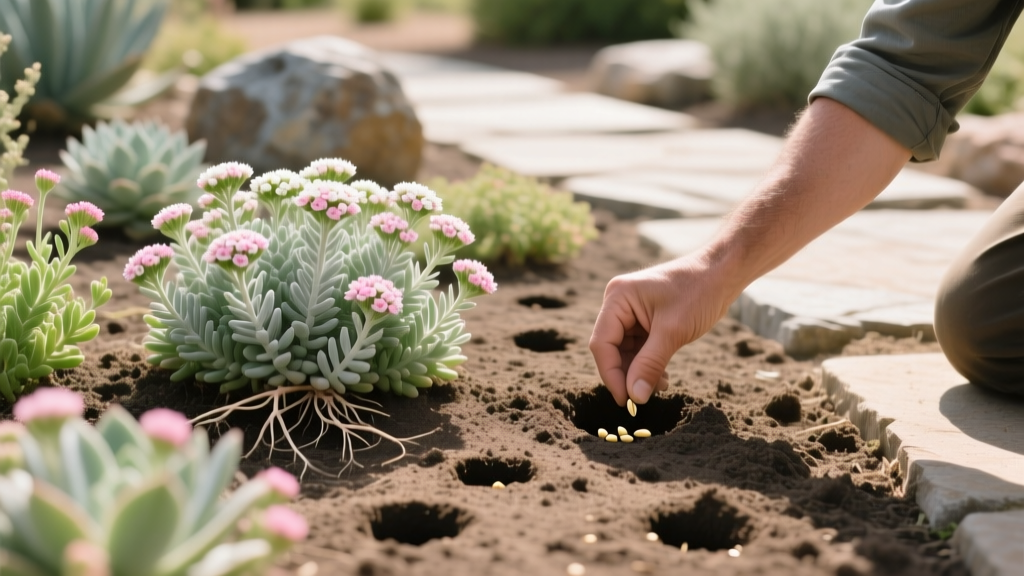
2026 Guide: Aerate & Seed Drought-Tolerant Sedum and Yarrow
Emily WatsonPublished
The 2026 Shift to Low-Till Xeriscape Conversion
As we navigate the 2026 gardening season, water conservation has moved from a regional concern to a nationwide priority. Homeowners are increasingly abandoning thirsty, high-maintenance turfgrass in favor of resilient, drought-tolerant xeriscape gardens. Among the most popular and ecologically beneficial plant combinations for these conversions are sedum and yarrow. However, simply scattering seeds over a former lawn space is a recipe for failure. Years of mowing, foot traffic, and turfgrass growth leave behind heavily compacted soil that repels water and stunts deep root development.
This is where the principles of aeration and seeding—traditionally reserved for lawn care—become the secret weapon for perennial garden establishment. By utilizing a low-till core aeration method, you can break up hardpan soil, improve water infiltration, and create the perfect micro-environments for yarrow seeds and sedum plugs to thrive, all without bringing dormant weed seeds to the surface via aggressive rototilling.
Why Sedum and Yarrow?
Sedum and yarrow are a powerhouse duo for drought-tolerant landscaping. Yarrow (Achillea millefolium and its cultivars) features deep taproots that mine moisture from deep within the soil profile, while its fern-like foliage and flat-topped flower clusters attract essential pollinators. According to the University of Minnesota Extension, yarrow is exceptionally hardy, thriving in poor soils where other perennials would quickly perish.
Sedum (stonecrop), on the other hand, utilizes a shallow but dense root system and succulent leaves to store water, acting as a living mulch that shades the soil and reduces evaporation. Together, they create a multi-tiered, drought-resistant garden that requires minimal supplemental watering once established. The Colorado State University Extension heavily recommends combining deep-rooted perennials with shallow succulents to maximize soil moisture utilization in xeriscape designs.
Step 1: Core Aeration for Compacted Lawn Soils
If you are converting a dead or struggling lawn into a sedum and yarrow garden, your first step is core aeration. Unlike spike aeration, which merely punches holes and can increase compaction along the sides, core aeration physically removes plugs of soil, allowing the ground to expand and breathe.
Choosing the Right Equipment
For a standard 500-square-foot conversion area, rent a walk-behind core aerator (such as a Billy Goat or Classen model) from your local home improvement center. Expect to pay around $85 to $110 for a half-day rental in 2026.
- Timing: Aerate in early spring when the soil is slightly moist but not waterlogged, or in early fall. Dry soil will shatter the tines; muddy soil will clog them.
- Depth and Spacing: Set the aerator to pull cores that are 2.5 to 3 inches deep. Make two passes over the area—one horizontally and one vertically—to ensure the holes are spaced roughly 2 to 3 inches apart.
- Leave the Plugs: Do not rake up the soil cores. Allow them to dry and break down naturally over the next two weeks, returning valuable microorganisms and organic matter to the surface.
Step 2: Topdressing and Seed Bed Preparation
Once the aeration holes are exposed, you need to fill them with a medium that promotes drainage. Sedum and yarrow despise wet feet, especially during winter dormancy.
Mix a topdressing blend consisting of 50% coarse horticultural sand and 50% screened compost. Using a push broom or a leveling rake, work this mixture deeply into the aeration holes. This step is critical: the compost provides the initial nutrient charge for seedling establishment, while the sand ensures the deep aeration channels remain open for rapid water infiltration and root penetration.
Step 3: Seeding Yarrow and Planting Sedum
While both plants can be grown from seed, a hybrid approach of seeding yarrow and plugging sedum yields the fastest and most reliable results for a 2026 garden installation.
Seeding Yarrow (Achillea)
Yarrow seeds are incredibly fine and require light to germinate. They must be surface-sown or barely pressed into the soil.
- Seeding Rate: Use approximately 1/4 ounce of pure yarrow seed per 1,000 square feet. For a 500 sq. ft. garden, mix 1/8 ounce of seed with a cup of dry sand to ensure even distribution.
- Application: Broadcast the seed-sand mixture evenly over the aerated and topdressed area. Use a lightweight lawn roller (filled halfway with water) to gently press the seeds into the topdressing mix without burying them.
Establishing Sedum (Plugs vs. Seed)
Sedum grown from seed is notoriously slow and vulnerable to being washed away during initial watering. Instead, purchase Sedum spurium or Sedum acre plugs. Plant these plugs 6 to 8 inches apart, tucking their root balls directly into or immediately adjacent to the compost-filled aeration holes to give them a head start on moisture access.
2026 Seeding & Establishment Data Table
| Plant Species | Establishment Method | Rate / Spacing | Sowing Depth | Germination / Rooting Time |
|---|---|---|---|---|
| Yarrow (Achillea millefolium) | Broadcast Seed | 1/4 oz per 1,000 sq ft | Surface (Needs Light) | 14 - 21 Days |
| Sedum spurium (Dragon's Blood) | Live Plugs | 1 Plug per 0.5 sq ft (6-8" apart) | Level with soil surface | 3 - 4 Weeks to establish |
| Sedum acre (Goldmoss) | Live Plugs / Stem Cuttings | 1 Plug per 0.5 sq ft | Level with soil surface | 2 - 3 Weeks to establish |
Step 4: The Xeriscape Transition Watering Schedule
The biggest mistake gardeners make when establishing drought-tolerant plants is treating them like drought-tolerant plants on day one. During the first 8 weeks of 2026's growing season, your goal is to encourage deep root growth through strategic watering.
- Weeks 1-2 (Germination Phase): Mist the seeded area lightly 2 to 3 times a day to keep the top 1/2 inch of soil consistently moist. The aeration holes will act as water reservoirs, drawing moisture deeper into the soil profile.
- Weeks 3-5 (Seedling & Plug Rooting): Reduce watering to once every other day, but increase the duration. Apply enough water to penetrate 3 inches deep, encouraging the yarrow taproots to chase the moisture down into the aeration channels.
- Weeks 6-8 (Hardening Off): Water deeply once or twice a week. By week 8, the yarrow and sedum should be firmly anchored.
- Week 9 and Beyond (Drought Mode): Cease supplemental watering entirely, relying only on natural rainfall. The plants are now established and will thrive on neglect.
2026 Cost Breakdown for a 500 Sq. Ft. Conversion
Converting a 500-square-foot section of yard using the aeration and seeding method is highly cost-effective compared to hiring landscapers to install mature nursery-grown perennials. Below is an estimated budget for a DIY project in 2026.
| Item / Service | Quantity | Estimated 2026 Cost |
|---|---|---|
| Walk-Behind Core Aerator Rental | Half-Day | $95.00 |
| Horticultural Sand | 10 bags (50 lbs each) | $45.00 |
| Screened Compost | 10 bags (40 lbs each) | $60.00 |
| Yarrow Seed (Premium Mix) | 1/4 oz Packet | $18.00 |
| Sedum Plugs (Trays of 50) | 2 Trays (100 plugs) | $110.00 |
| Total Estimated Project Cost | $328.00 |
Ongoing Maintenance and Weed Control
Because we avoided rototilling, the weed seed bank in your soil remains largely undisturbed deep underground. However, wind-blown weeds may still attempt to colonize the open spaces between your sedum and yarrow during the first year. Hand-pull any invasive weeds while their roots are still shallow.
Avoid the temptation to fertilize. Yarrow is notorious for flopping over and losing its rigid, upright structure if grown in overly rich soils. The compost used during the topdressing phase provides more than enough nutrition for the first three years. By embracing the aeration and seeding method, you are not just planting a garden; you are actively rehabilitating damaged soil, fostering local pollinator populations, and future-proofing your landscape against the increasingly dry summers of 2026 and beyond.
