Gardening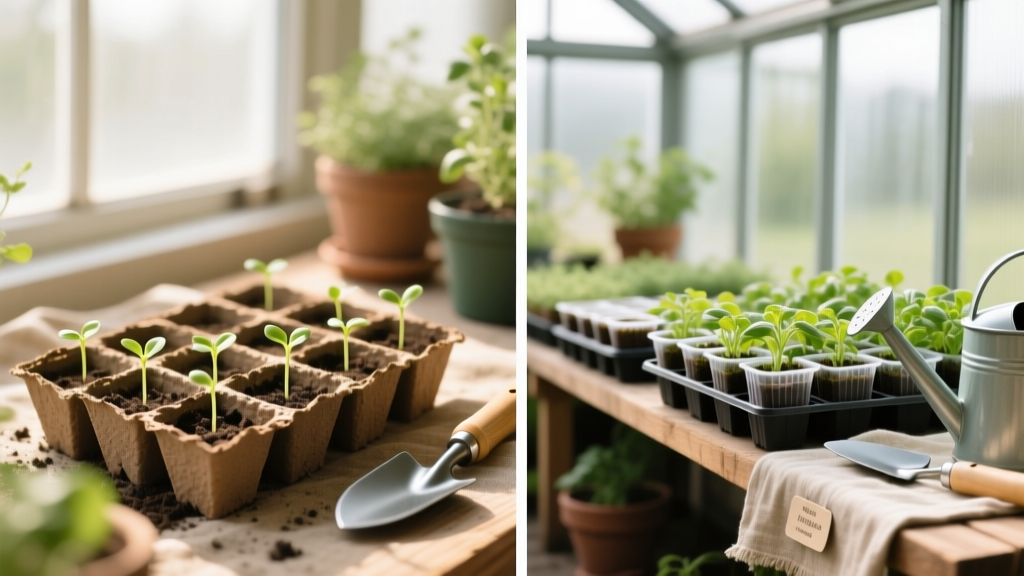
Seed Starting vs Transplants: A Gardener's Cost Guide
Mike RodriguezPublished
The Great Garden Debate: Seeds vs. Nursery Starts
As grocery prices continue to fluctuate, more homeowners are turning to backyard vegetable gardening to offset their food bills and enjoy fresher, healthier produce. However, gardening is not entirely free. Every seasoned gardener knows that the path to a bountiful harvest is paved with soil amendments, fertilizers, tools, and, most notably, the plants themselves. When it comes to populating your raised beds and containers, you are faced with a classic budgetary dilemma: should you start your plants from seed indoors, or should you purchase live transplants from a local nursery?
The answer is rarely black and white. While a packet of seeds undeniably costs less than a flat of nursery-grown seedlings, the true financial picture requires a deeper analysis of upfront investments, recurring expenses, hidden labor costs, and failure rates. In this comprehensive cost and budgeting guide, we will break down the exact economics of seed starting versus buying transplants, helping you allocate your gardening budget for maximum yield and minimum waste.
The 'First-Year Tax' of Indoor Seed Starting
If you are a first-time gardener attempting to start seeds indoors, you will immediately encounter what budget-minded growers call the 'First-Year Tax.' Seeds require specific environmental conditions to germinate and thrive, meaning you cannot simply plant them in a dark corner and expect success. To do it properly, you need specialized equipment.
Essential Seed Starting Equipment Costs
- LED Grow Lights: While standard fluorescent shop lights work, modern full-spectrum LED grow lights are more energy-efficient and produce less heat. A decent 2-foot by 4-foot LED panel or a multi-tier shelving unit with integrated lights will cost between $60 and $150.
- Seedling Heat Mats: Warm-season crops like tomatoes, peppers, and eggplants require soil temperatures between 75°F and 85°F to germinate reliably. A standard 10-inch by 20-inch waterproof heat mat costs around $20 to $30.
- Seed Trays and Humidity Domes: You will need heavy-duty, reusable plastic cell trays (1020 size) and clear humidity domes to retain moisture. A pack of five sets costs approximately $15 to $25.
- Timer and Power Strip: Seedlings need 14 to 16 hours of light per day. A simple outlet timer and a surge-protected power strip will add about $20 to your cart.
Total First-Year Setup Cost: Expect to spend between $115 and $225 before you even buy a single seed or bag of soil. This is a capital expenditure (CapEx) that will depreciate over several seasons, provided you clean and store your gear properly.
The Recurring Costs of Seed Starting
Once your infrastructure is in place, your subsequent years will only require operating expenses (OpEx). These recurring costs are where seed starting truly shines on a spreadsheet.
- Seeds: A standard packet of heirloom or hybrid vegetable seeds contains 25 to 100 seeds and costs between $3.00 and $5.00.
- Sterile Seed Starting Mix: Never use garden soil for indoor seed starting; it compacts and harbors pathogens. A large bag of sterile, peat-based or coco-coir seed starting mix costs about $12.00 to $18.00 and will fill roughly three to four standard 1020 trays.
- Electricity: Running a 40-watt LED grow light and a 15-watt heat mat for 16 hours a day over a 6-week seed starting period will consume roughly 50 kilowatt-hours (kWh). At the national average electricity rate of $0.16 per kWh, this adds about $8.00 to your utility bill.
The Financial Reality of Nursery Transplants
Buying transplants from a garden center is the ultimate convenience play. You bypass the germination phase, the messy indoor lighting setups, and the risk of early seedling failure. However, you are paying a premium for the nursery's labor, greenhouse overhead, and retail markup.
Standard 4-packs or 6-packs of hybrid vegetables (like Early Girl tomatoes or bell peppers) typically retail for $4.00 to $6.00 per pack. If you are growing a large garden and need 30 tomato plants, you are looking at $20.00 to $30.00 just for standard varieties. The costs skyrocket if you desire specialty, organic, or rare heirloom varieties. A single 4-inch pot of a grafted heirloom tomato or a specialized hot pepper can easily cost $7.00 to $12.00 at a boutique nursery.
Furthermore, nurseries are subject to the same supply chain issues as the rest of the economy. In years where seed shortages or late spring frosts occur, nursery transplants become scarce, and prices can surge by 20% to 30% overnight.
Head-to-Head Cost Comparison: 30 Tomato Plants
To understand the true difference in cost, let us compare the expenses of producing 30 tomato plants using both methods. For the seed starting calculation, we are assuming the 'First-Year Tax' equipment has already been purchased and is being reused.
| Expense Category | Seed Starting (Year 2+) | Nursery Transplants |
|---|---|---|
| Plant Material | $4.50 (1 Heirloom Seed Packet) | $30.00 (5 six-packs @ $6.00 each) |
| Growing Medium | $6.00 (Portion of $15 bag of mix) | $0.00 (Included in pot) |
| Utilities (Electricity) | $8.00 (Lights and heat mat) | $0.00 |
| Water & Fertilizer | $2.00 (Liquid seedling feed) | $0.00 (Pre-fertilized by nursery) |
| Total Cost | $20.50 | $30.00 |
| Cost Per Plant | $0.68 | $1.00 |
While the seed starting method saves roughly $10.00 on 30 plants, the real financial victory is in variety selection. For $4.50, you can grow 30 rare 'Cherokee Purple' or 'Brad's Atomic Grape' tomatoes, which would cost upwards of $150.00 to purchase as premium 4-inch nursery transplants.
Hidden Costs: Time, Labor, and Failure Rates
A strict financial ledger does not account for the most valuable resource in gardening: your time. Seed starting is labor-intensive. It requires daily monitoring of moisture levels, adjusting light heights to prevent 'leggy' seedlings, and a meticulous 7-to-10-day 'hardening off' process to acclimate indoor plants to outdoor UV rays and wind.
Moreover, biological failure rates must be factored into your budget. The most common and devastating issue for indoor seed starters is damping-off, a fungal disease that causes seedlings to collapse at the soil line and die.
According to the Iowa State University Extension and Outreach, 'Damping-off is a common disease problem... caused by several soil-borne fungi such as Pythium, Rhizoctonia, and Fusarium.' The extension notes that prevention relies heavily on sanitation, proper air circulation, and avoiding overwatering. When a tray of seedlings is lost to damping-off, the budget-minded gardener must purchase replacement transplants at retail prices, entirely negating the savings of starting from seed.
If you have a demanding job or travel frequently, the risk of seedling death is high. In these cases, the 'convenience fee' of nursery transplants is actually an insurance policy against crop failure.
Strategic Budgeting: What to Sow and What to Buy
The smartest gardeners do not choose one method exclusively; they use a hybrid approach to optimize their budget. Here is a strategic guide on where to allocate your funds:
Always Start from Seed (High ROI)
- Leafy Greens & Lettuces: A $4 packet of seeds yields hundreds of plants. Nursery starts bolt quickly and are poor value.
- Root Vegetables: Carrots, radishes, and beets do not transplant well due to taproot disturbance. Direct sow these outdoors.
- Cucurbits: Zucchini, cucumbers, and squash grow aggressively and are incredibly cheap to direct sow once the soil warms.
- Herbs: Basil, cilantro, and dill are vastly more economical from seed.
Buy as Transplants (Time & Risk Savers)
- Rosemary & Thyme: These woody herbs are notoriously slow and difficult to germinate from seed. Buying established nursery plants saves months of frustration.
- Onion & Leek Starts: While you can grow onions from seed, it requires starting them indoors 12 weeks before the last frost. Buying dormant onion 'sets' or bare-root bundles in early spring is highly cost-effective and saves immense time.
- Asparagus Crowns: Always buy 1-year or 2-year-old bare-root crowns. Growing asparagus from seed adds years to your first harvest.
Advanced Budget Hacks for the Frugal Gardener
If you want to slash your garden budget to the absolute bone, implement these professional cost-saving strategies:
- Winter Sowing: Bypass the 'First-Year Tax' of indoor lights entirely by winter sowing. This method involves planting seeds in upcycled, clear plastic milk jugs and leaving them outside in the snow. The jugs act as mini-greenhouses, and the seeds naturally stratify and germinate when spring arrives. Cost: $0.00 (plus seeds).
- Local Seed Libraries: Many public libraries now host seed exchanges where you can 'check out' packets of locally adapted, open-pollinated seeds for free.
- Upcycled Cell Trays: Instead of buying plastic cell trays, use toilet paper rolls, egg cartons (with drainage holes poked in the bottom), or rotisserie chicken containers as humidity domes.
- Save Your Own Seed: Allow a few of your healthiest heirloom tomatoes and peppers to over-ripen on the vine, harvest the seeds, ferment them, and dry them. This reduces your recurring seed costs to absolute zero.
Conclusion: Calculating Your Garden's True ROI
Ultimately, the choice between seed starting and buying transplants depends on your available capital, your schedule, and your gardening goals. If you are growing a massive market-style garden with dozens of rare heirloom varieties, investing in the infrastructure for seed starting will yield a massive return on investment over just two or three seasons. However, if you are managing a small urban patio garden with only a few containers, the 'First-Year Tax' of seed starting equipment will never be recouped, and buying a few high-quality nursery transplants is the most financially sound decision.
By understanding the hidden costs of electricity, labor, and biological failure, you can build a customized garden budget that maximizes your harvest without breaking the bank. Track your expenses in your first year, evaluate your hourly 'garden wage,' and adjust your strategy next spring to cultivate both a thriving garden and a healthy bank account.
