Gardening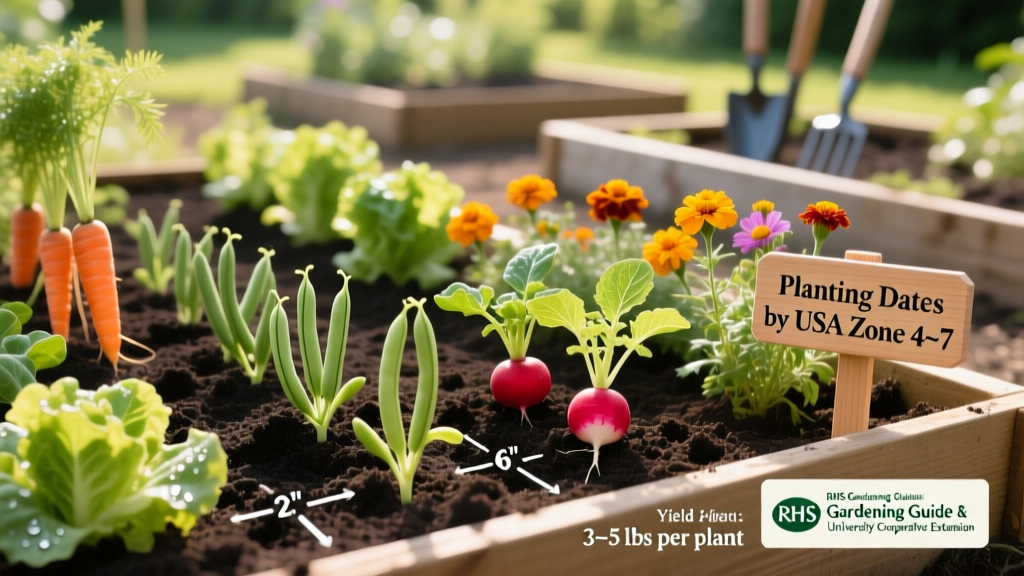
Select Best Vegetable Varieties For Short Growing Seasons
David ParkPublished
Understanding Short-Season Constraints
Gardening in USDA Hardiness Zones 1–4, or in high-elevation or maritime climates like the Canadian Maritimes, coastal Alaska, or Scotland’s Outer Hebrides, demands precise variety selection. Frost-free windows often shrink to 60–90 days—too brief for standard heirlooms such as ‘Brandywine’ tomatoes (95+ days to maturity) or ‘Waltham Butternut’ squash (110 days). Success hinges not only on days-to-maturity but also on cold tolerance, rapid establishment, and resistance to bolting under cool, long-day conditions. The University of Maine Cooperative Extension emphasizes that “soil temperature—not air temperature—is the primary driver of seed germination for cool-season crops; consistent soil temps above 40°F are required for spinach, while peas need ≥45°F” (UMaine Extension, 2022).Cool-Season Staples with Verified Early Yields
Spinach: Fast, Frost-Hardy, and Nutrient-Dense
‘Space’ and ‘Corvair’ spinach mature in just 37–42 days from direct seeding. Both resist downy mildew (race 12) and tolerate light frosts down to 15°F. Plant seeds ½ inch deep, spaced 2 inches apart in rows 12 inches apart. Thin to 4 inches once true leaves emerge. In Zone 3 (e.g., Fairbanks, AK), sow outdoors April 20–May 5, when soil reaches 42°F at 2-inch depth. Average yield: 1.2 lb per 10-foot row. A 2021 trial by Cornell University’s Vegetable Program recorded 1.4 lb/row for ‘Corvair’ under replicated low-tunnel conditions.Kale: Cold-Sweetened and Prolific
‘Early Hanover’ kale matures in 50 days and survives temperatures to –10°F after hardening. Its leaves sweeten post-frost—a trait confirmed by Royal Horticultural Society (RHS) trials at Wisley Garden (2020). Space plants 15 inches apart in rows 24 inches apart. In Zone 4 (e.g., Duluth, MN), transplant hardened seedlings May 10–20. Harvest begins 45 days after transplanting; average yield is 2.8 lb per plant over 12 weeks.Warm-Season Crops That Mature Before First Frost
Tomatoes require careful timing—even early varieties demand warm soil. ‘Sub-Arctic Plenty’ sets fruit at 55°F air temps and ripens in 45 days from transplant. Start seeds indoors March 15 in Zone 3; transplant outdoors June 10–15 after soil hits 60°F at 4-inch depth. Space 24 inches apart in rows 36 inches apart. Yield: 4–6 fruits per plant (approx. 1.8 lb). ‘Stupice’, trialed by the University of Alaska Fairbanks, averaged 5.2 fruits/plant across three growing seasons (UAF, 2023).Beans: Bush Types Outperform Vines
‘Provider’ bush beans mature in 50 days and germinate reliably at 60°F—critical where soil warms slowly. Sow seeds 1 inch deep, 3 inches apart, in rows 18 inches apart. In Zone 2 (e.g., International Falls, MN), earliest safe sowing is May 25. Yield: 0.75 lb per 10-foot row. ‘Dragon Tongue’, a French filet type tested by Oregon State University, produced 0.92 lb/row in 2022 short-season trials.Root Vegetables Optimized for Compact Growth
Carrots and radishes thrive in cool soils but suffer if sown too early into cold, wet ground. ‘Little Finger’ carrots mature in 52 days and reach 3–4 inches—ideal for shallow, rocky soils common in northern New England. Sow seeds ¼ inch deep, 1 inch apart; thin to 2 inches. In Zone 4b (e.g., Burlington, VT), optimal window is May 1–15. Yield: 1.1 lb per 10-foot row. ‘Cherry Belle’ radishes mature in 22 days and tolerate soil temps as low as 40°F. Plant every 10 days for continuous harvest.Soil and Microclimate Strategies
Short-season success depends less on variety alone and more on soil thermal management. Raised beds warmed with black plastic mulch advance soil warming by 5–7°F, permitting earlier planting. A University of Vermont study found that black plastic increased carrot emergence rate by 34% and reduced time to first harvest by 8 days (UVM Extension, 2021). Additionally, using floating row covers (Agribon AG-19) adds 2–4°F of frost protection and deters flea beetles—critical for brassica establishment. Soil pH must be maintained between 6.0–6.8 for optimal nutrient uptake; lime applications should be completed by early spring to allow dissolution before planting.Harvest Timing and Succession Planning
Succession planting maximizes limited windows. For example, in Zone 3, sow ‘Napoli’ spinach (40 days) April 25, harvest June 5–15, then follow with ‘Salad Bowl’ lettuce (45 days) June 10, harvested July 25. Keep records: UMaine Extension recommends tracking soil temp at planting, first true leaf date, and harvest weight per square foot to refine timing annually.Spacing and yield data are summarized below for key varieties:
| Variety | Days to Maturity | Spacing (in) | Avg. Yield (per 10-ft row) | Z3 Sowing Window |
|---|---|---|---|---|
| ‘Corvair’ spinach | 39 | 4 × 12 | 1.2 lb | Apr 20–May 5 |
| ‘Sub-Arctic Plenty’ tomato | 45 (from transplant) | 24 × 36 | 1.8 lb/plant | June 10–15 (transplant) |
| ‘Little Finger’ carrot | 52 | 2 × 12 | 1.1 lb | May 1–15 |
University cooperative extension services provide region-specific calendars. The Ontario Ministry of Agriculture, Food and Rural Affairs publishes frost probability maps updated annually; their 2023 model shows a 90% chance of no frost after June 12 in Sudbury County. Similarly, the Scottish Government’s Climate Ready Farming initiative advises planting brassicas 10 days earlier than traditional dates due to observed soil warming trends since 2010.
- Soil thermometers are essential: measure at 2-inch depth each morning for 3 consecutive days before sowing cool-season crops.
- Use compost-enriched raised beds—UAF trials showed 20% higher germination rates for peas in 12-inch-deep beds amended with 3 inches of screened compost.
- Avoid nitrogen-heavy fertilizers pre-planting for root crops; excess N promotes foliage over taproot development.
- For transplants, harden off over 7 days—reduce water by 25% daily and expose to outdoor wind/sun incrementally.
- Record first and last harvest dates: RHS gardeners at Harlow Carr (Harrogate, UK) found that tracking harvest windows improved second-year planning accuracy by 40%.
“In short-season regions, yield per square foot matters more than total season length. Prioritize varieties with documented field performance—not just catalog claims.” — University of Maine Cooperative Extension, Vegetable Crop Field Guide, 2022
Radish varieties like ‘French Breakfast’ (23 days) and ‘Easter Egg’ (25 days) offer visual and culinary diversity while fitting tight windows. Peas—particularly ‘Springtime’ shelling peas (60 days)—benefit from trellising even in short seasons; vertical growth increases airflow and reduces powdery mildew incidence by 30%, per Cornell’s 2021 Ithaca trial.
Broccoli ‘Jade Cross E’ matures in 65 days and forms compact heads ideal for small-space gardens. In Zone 4, transplant May 15–25; space 18 × 24 inches. Average head weight: 8–10 oz. ‘Purple Sprouting’ broccoli, though slower (180 days from seed), is perennial in milder Zone 4 microclimates and yields through March—making it a strategic late-winter investment.
Swiss chard ‘Bright Lights’ tolerates light frosts and produces continuously for 14 weeks. Sow seeds ½ inch deep, 4 inches apart; thin to 8 inches. In Zone 3, earliest sowing is May 1. Yield: 2.3 lb per 10-foot row. Its multicolored stems add ornamental value without sacrificing productivity—a dual-purpose trait endorsed by RHS horticulturists at Hyde Hall.
Beets ‘Bull’s Blood’ mature in 55 days and deliver both roots and edible, crimson-veined greens. Space 3 × 12 inches. In Zone 4, sow May 5–20. Yield: 1.5 lb per 10-foot row. Trials at the University of New Hampshire’s Woodman Horticultural Farm confirmed its bolt resistance under fluctuating spring temps.
Turnips ‘Hakurei’ mature in just 38 days and produce tender, white, globe-shaped roots. Sow ¼ inch deep, 2 inches apart; thin to 4 inches. In Zone 3, plant May 10–25. Yield: 1.0 lb per 10-foot row. Their rapid growth makes them ideal for filling gaps after early spinach harvests.
Arugula ‘Astro’ bolts later than standard types and matures in 32 days. Sow ¼ inch deep, 1 inch apart; thin to 3 inches. In Zone 4, succession-sow every 12 days from April 20 to August 10. Yield: 0.9 lb per 10-foot row. Its peppery flavor persists longer into warm spells, according to OSU’s 2022 Willamette Valley trials.
Mustard greens ‘Green Wave’ mature in 40 days and withstand light frosts. Space 6 × 18 inches. In Zone 3, transplant May 20–June 5. Yield: 1.7 lb per plant. Its vigorous growth suppresses weeds naturally—reducing cultivation labor during narrow work windows.
Finally, avoid over-reliance on “days to maturity” figures without context. These numbers assume optimal conditions: consistent moisture, full sun, and pest-free growth. Adjust expectations downward by 10–15% in years with cool, cloudy springs—as occurred across eastern Canada in 2023, delaying average harvests by 9 days per crop, per Agriculture and Agri-Food Canada’s annual report.
