Gardening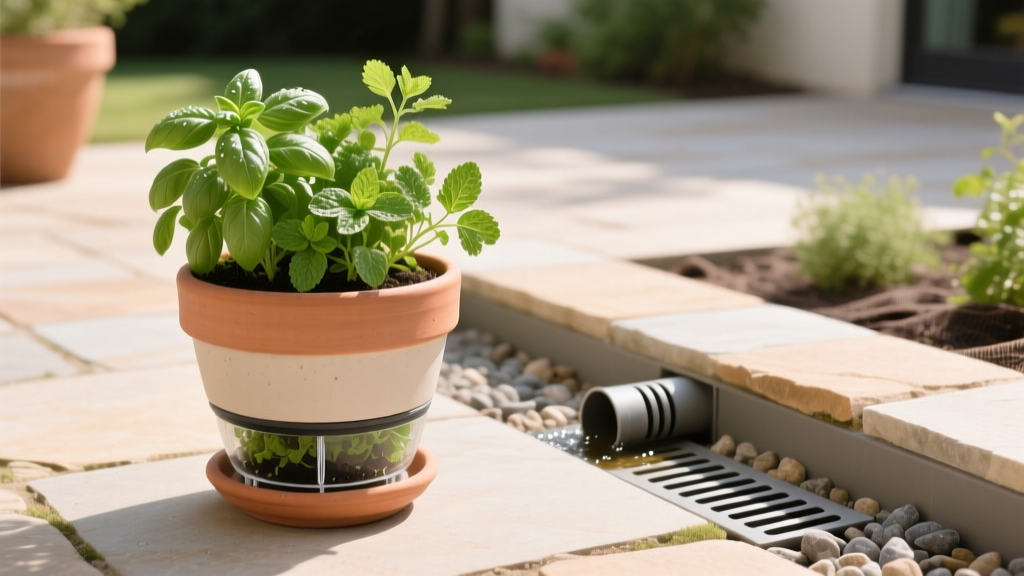
2026 Self-Watering Herb Planter & Patio French Drain Guide
David ParkPublished
The 2026 Self-Watering Herb Planter Dilemma
As we navigate the 2026 gardening season, container herb gardening has reached new heights of convenience and efficiency. Modern self-watering planters, such as the latest Lechuza Cubico models and Gardener's Supply Company's advanced resin troughs, have become the gold standard for busy home gardeners. These systems utilize a built-in water reservoir and a capillary wicking chamber to deliver moisture directly to the root zone, reducing daily watering chores and promoting robust herb growth.
However, this convenience introduces a significant, often overlooked challenge: overflow management. When the internal reservoir is full and a sudden spring downpour occurs, the excess water must go somewhere. If the planter's overflow plug is left in, or if the drainage holes simply dump water onto your patio, deck, or foundation, you risk severe water damage, slippery hardscapes, and degraded structural integrity. According to the University of Minnesota Extension, proper drainage and moisture management are the single most critical factors in successful container gardening, yet exterior runoff is rarely addressed by the planters themselves.
The ultimate solution for 2026 is integrating your self-watering herb garden setup with a micro-French drain system. This guide will walk you through setting up your container herb garden while simultaneously installing a specialized French drain to intercept, manage, and disperse planter runoff safely away from your home.
Why a French Drain is Essential for Container Runoff
Many gardeners assume that a simple splash block or a sloped patio is sufficient to handle container overflow. But as extreme weather events and heavy localized downpours become more frequent in 2026, passive surface drainage often fails. Water pools around the base of your planters, leading to algae growth on pavers, wood rot on decks, and mosquito breeding grounds.
A French drain—traditionally used to dry out soggy lawns—can be adapted into a 'micro-French drain' or patio-edge trench specifically designed to catch the concentrated runoff from large self-watering herb planters. Penn State Extension emphasizes that intercepting water at the source and routing it sub-surface is the most effective way to protect home foundations and hardscapes from long-term water damage.
By routing the overflow tubing from your self-watering planters directly into the gravel bed of a French drain, you create a closed-loop, sub-surface dispersal system. Your patio stays bone-dry, and your herbs never sit in waterlogged soil.
Materials Needed for the 2026 Installation
Before you begin planting your basil and rosemary, gather the following materials for the drainage infrastructure. Prices reflect average 2026 home improvement center costs:
- Perforated Pipe: NDS 3-inch or 4-inch corrugated flexible perforated drainage pipe (approx. $1.50 per linear foot).
- Drainage Gravel: 3/4-inch washed drainage stone (not pea gravel, which compacts). Approx. $55 per cubic yard.
- Landscape Fabric: Non-woven geotextile fabric (crucial for preventing silt from clogging the pipe over time). Approx. $0.75 per square foot.
- Overflow Tubing: 1/2-inch clear vinyl tubing to connect planter spouts to the drain trench.
- Trenching Tools: A flat spade, trenching shovel, and a line level to ensure proper slope.
Step-by-Step: Installing the Micro-French Drain
Step 1: Trenching and Slope Calculation
Map out a trench line directly behind or beneath the designated area where your herb planters will sit. The trench should be 6 inches wide and 8 to 10 inches deep. The most critical element of any French drain is the slope. Use a line level to ensure the trench slopes away from your home or patio edge at a minimum grade of 1 inch per 8 feet. This gravity-fed slope ensures that overflow water moves swiftly through the pipe to a designated discharge area, such as a dry well or a lower-elevation garden bed.
Step 2: Lining the Trench
Line the entire trench with your non-woven geotextile fabric. Leave enough excess fabric on both sides to fold over the top of the gravel later. This fabric acts as a filter, allowing water to enter the gravel bed while keeping soil and debris out, which is essential for maintaining the system's longevity through the 2026 seasons and beyond.
Step 3: Pipe Placement and Gravel Backfill
Place the perforated pipe in the center of the trench with the holes facing downward. This counterintuitive placement actually improves water entry and prevents sediment from settling directly inside the pipe. Cover the pipe with 2 to 3 inches of washed drainage gravel. Fold the excess landscape fabric over the gravel to create a 'burrito' effect, completely encapsulating the drain. Top it off with an additional inch of gravel, or cover it with patio pavers or decorative river rock to match your landscape aesthetic.
Setting Up the Self-Watering Herb Planters
With the drainage infrastructure in place, it is time to set up the planters. Position your self-watering containers so that their overflow valves align with the French drain trench below.
Connecting the Overflow System
Most premium 2026 self-watering planters feature a threaded overflow spout or a removable drain plug near the base of the reservoir. Attach your 1/2-inch clear vinyl tubing to this spout. Run the other end of the tubing down into the exposed gravel bed of your French drain before sealing the trench completely, or route it through a small gap in your patio pavers. When heavy rains fill the planter's reservoir, the excess water will silently flow through the tube and into the French drain, bypassing your patio surface entirely.
Choosing the Right Soil and Herbs
Self-watering planters require a specific soil structure. Do not use heavy garden soil or topsoil, which will compact and block the wicking action. Instead, use a high-quality, lightweight potting mix amended with 20% perlite to ensure adequate aeration.
When selecting herbs, consider their moisture preferences:
- Moisture-Loving Herbs (Basil, Parsley, Mint, Cilantro): These thrive in self-watering systems. You can allow the potting mix to make direct contact with the wicking chamber.
- Mediterranean Herbs (Rosemary, Thyme, Oregano, Sage): These herbs are highly susceptible to root rot if the soil remains constantly wet. When planting these in a self-watering planter, create a 'dry zone' by placing a 2-inch layer of dry perlite or coarse sand between the wicking chamber and the root ball. The French drain exterior setup ensures the ambient environment around the planter remains dry, further protecting these sensitive herbs.
Pro Tip: In 2026, many smart self-watering planters include water-level indicators. Always monitor the indicator after a heavy storm. If the reservoir is maxed out, verify that your vinyl overflow tubing is successfully depositing water into the French drain gravel bed.
Comparison Chart: Runoff Management Strategies
How does the micro-French drain compare to other common methods for managing container garden runoff? Review the table below to understand why the French drain is the superior choice for modern setups.
| Runoff Management Method | Effectiveness for Self-Watering Planters | Estimated 2026 Cost | Aesthetic Impact |
|---|---|---|---|
| Micro-French Drain (Gravel Trench) | Excellent (Handles heavy rain & direct overflow tubing) | $4 - $7 per linear foot | Hidden / Seamless integration |
| Catch Basin with Grate | Good (Prone to debris and soil clogging) | $45 - $80 per basin | Visible plastic/metal grate |
| Splash Block / Diverter | Poor (Fails during extreme downpours, causes pooling) | $15 - $25 each | Bulky / Unsightly on patios |
| Manual Reservoir Emptying | Moderate (Requires constant human intervention) | $0 (Time cost is high) | N/A |
Maintenance Tips for 2026 and Beyond
To ensure your integrated herb garden and French drain system functions flawlessly for years, implement a simple bi-annual maintenance routine. In early spring, flush the French drain pipe with a garden hose on high pressure to clear any winter sediment. Inspect the clear vinyl overflow tubing for algae buildup or kinks; a quick rinse with a mild bleach solution will keep the tubing clear and flexible.
For the planters themselves, empty the reservoir completely at the end of the autumn season before the first freeze. This prevents the internal plastic chambers from cracking due to ice expansion. By combining the water-saving benefits of 2026's best self-watering herb planters with the structural protection of a properly installed French drain, you create a resilient, beautiful, and worry-free outdoor garden space.
