Pest Control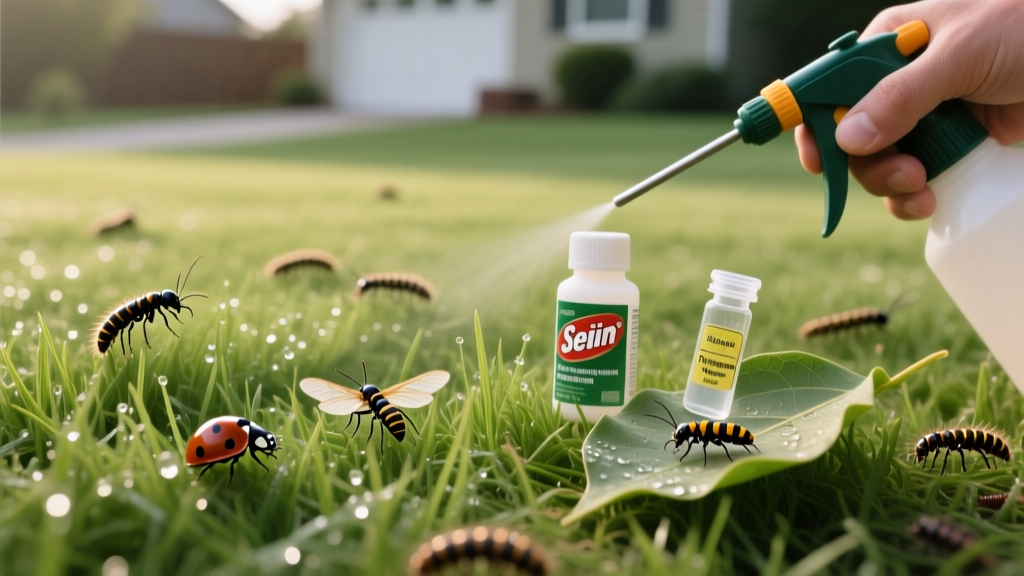
Armyworm Sevin Treatment 2026: Bio-Control Impact & Rescue Guide
Sarah ChenPublished
The 2026 Armyworm Outbreak and the Bio-Control Dilemma
In 2026, shifting weather patterns and unseasonably warm late-summer nights have accelerated the northern migration of the fall armyworm (Spodoptera frugiperda). For lawn care professionals and homeowners dedicated to Integrated Pest Management (IPM), this presents a significant challenge. The cornerstone of any sustainable lawn care program is bio-control—relying on beneficial insects like parasitic wasps, ground beetles, and predatory nematodes to naturally suppress pest populations. However, when an armyworm infestation reaches outbreak levels, natural predators are quickly overwhelmed, and your turf can be decimated in a matter of days.
This is where the bio-control dilemma arises. When biological agents fail to halt a severe armyworm march, a chemical rescue treatment becomes necessary to save the lawn. Sevin, which contains the active ingredient carbaryl, remains one of the most accessible and fast-acting insecticides on the market in 2026. But because it is a broad-spectrum neurotoxin, applying Sevin requires a strategic, highly calculated approach to minimize the collateral damage inflicted upon your lawn's beneficial insect network.
Sevin (Carbaryl) vs. Beneficial Insects: Understanding the Trade-Off
Carbaryl works by disrupting the nervous system of insects, leading to rapid paralysis and death. While it is highly effective at knocking down large, late-instar armyworms that have developed resistance to milder biological treatments, it does not discriminate between pests and predators. According to the Environmental Protection Agency (EPA), carbaryl is highly toxic to bees, aquatic invertebrates, and many beneficial predatory insects.
When you broadcast Sevin across your lawn, you are effectively hitting the reset button on your local ecosystem. Ladybugs, lacewings, and parasitic wasps (such as Trichogramma species) are highly susceptible to carbaryl. Wiping out these beneficials can lead to secondary pest outbreaks later in the 2026 season, as aphids, spider mites, and whiteflies no longer have natural predators to keep their populations in check. Therefore, Sevin must never be used as a preventative measure; it is strictly a rescue treatment when bio-controls have been exhausted.
Scouting and the Rescue Treatment Threshold
Before reaching for Sevin, you must confirm that the armyworm population has crossed the economic and aesthetic injury threshold. In 2026, the accepted threshold for turfgrass is three to five armyworm larvae per square foot. To accurately scout your lawn, perform a soap flush test:
- Mix 1 to 2 tablespoons of liquid dish soap into a gallon of water.
- Pour the solution over a 1-square-foot area of the lawn's edge (where damage meets healthy grass).
- Wait 3 to 5 minutes. The soap irritates the larvae, forcing them to the surface.
- Count the larvae. If you see more than four, intervention is required.
If the larvae are small (early instars), biological controls like Bacillus thuringiensis var. kurstaki (Bt) are highly effective and safe for beneficials. However, if the soap flush reveals large, mature larvae (late instars with distinct inverted 'Y' markings on their heads), Bt will likely fail. This is the exact scenario that justifies a targeted Sevin rescue treatment.
Strategic Sevin Application: Minimizing Collateral Damage
If you must use Sevin to save your turf, your application technique must be meticulously planned to protect surviving pollinators and beneficial insects. Follow these 2026 IPM best practices for carbaryl application:
1. Mow and Remove Blooming Weeds
Beneficial insects and pollinators are attracted to flowers. Before applying Sevin, mow your lawn and specifically target blooming weeds like clover, dandelions, and creeping charlie. Removing these nectar sources ensures that bees and predatory wasps are not actively foraging in the treatment zone during or immediately after application.
2. Time Your Application for Dusk
Carbaryl is most dangerous to bees when it is wet. Once it dries, the acute contact toxicity drops significantly, though residual toxicity remains. By applying Sevin liquid concentrate at dusk or in the early evening, you allow the product to dry overnight when pollinators and most diurnal beneficial insects are inactive. Never apply Sevin during the heat of the day or when winds exceed 5 mph to prevent drift onto neighboring pollinator gardens.
3. Utilize Spot Treatments Over Broadcast Sprays
Armyworms often invade in localized waves, marching from adjacent fields or garden beds. Instead of treating the entire property, map the damage and apply Sevin only to the infested zones and a 5-foot buffer perimeter. This leaves safe havens for ground beetles and beneficial nematodes to survive and eventually recolonize the treated areas.
Post-Sevin Recovery: Rebuilding Your Bio-Control Network
Once the armyworm threat has been neutralized, your immediate focus must shift to ecological recovery. The residual effects of carbaryl in the soil and thatch layer can persist for several weeks, meaning you cannot immediately release sensitive beneficial insects like ladybugs or predatory mites.
According to turfgrass experts at Penn State Extension, maintaining a healthy, vigorous lawn is the best long-term defense against recurring pests. To rebuild your bio-control army post-Sevin:
- Wait 21 to 30 Days: Allow the carbaryl residue to break down naturally through microbial activity and UV exposure.
- Apply Beneficial Nematodes: In the fall of 2026, introduce Steinernema carpocapsae nematodes. These microscopic worms seek out and destroy overwintering pests and soil-dwelling larvae without harming earthworms or plant roots.
- Plant Insectary Strips: Borders of yarrow, dill, and sweet alyssum will attract predatory wasps and hoverflies back to your property, re-establishing the natural food web.
- Hydrate the Soil: Deep, infrequent watering helps dilute residual chemicals in the thatch and promotes the soil microbiome, which is essential for breaking down synthetic pesticides.
2026 Armyworm Treatment Comparison Chart
Understanding how Sevin stacks up against biological alternatives is crucial for making informed IPM decisions. Below is a comparison of the primary armyworm treatments available to homeowners and professionals in 2026.
| Treatment Type | Active Agent | Speed of Control | Impact on Beneficials | Est. 2026 Cost (per 1,000 sq ft) |
|---|---|---|---|---|
| Biological (Bt) | Bacillus thuringiensis var. kurstaki | Slow (3-5 days) | None (Highly targeted) | $0.15 - $0.25 |
| Biological (Nematodes) | Steinernema carpocapsae | Moderate (5-7 days) | None (Soil-dwelling) | $0.30 - $0.45 |
| Chemical Rescue | Carbaryl (Sevin) | Rapid (12-24 hours) | Severe (Broad-spectrum) | $0.10 - $0.20 |
| Chemical (Modern) | Chlorantraniliprole | Moderate (2-4 days) | Low (Pollinator friendly) | $0.40 - $0.60 |
Note: While Sevin is cost-effective and fast, the long-term ecological cost of wiping out beneficial insects often leads to higher maintenance costs later in the season due to secondary pest outbreaks.
Final Thoughts on Integrated Pest Management
The 2026 lawn care season demands a nuanced approach to pest management. Armyworms are voracious and unforgiving, and there is no shame in utilizing a powerful tool like Sevin when your turf is on the brink of destruction. However, as stewards of our local environments, we must view carbaryl not as a routine maintenance product, but as an emergency brake. By combining rigorous scouting, targeted evening applications, and a dedicated post-treatment bio-control recovery plan, you can save your lawn from armyworms while preserving the vital beneficial insect networks that keep your outdoor ecosystem thriving year after year.