Pest Control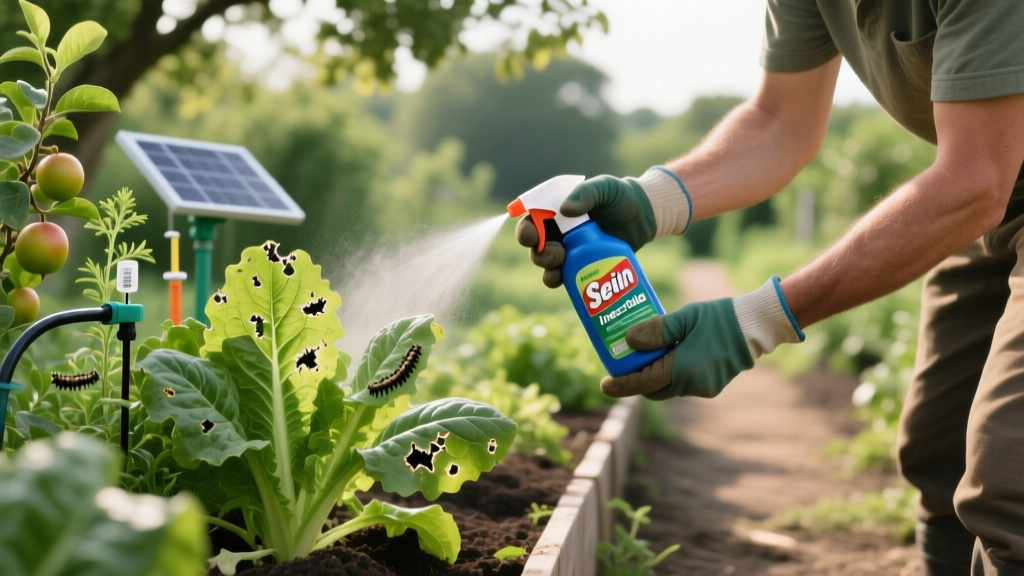
Treating Armyworms in Foodscapes: Sevin Insecticide Guide 2026
David ParkPublished
The Armyworm Threat to Your Edible Landscape
As we navigate the 2026 growing season, edible landscaping and foodscaping continue to transform suburban yards into productive, beautiful ecosystems. However, integrating ornamental plants with food crops like corn, tomatoes, brassicas, and leafy greens creates a diverse buffet for opportunistic pests. Among the most devastating of these are armyworms—specifically the fall armyworm (Spodoptera frugiperda) and the true armyworm (Mythimna unipuncta). According to the University of Florida IFAS, fall armyworms are notorious for their voracious appetites and rapid defoliation, capable of destroying a mature foodscape in a matter of days if left unchecked.
Armyworms are particularly drawn to the grasses and broadleaf weeds often used as groundcovers or companion plants in foodscapes. When their preferred grassy hosts are depleted, they march en masse into your vegetable beds, skeletonizing leaves and boring into developing fruits. While Integrated Pest Management (IPM) always prioritizes biological controls, severe infestations sometimes require rapid chemical intervention to save your harvest. This is where Sevin insecticide enters the conversation.
Understanding Sevin Insecticide in 2026
When discussing Sevin in 2026, it is critical to understand that "Sevin" is a brand name, not a single chemical. Historically, Sevin was synonymous with carbaryl, a broad-spectrum carbamate insecticide. However, over the last few years, the manufacturer (GardenTech) has transitioned many of its consumer-ready Sevin products to zeta-cypermethrin, a pyrethroid. Some dust formulations and agricultural concentrates may still contain carbaryl, but the liquid ready-to-use and concentrate sprays commonly found in garden centers are now predominantly zeta-cypermethrin.
Why does this matter for your foodscape? The active ingredient dictates the toxicity profile, the environmental impact, and most importantly, the Pre-Harvest Interval (PHI). Zeta-cypermethrin is highly effective against chewing insects like armyworms and offers a rapid knockdown, but it is also extremely toxic to aquatic life and bees. Carbaryl carries its own set of risks, including high toxicity to beneficial insects and potential health concerns for applicators. Always read the 2026 product label to confirm the exact active ingredient before applying any product near edible crops.
The Foodscape Dilemma: Broad-Spectrum vs. Targeted Control
In a dedicated foodscape, we rely heavily on beneficial insects—parasitic wasps, ground beetles, and tachinid flies—to naturally regulate pest populations. Using a broad-spectrum insecticide like Sevin is generally considered a last resort in IPM because it indiscriminately kills both the armyworms and the beneficial predators that keep secondary pests (like aphids and spider mites) in check.
However, there are scenarios where Sevin is justified in an edible landscape:
- Severe, Late-Instar Infestations: Biological controls like Bacillus thuringiensis (Bt) are highly effective on young, early-instar armyworms. But if you discover large, mature caterpillars (over 1 inch long) decimating your corn whorls or tomato plants, Bt may act too slowly to save the crop. Sevin provides the immediate knockdown required.
- Perimeter Defense: Applying Sevin as a barrier treatment on the non-edible ornamental borders of your foodscape can stop an advancing "army" before they reach your vegetable beds.
Pre-Harvest Intervals (PHI) for Common Foodscaping Crops
The Pre-Harvest Interval (PHI) is the mandatory waiting period between the last application of a pesticide and the harvest of the crop. Consuming produce before the PHI has elapsed is illegal and unsafe. Below is a general guide for common foodscape crops, but you must verify the exact PHI on the specific Sevin product label you purchase, as formulations vary.
| Crop | Active Ingredient | Typical PHI (Days) | Max Applications/Year |
|---|---|---|---|
| Sweet Corn | Zeta-cypermethrin | 1 to 3 days | 6 |
| Tomatoes | Zeta-cypermethrin | 3 to 5 days | 6 |
| Leafy Greens (Lettuce, Spinach) | Zeta-cypermethrin | 7 to 14 days | 4 |
| Brassicas (Kale, Cabbage) | Zeta-cypermethrin | 7 days | 6 |
| Squash & Cucurbits | Zeta-cypermethrin | 3 days | 6 |
Note: If using a legacy carbaryl-based Sevin dust on edibles, PHIs are often significantly longer (e.g., 7-21 days depending on the crop). The EPA's Safe Pest Control guidelines emphasize that the product label is the ultimate legal authority on application rates and intervals.
Step-by-Step Application Guide for Armyworms
If you have determined that Sevin is necessary to save your edible landscape, follow these strict application protocols to maximize efficacy and minimize harm to your foodscape's ecosystem.
1. Scout and Identify
Armyworms feed primarily at night and hide in the soil or deep within plant whorls during the day. Scout your foodscape at dusk or dawn. Look for "frass" (caterpillar droppings that resemble wet sawdust) on leaves and the ground. In corn, check the whorls; in tomatoes, inspect the lower canopy and developing fruit.
2. Protect the Pollinators
Because Sevin is highly toxic to bees, never spray during the day when pollinators are active. Apply the insecticide in the late evening, just as the sun sets and bees have returned to their hives. By morning, the spray will have dried, significantly reducing the risk of contact toxicity to foraging bees. Avoid spraying directly on the blossoms of any fruiting vegetables or companion flowers like borage and nasturtiums.
3. Mix and Apply
Wear appropriate personal protective equipment (PPE), including long sleeves, pants, and chemical-resistant gloves. If using a liquid concentrate, mix it precisely according to the label's instructions for your specific crop. Use a pump sprayer to apply a fine mist, ensuring thorough coverage of the upper and lower leaf surfaces, as well as the base of the plants where larvae hide.
4. Post-Application Cleanup and Harvest
Mark your calendar with the exact harvest date based on the PHI. When you do harvest, wash all produce thoroughly with a mild baking soda and water solution to remove any residual surface dust or droplets. As noted by Penn State Extension, integrating chemical controls should always be paired with rigorous sanitation and monitoring to prevent secondary outbreaks.
Integrating Sevin into a Broader IPM Strategy
Using Sevin should not be your only line of defense in an edible landscape. To maintain a healthy, productive foodscape in 2026 and beyond, integrate chemical treatments with proactive cultural and biological controls:
- Tillage and Soil Disruption: Armyworm pupae reside in the top few inches of soil. Lightly tilling your beds between crop rotations exposes these pupae to birds and desiccation.
- Pheromone Traps: Set up fall armyworm pheromone traps at the edges of your property to monitor moth flights. This gives you a 10-to-14-day warning before caterpillars hatch and begin feeding.
- Beneficial Nematodes: Apply Steinernema carpocapsae nematodes to your soil in the early evening. These microscopic worms actively hunt and kill armyworm pupae in the soil without harming your plants or earthworms.
- Companion Planting: Plant nectar-rich flowers like sweet alyssum, yarrow, and dill to attract parasitic wasps. These tiny, non-stinging wasps lay their eggs inside armyworm caterpillars, naturally controlling the population from the inside out.
When to Avoid Sevin in Your Foodscape
There are specific situations where Sevin should be entirely avoided in an edible landscape. If your foodscape is heavily interplanted with blooming pollinator attractors, the risk of drift and accidental bee mortality is too high. Additionally, if you are dealing with a mild infestation that can be managed by hand-picking caterpillars or applying targeted Bt (Bacillus thuringiensis var. kurstaki), choose the biological route. Bt is entirely safe for humans, pets, and beneficial insects, making it the gold standard for organic foodscaping.
Furthermore, if your garden is suffering from a concurrent spider mite or aphid outbreak, applying Sevin will eliminate the predatory insects that keep those sap-sucking pests in check, often leading to a devastating secondary outbreak that is much harder to manage than the original armyworms.
Conclusion
Managing armyworms in an edible landscape requires a careful balance between protecting your harvest and preserving the delicate ecological web that makes foodscaping so rewarding. While Sevin insecticide remains a powerful tool for rapid knockdown of severe caterpillar infestations in 2026, it must be used judiciously, with strict adherence to Pre-Harvest Intervals and pollinator protection protocols. By combining targeted chemical interventions with robust IPM practices, you can ensure your foodscape remains both productive and ecologically resilient for seasons to come.