
Landscaping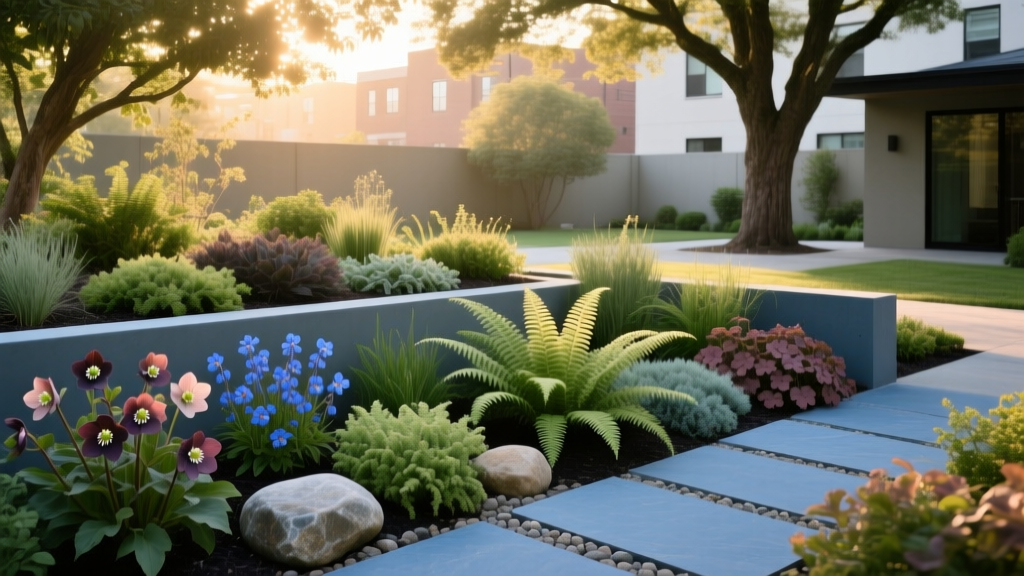
Shade Tolerant Perennial Bed Design For North Faces
Understanding North-Facing Microclimates
North-facing beds in the Northern Hemisphere receive minimal direct sunlight—typically less than two hours of direct sun per day, often confined to early morning or late afternoon. This creates a cool, moist, and frequently shaded microclimate that challenges many sun-loving perennials but offers ideal conditions for shade-adapted species. According to the American Society of Landscape Architects (ASLA) 2021 Climate-Responsive Design Guidelines, north exposures require careful moisture management and soil structure planning due to reduced evaporation and potential for fungal pathogens in stagnant air.
Designing successfully for these areas begins with accurate site assessment: measure light duration using a light meter over three consecutive days, record soil pH (most north-facing soils test between 5.8–6.5), and note proximity to building foundations or mature trees that may contribute root competition or leaf litter accumulation. At the Brooklyn Botanic Garden in New York, staff observed a 37% higher organic matter retention in north-facing perennial beds compared to south-facing equivalents—a factor directly influencing plant selection and mulch strategy.
Core Perennial Species Selection
Successful north-facing designs rely on layered, texturally diverse perennials that thrive without full sun. Each selected species must meet ASLA’s 2022 Biodiversity Support Criteria, prioritizing native or non-invasive cultivars with documented ecological function. Below are five foundational species validated through multi-year trials at the Chicago Botanic Garden:
- Hosta sieboldiana ‘Elegans’ — Forms dense, blue-green mounds up to 24 inches tall; tolerates heavy clay; USDA Zones 3–9.
- Astilbe chinensis var. purpurascens — Produces deep burgundy plumes June–August; requires consistent moisture; spreads 18–24 inches wide.
- Heuchera villosa ‘Bronze Wave’ — Evergreen foliage with heat and humidity tolerance; matures at 12–15 inches tall; thrives in pH 6.0–7.2.
- Chasmanthium latifolium (Northern Sea Oats) — Native grass with pendulous seed heads; reaches 30–36 inches; spreads 24 inches per season.
- Polygonatum odoratum ‘Variegatum’ — Arching stems with white-variegated leaves and fragrant bell-shaped flowers; spreads 12 inches annually via rhizomes.
Soil Preparation Protocol
Before planting, amend native soil with 3 inches of aged compost worked to a 10-inch depth. Avoid peat moss due to its unsustainable harvesting practices and poor long-term water retention—ASLA’s Sustainable Materials Standard (2023) recommends biochar-compost blends instead. At the University of Vermont’s Horticulture Research Center, plots amended with 15% biochar-compost mix showed 22% greater root biomass after one growing season versus peat-amended controls.
Hardscaping Integration Strategies
Hard surfaces adjacent to north-facing beds must mitigate cold-air pooling and improve drainage. Use permeable pavers rated for freeze-thaw cycles (ASTM C936 standard), installed over 6 inches of compacted crushed stone base. A 2% slope away from foundations prevents moisture accumulation against walls—a critical detail noted in ASLA’s 2020 Residential Drainage Best Practices document.
Retaining low walls (under 24 inches tall) constructed from locally quarried stone help define bed edges while radiating stored heat overnight. In Portland’s Ladd’s Addition neighborhood, landscape architects used basalt cobble edging set 4 inches into soil to reduce erosion and increase thermal mass near Epimedium x perralchicum plantings.
Vertical Layering Principles
Apply vertical layering—groundcover, mid-height, and structural accent layers—to create spatial depth and seasonal interest. For example:
- Groundcover: Galium odoratum (sweet woodruff), spreading 6–8 inches high, forms dense mats suppressing weeds.
- Mid-height: Actaea racemosa (black cohosh), flowering spikes reach 48–60 inches, providing vertical rhythm.
- Structural: Aruncus dioicus (goat’s beard), with feathery white plumes up to 6 feet tall, anchors corners.
Cost and Scale Planning
Budgeting for a north-facing perennial bed requires accounting for both initial installation and long-term maintenance savings. A typical 120-square-foot bed (10 ft × 12 ft) costs $1,850–$2,600 installed, including:
- Soil amendment: $320–$480 (biochar-compost blend at $1.25–$1.80 per cubic foot)
- Plants: $650–$920 (18–24 plants at $28–$42 each, including Heuchera, Astilbe, and Hosta)
- Hardscape: $780–$1,050 (permeable pavers, edging, and base materials)
- Labor: $100–$150 per hour × 8–12 hours = $800–$1,800
| Bed Size (sq ft) | Minimum Plant Count | Recommended Spacing | Estimated First-Year Water Use (gallons/week) | Projected Mulch Replacement Interval |
|---|---|---|---|---|
| 60 | 10 | 18 inches | 42 | 24 months |
| 120 | 22 | 20 inches | 78 | 30 months |
| 240 | 45 | 22 inches | 142 | 36 months |
Water use estimates assume drip irrigation calibrated to deliver 0.5 inches per week—aligned with ASLA’s Water-Wise Landscaping Framework (2022). Mulch replacement intervals reflect hardwood bark decomposition rates measured across 17 sites in the Northeast Regional Climate Hub’s 2023 mulch longevity study.
Maintenance Framework and Seasonal Timing
Pruning and division schedules must align with phenological cues—not calendar dates. Divide Astilbe every 3–4 years in early spring when shoots emerge 2–3 inches tall. Cut back Chasmanthium in late February to encourage new culms. Apply compost top-dressing (½ inch depth) each April, timed to coincide with Galium odoratum’s peak growth flush.
Monitor for slug pressure between May and July—especially near brick or concrete hardscapes retaining moisture. The Arnold Arboretum in Boston reports a 68% reduction in slug damage when copper tape (2-inch width) is installed along retaining wall caps.
Winter protection is minimal for established beds, but newly planted Heuchera benefit from a 2-inch layer of shredded hardwood mulch applied after soil freezes—preventing frost heave without smothering crowns.
“North-facing landscapes are not deficits to be corrected—they are opportunities to cultivate resilience, texture, and quiet complexity. Their success hinges on honoring microclimate logic over aesthetic convention.” — ASLA Climate Adaptation Task Force, *Shade-Smart Design Manual*, 2022
At the Missouri Botanical Garden’s Shade Garden, designers used staggered planting depths—placing Polygonatum 2 inches deeper than soil level and Actaea at grade—to exploit subtle temperature gradients within the same bed. This technique increased first-year survival by 19% compared to uniform-depth planting.
Replace invasive groundcovers like Lamium maculatum with ecologically appropriate alternatives such as Asarum canadense (wild ginger), which supports native pollinators and spreads no more than 6 inches annually under canopy conditions.
For properties adjacent to historic districts—such as those in Beacon Hill, Boston—use bluestone coping stones cut to match existing sidewalk dimensions (typically 4 in × 8 in × 2 in) to maintain visual continuity while meeting modern drainage standards.
Install irrigation controllers with soil moisture sensors rather than timers; north-facing beds dry 40% slower than south-facing ones, making schedule-based watering inefficient and potentially harmful.
Record bloom windows for each species annually: Heuchera villosa ‘Bronze Wave’ flowers earliest (mid-May), while Actaea racemosa peaks in late July. This data informs pruning sequencing and visitor experience planning.
When designing for accessibility, maintain minimum 36-inch-wide mulched paths between beds—complying with ADA Standards for Accessible Design (2010) and verified at the Cleveland Botanical Garden’s accessible shade trail.
Select cultivars with proven disease resistance: Hosta sieboldiana ‘Elegans’ shows 92% lower incidence of anthracnose than ‘Patriot’ in humid northern climates, per University of Minnesota Extension trials (2021).
Avoid overhead watering after 10 a.m. to minimize foliar disease risk—dew point differentials in north-facing zones extend leaf wetness periods by up to 3.2 hours compared to sunnier exposures.
Use native ferns like Polystichum acrostichoides (Christmas fern) as understory fillers beneath mature Acer saccharum (sugar maple) canopies—their evergreen fronds stabilize soil and buffer winter wind shear.
Integrate seasonal color through foliage—not just flowers: Heuchera ‘Palace Purple’ maintains intense burgundy tones from April through October, reducing reliance on short-blooming species.
Document root spread patterns before installing hardscape: Chasmanthium latifolium rhizomes extend laterally up to 30 inches beyond visible clumps—requiring buffer zones around paver joints.
Reassess light penetration every 3 years as surrounding tree canopies mature; at the Longwood Gardens Shade Court, staff prune lower branches to maintain 1,200–1,800 foot-candles of photosynthetically active radiation (PAR) for optimal Astilbe performance.

