
Landscaping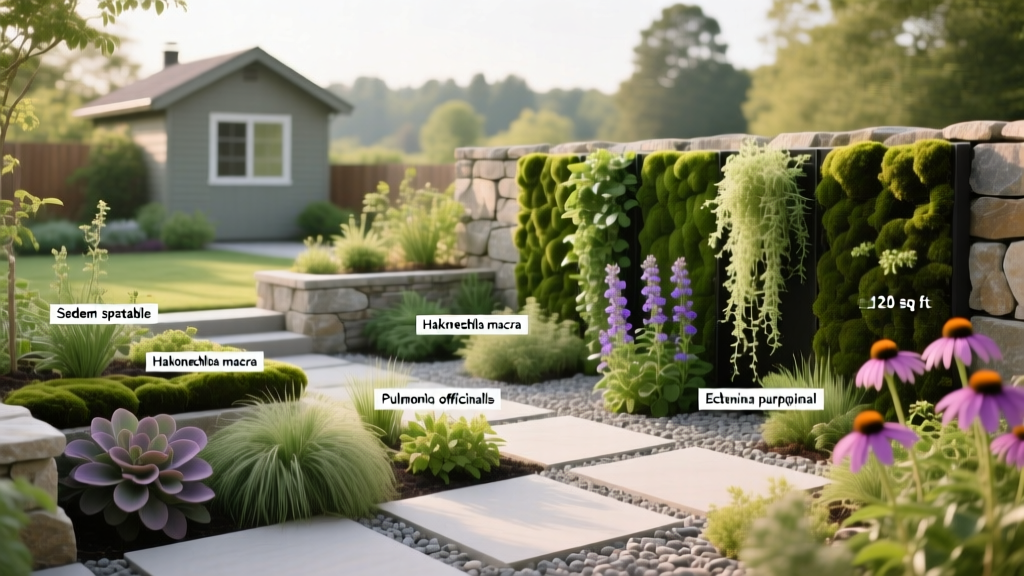
Small Backyard Landscape Design With Vertical Gardens
Maximizing Limited Space Through Vertical Integration
Small backyard landscapes—typically under 500 square feet—present both constraints and opportunities for creative, ecologically responsive design. Rather than viewing spatial limitation as a deficit, landscape architects increasingly treat vertical surfaces as functional extensions of the ground plane. This approach aligns with the American Society of Landscape Architects (ASLA) 2021 Climate Action Plan, which emphasizes “multi-layered planting strategies to increase biodiversity, reduce urban heat island effects, and optimize stormwater retention in dense residential settings.” In cities like Portland, Oregon, where median lot sizes average 4,200 ft² but usable backyard space often falls below 300 ft² due to setbacks and structures, vertical gardens offer scalable solutions without sacrificing hardscape utility or aesthetic cohesion.
Design Principles for Small-Scale Vertical Systems
Effective vertical garden integration rests on three foundational landscape architecture principles: layering, rhythm, and scale modulation. Layering involves stacking plant forms—groundcovers, mid-height perennials, and vining species—to create visual depth. Rhythm is achieved through repetition of form, color, or texture across vertical planes; for instance, alternating *Festuca glauca* ‘Elijah Blue’ in wall-mounted troughs with trailing *Sedum spurium* ‘Dragon’s Blood’ establishes predictable visual cadence. Scale modulation ensures that vertical elements do not overwhelm human proportions: ASLA’s Residential Design Guidelines (2020) recommend vertical garden structures remain no taller than 8 ft in backyards under 400 ft² to preserve spatial intimacy and avoid shading adjacent habitable zones.
Structural Integrity and Load Considerations
Before installation, assess load-bearing capacity. A fully saturated modular vertical garden system weighs approximately 15–20 lb/ft². For masonry walls, consult a structural engineer if mounting panels exceeding 4 ft in height. Freestanding trellises should be anchored into concrete footings at least 18 inches deep and 12 inches wide—standard practice verified by the University of California Cooperative Extension’s 2022 Urban Horticulture Handbook.
Microclimate Mapping for Plant Selection
Map sun exposure over 24-hour intervals using a solar pathfinder or smartphone app. South-facing walls in USDA Zone 7b (e.g., Richmond, Virginia) receive up to 9 hours of direct sunlight daily—ideal for drought-tolerant *Lavandula angustifolia* and *Helianthemum nummularium*. North-facing walls may receive only 2–3 hours of indirect light, favoring shade-adapted *Asplenium scolopendrium* (Hart’s-tongue fern) and *Polystichum acrostichoides* (Christmas fern).
Plant Palette for Functional and Aesthetic Performance
Select species based on growth habit, maintenance demand, root structure, and ecological service. Avoid aggressive spreaders like *Celastrus scandens* (American bittersweet), which can compromise wall integrity. Prioritize native or adaptive non-invasives with shallow, fibrous root systems suited to shallow growing media (typically 3–4 inches deep in modular systems). The following table compares five high-performing species for small-yard vertical applications:
| Species (Latin) | Light Requirement | Max Height (ft) | Drought Tolerance | USDA Zones | Primary Function |
|---|---|---|---|---|---|
| Lonicera sempervirens | Full sun to part shade | 15–20 | Moderate | 4–9 | Pollinator support, erosion control |
| Sedum telephium ‘Autumn Joy’ | Full sun | 1.5–2 | High | 3–11 | Seasonal interest, low-water succulent |
| Parthenocissus quinquefolia | Full sun to full shade | 30–50 | High | 3–9 | Cooling, privacy screening |
For edible integration, consider *Actinidia kolomikta*, a hardy kiwi vine with variegated foliage and edible fruit, suitable for trellises 6–8 ft tall. Its shallow roots adapt well to contained vertical systems and provide year-round visual interest.
Hardscaping Integration and Material Strategies
Hardscape must reinforce—not compete with—vertical plantings. Use permeable pavers (e.g., Belgard Eco-Pave®) laid at a 1% slope toward planted walls to direct runoff into root zones. Retaining walls under 3 ft in height—common in terraced small yards—should incorporate weep holes every 4 ft horizontally and use mortarless segmental blocks to allow root penetration and drainage. At the Chicago Botanic Garden’s Regenstein Fruit & Vegetable Garden, vertical herb walls are integrated with reclaimed brick pathways and stainless-steel cable trellises spaced at 12-inch vertical intervals—proven to support vigorous *Rosmarinus officinalis* and *Thymus vulgaris* growth while permitting airflow to prevent fungal disease.
Cost-Efficient Construction Methods
Modular panel systems range from $45–$120 per square foot installed, depending on irrigation integration and structural anchoring. DIY-built wooden pallet gardens cost $8–$15 per ft² in materials but require biannual replacement. Drip irrigation lines embedded within vertical systems add $2.50–$4.00 per linear foot. Labor accounts for 60–70% of total project cost; hiring a certified landscape architect (CLA) for design-only services averages $150–$250/hour, according to the ASLA 2023 Professional Fees Survey.
- A 6 ft × 8 ft vertical garden (48 ft²) using pre-grown modular panels costs $2,160–$5,760 installed.
- Soilless growing medium (rockwool + coconut coir blend) requires 1.2 cubic feet per 10 ft² of vertical surface.
- Irrigation timers set to deliver 0.5 gallons per hour per emitter maintain optimal moisture in 3-inch-deep substrate.
- Annual pruning of *Campsis radicans* reduces biomass by 40%, preventing gutter clogging in rooftop-adjacent installations.
- At the Brooklyn Grange Rooftop Farm in New York City, vertical strawberry towers yield 1.8 lbs per ft² annually with biweekly foliar feeding.
Maintenance Protocols and Seasonal Adjustments
Vertical gardens demand proactive, seasonally calibrated care. Spring entails inspecting anchors, flushing drip emitters, and applying slow-release organic fertilizer (e.g., 5-5-5 granular blend at 1.5 tsp per ft² of planting area). Summer requires biweekly foliar misting for ferns during heatwaves above 90°F. Fall pruning of deciduous vines like *Ampelopsis brevipedunculata* improves air circulation and reduces overwintering pests. Winter protection includes insulating irrigation lines below 28°F and covering tender *Tropaeolum speciosum* tubers with 2 inches of shredded hardwood mulch.
Monitoring plant health requires tactile assessment: gently squeeze stems of *Vinca minor*—turgid tissue indicates adequate hydration; hollow or brittle stems signal chronic under-watering. Root rot in *Heuchera sanguinea* manifests as chlorotic lower leaves and blackened petiole bases—prompt removal of affected modules prevents systemic spread.
“Vertical gardens in compact residential landscapes must serve ecological function first, ornament second. Their success is measured not in bloom count, but in measurable reductions in ambient temperature, stormwater runoff volume, and pollinator visitation frequency.” — ASLA Sustainable Sites Initiative (SITES™) v2 Technical Reference, 2022
Soil pH testing every six months ensures stability between 5.8–6.5 for acid-loving *Rhododendron yakushimanum*, commonly used in Pacific Northwest vertical designs. Fertilizer application should cease after August 15 in Zone 6a (e.g., Cleveland, Ohio) to avoid stimulating tender growth vulnerable to early frosts.
Water budgeting is critical: a 50 ft² vertical garden consumes ~12 gallons per week in moderate climates (Zone 7), rising to 22 gallons during sustained 95°F periods. Rainwater harvesting via 50-gallon barrels connected to downspouts offsets 30–40% of irrigation demand, per data collected at the Lady Bird Johnson Wildflower Center’s Demonstration Garden in Austin, Texas.
Structural inspections should occur twice yearly—once before spring growth surge and again after autumn leaf drop—to identify corrosion on aluminum frames or warping in cedar trellises exposed to >60 inches annual precipitation.
Pruning schedules vary by species: *Jasminum officinale* benefits from post-bloom thinning to maintain 30% canopy openness, while *Pileostegia viburnoides* requires only light tip-pruning every other year to encourage lateral branching.
Incorporating habitat value elevates design beyond aesthetics. Installing bat boxes 12–15 ft above ground near *Campsis radicans*-covered walls supports natural insect control; one maternity colony consumes 3,000–5,000 mosquitoes nightly, according to research published by the Organization for Bat Conservation (2019).
For fire-resilient design in California’s Wildland-Urban Interface, select non-resinous species such as *Mahonia aquifolium* and avoid *Juniperus scopulorum*, whose volatile oils increase ignition risk. The City of Santa Rosa’s Firewise Landscaping Ordinance mandates vertical plantings within 5 ft of structures maintain ≤15% dead material content year-round.
Lighting integration enhances usability: low-voltage LED strips mounted 6 inches behind *Lamium maculatum* ‘Beacon Silver’ highlight silver foliage without promoting leggy growth—a technique refined at the Longwood Gardens Main Fountain Garden lighting retrofit (2021).
Succession planting ensures year-round structure: interplant ephemeral *Tiarella cordifolia* with evergreen *Pachysandra terminalis* to maintain visual continuity as spring blooms fade. This layered strategy reduces bare-soil exposure by 70% compared to monoculture vertical installations, per field trials conducted at the Morris Arboretum of the University of Pennsylvania.
When designing for accessibility, mount planter boxes at 30–36 inches above grade—aligned with ADA Standards for Accessible Design (2010)—to accommodate wheelchair users and reduce bending strain. Vertical reach for overhead trellises should not exceed 72 inches for independent pruning access.
Finally, document plant performance annually using standardized metrics: percent coverage, bloom duration (recorded in days), and pest incidence rate (number of affected plants per 10 ft²). Such data informs future species selection and validates adherence to ASLA’s Evidence-Based Design Framework (2021).

