Gardening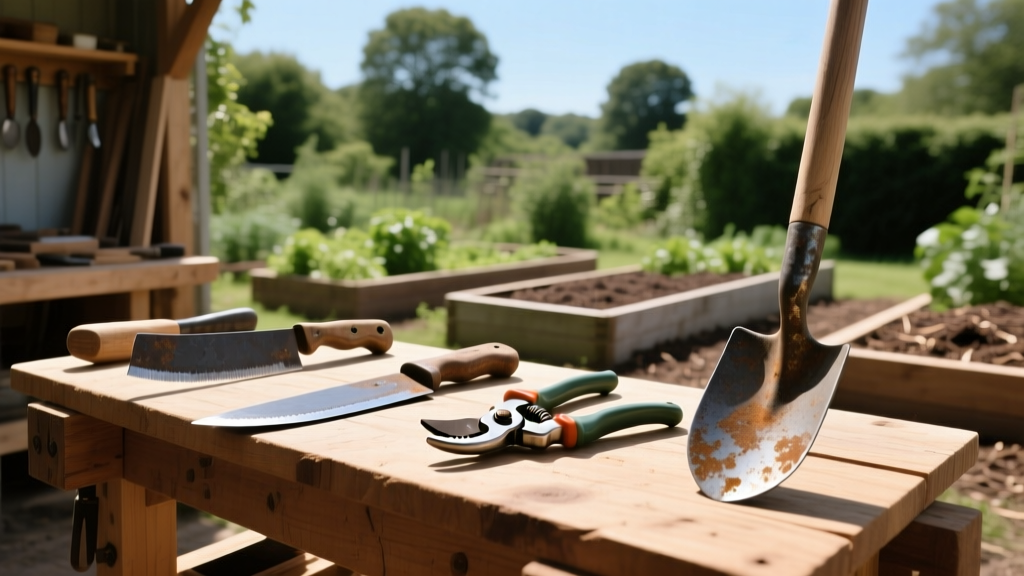
2026 Guide: Sharpening & Oiling Hand Mulching Tools
David ParkPublished
The Intersection of Tool Care and Mulching Methods
As we move through the 2026 gardening season, the emphasis on sustainable, organic mulching methods has never been stronger. Whether you are applying arborist woodchips to suppress weeds in perennial borders, spreading straw mulch over vegetable beds, or turning homemade leaf mold for soil amendment, the efficiency of your mulching strategy relies entirely on the tools you use to prepare and move those materials. Dull blades crush plant fibers rather than slicing them, leading to ragged cuts on branches intended for chipping and uneven chopping of straw bales. Furthermore, poorly maintained metal tools introduce rust and toxic petroleum residues directly into your organic mulch layers, compromising the soil food web beneath.
Proper garden tool care—specifically the sharpening and oiling of hand tools—is not just a chore; it is a foundational practice for successful mulch preparation. According to the Royal Horticultural Society (RHS), regular cleaning, sharpening, and oiling of garden tools extends their lifespan by decades and prevents the spread of soil-borne pathogens. In this comprehensive 2026 guide, we will explore exactly how to maintain the specific hand tools required for modern mulching methods, ensuring your equipment is razor-sharp, rust-free, and safe for organic gardening.
Essential Hand Tools for Mulch Preparation
Different mulching materials require different preparation techniques, and consequently, different tools. Before diving into maintenance, it is crucial to identify the primary hand tools used in mulch processing:
- Bypass Pruners and Loppers: Essential for cutting live branches (up to 2 inches thick) that will be fed into a chipper for fresh woodchip mulch (Ramial Chipped Wood).
- Machetes and Billhooks: Used for chopping down cover crops, slicing through bound straw or hay bales, and processing coarse compost materials before they are laid as mulch.
- Pitchforks and Spades: Necessary for lifting, turning, and spreading heavy, wet mulching materials like leaf mold, compost, and aged manure.
Sharpening Techniques for Mulching Blades
A sharp tool requires less physical exertion and creates cleaner cuts, which is vital when processing organic matter for mulch. Clean cuts on branches prevent the bark from tearing, which ensures uniform woodchips that break down evenly on your garden beds.
Sharpening Pruners and Loppers for Woodchip Mulch
Bypass pruners, such as the industry-standard Felco 2 or modern 2026 ratcheting models, operate like scissors. Only the angled bevel of the upper blade needs to be sharpened. To maintain these tools for heavy branch-cutting:
- Disassemble and Clean: Remove sap and resin buildup using a wire brush and rubbing alcohol. Sap buildup creates friction and ruins the cutting geometry.
- Secure the Blade: Clamp the pruner in a vise with the bevel facing up.
- Use a Diamond Stone: A medium-grit diamond whetstone (such as a DMT Dia-Sharp) is ideal for modern high-carbon and stainless steels. Match the factory bevel angle, typically between 20 and 25 degrees.
- Stroke and Hone: Push the stone along the edge in one direction, away from you, maintaining the angle. Repeat until a burr forms on the flat side, then gently remove the burr with a single flat stroke.
For loppers used to harvest thicker branches for mulch, a bastard file followed by a fine whetstone provides the necessary edge retention to chew through fibrous wood without rolling the edge.
Sharpening Machetes and Billhooks for Straw Mulch
When preparing straw or hay mulch, chopping the material into 4-to-6-inch lengths prevents the mulch from matting and repelling water. Machetes and traditional English billhooks take a beating during this process. Unlike pruners, these tools require a slightly more convex, durable edge (around 25 to 30 degrees) to withstand impact with hidden stones or tough stalks.
Use a 10-inch mill bastard file to restore the primary bevel. Clamp the tool securely and push the file along the edge using smooth, overlapping strokes. Finish with a coarse leather strop or a heavy-grit whetstone to align the microscopic teeth of the blade. As noted by experts at Fine Gardening, maintaining the correct angle is far more critical than the speed of sharpening; a consistent 25-degree angle will yield a blade that slices through straw bales effortlessly.
Oiling and Rust Prevention: The Organic Mulch Rule
In 2026, the shift away from petroleum-based lubricants in organic gardening is complete. When you are oiling tools that will directly contact your mulch and soil, you must avoid standard motor oils, WD-40, or synthetic greases. These products contain heavy metals and petrochemicals that will leach into your organic mulch layer, harming beneficial mycorrhizal fungi and earthworms.
Botanical and Food-Grade Oils for 2026
Instead, rely on natural, biodegradable oils that protect high-carbon steel without contaminating your garden beds:
- Camellia Oil: A traditional Japanese woodworking oil that is incredibly thin, penetrates deeply, and leaves a hard, non-sticky protective film. Perfect for pruning shears and loppers.
- Boiled Linseed Oil (BLO):strong> Excellent for wooden handles of pitchforks and shovels. It polymerizes, sealing the wood against the moisture inherent in wet leaf mold and compost mulches.
- Food-Grade Mineral Oil: A safe, inexpensive option for coating the broad surfaces of spades and hoes used to move mulch.
The Sand and Oil Bucket Method for Digging Tools
Pitchforks and shovels used to spread heavy, damp mulch are prone to rapid rusting and soil adhesion. The most effective maintenance technique is the "sand and oil bucket."
- Fill a 5-gallon bucket with coarse builder's sand.
- Pour half a cup of food-grade mineral oil or boiled linseed oil into the sand and mix thoroughly until the sand feels damp but not pooling.
- After using your pitchfork to spread compost or leaf mulch, scrub off the bulk of the debris with a stiff brush.
- Plunge the metal tines or blade into the oiled sand several times. The sand acts as a mild abrasive to clean the metal, while the oil leaves a microscopic rust-inhibiting barrier.
This method is highly recommended by agricultural extensions, including Penn State Extension, as a primary defense against rust and a way to sanitize tools between different garden zones.
2026 Mulching Tool Maintenance Comparison Chart
Use the following table to establish a rapid-reference maintenance schedule for your mulching arsenal.
| Tool Type | Primary Mulching Use | Sharpening Angle | Recommended 2026 Oil | Maintenance Frequency |
|---|---|---|---|---|
| Bypass Pruners | Harvesting branches for woodchips | 20 - 25 Degrees | Camellia Oil | Wipe after use; hone weekly |
| Garden Loppers | Processing thick brush for chipping | 20 - 25 Degrees | Camellia / Mineral Oil | File monthly during heavy use |
| Machete / Billhook | Chopping straw bales and cover crops | 25 - 30 Degrees | Food-Grade Mineral Oil | File before every major mulching job |
| Pitchfork | Moving leaf mold and compost mulch | N/A (Blunt tines) | Oiled Sand Bucket | Plunge in oiled sand after each use |
| Spade / Shovel | Spreading and leveling bulk mulch | N/A (Flat edge) | Oiled Sand Bucket / BLO | Wipe with oiled rag post-cleanup |
Seasonal Storage and Winterizing
When the mulching season concludes in late autumn, your tools must be properly winterized. Any organic acids from decomposing mulch left on metal surfaces will cause severe pitting over the winter months. Wash all tools with a mild soap solution, dry them completely with a microfiber cloth, and apply a heavy coat of boiled linseed oil to all metal surfaces. Store wooden-handled tools indoors or in a climate-controlled shed to prevent the wood from drying out and shrinking away from the metal tangs.
Conclusion
Mastering mulching methods in 2026 requires more than just knowing which organic materials to apply to your soil; it demands respect for the tools that make the work possible. By adopting a rigorous routine of sharpening your pruners and machetes to precise angles, and utilizing eco-friendly, plant-based oils to protect your steel and wood, you ensure that your mulch preparation is efficient, safe, and sustainable. Well-maintained tools transform the arduous task of processing organic mulch into a satisfying garden ritual, ultimately leading to healthier soil and more vibrant landscapes.
