
Landscaping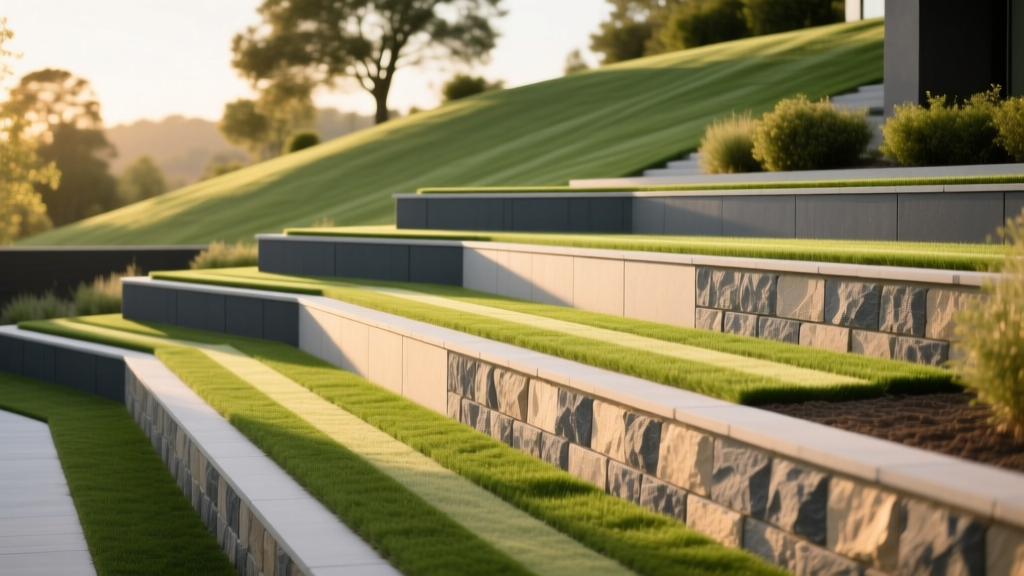
2026 Sloped Backyard Terracing: Segmental Walls For Lawn Stripes
Mike RodriguezPublished
The Intersection of Hardscaping and Lawn Art in 2026
As landscaping trends evolve in 2026, homeowners are increasingly rejecting the notion that a sloped backyard is a limitation. Instead, slopes are being embraced as dynamic, multi-dimensional canvases for outdoor art. The most striking trend this year is the integration of sloped backyard terracing with segmental retaining walls (SRWs) specifically designed to frame and enhance lawn striping and aesthetic turf patterns. While traditional lawn striping requires a relatively flat, expansive surface to achieve those crisp, alternating light-and-dark lines, a terraced slope breaks the yard into distinct, geometric planes. Each terrace acts as an individual canvas, allowing for complex, tiered aesthetic patterns that are impossible to achieve on a single flat grade.
By combining the structural engineering of modern hardscaping with the meticulous grooming of turfgrass artistry, you can transform a difficult, erosion-prone slope into a breathtaking, multi-level showcase. This guide explores how to design, build, and maintain terraced segmental walls in 2026 to create the ultimate backdrop for advanced lawn striping.
Why Segmental Retaining Walls Are the 2026 Standard
Segmental retaining walls are mortarless, interlocking concrete block systems that rely on gravity, friction, and often geogrid reinforcement to hold back soil. In 2026, SRW technology has advanced significantly, offering blocks with integrated drainage channels, lighter-weight composite materials, and highly realistic natural stone textures. Brands like Allan Block and Keystone Hardscapes dominate the market, providing systems that allow for both sweeping curves and sharp, angular corners.
For the lawn striping enthusiast, the precision of an SRW is paramount. Unlike poured concrete or natural boulder walls, segmental blocks offer a perfectly straight or perfectly curved top edge when capped. This crisp hardscape border acts as a visual frame for your turf patterns, much like a matboard frames a painting. Furthermore, the mortarless design allows for slight flexibility and superior drainage, ensuring that the turf near the wall edge does not suffer from water pooling, which can ruin the visual consistency of your stripes.
Designing Terraces for Optimal Lawn Striping Patterns
The success of your aesthetic patterns depends entirely on the dimensions of your terraces. When planning your sloped backyard terracing with segmental retaining walls, you must calculate the depth (front-to-back distance) of each level based on your mower's turning radius and your desired stripe width. If a terrace is too shallow, you will spend more time turning the mower than actually laying down straight lines, resulting in jagged, messy patterns at the wall edges.
In 2026, the most popular aesthetic approach is the Tiered Checkerboard or Alternating Direction pattern. By mowing horizontal stripes on the top terrace, vertical stripes on the middle terrace, and diagonal stripes on the bottom terrace, you create a stunning 3D optical illusion that highlights the architectural lines of the retaining walls.
Terrace Dimensions vs. Ideal Striping Patterns
| Terrace Depth (Front to Back) | Recommended Mower Type | Ideal Aesthetic Pattern | Stripe Width Recommendation |
|---|---|---|---|
| 8 to 12 feet | 21-inch Push Mower with Striping Kit | Horizontal Bands, Concentric Curves | 4 to 6 inches (Narrow, detailed) |
| 12 to 20 feet | 36-inch Stand-On or Walk-Behind | Checkerboard, Diagonal Diamonds | 8 to 12 inches (Classic) |
| 20+ feet | 42 to 52-inch Zero-Turn with Roller | Large-Scale Labyrinth, Multi-Directional | 12 to 16 inches (Bold, high-contrast) |
Step-by-Step: Building the Terraced Canvas
Constructing a terraced slope requires meticulous attention to base preparation and drainage. A failing wall will shift, causing the turf above to tear and ruining your carefully planned geometric lines. According to engineering guidelines from the Allan Block Residential Retaining Wall systems, proper compaction and base gravel depth are non-negotiable for long-term stability.
1. Excavation and Base Preparation
Excavate a trench for your first course of blocks. The trench must be deep enough to bury at least 10% of the total wall height, plus a 6-inch compacted gravel base. Use a mechanical plate compactor to ensure the base is perfectly level. Any deviation in the first course will multiply as you stack higher, resulting in wavy walls that will distort the visual lines of your turf borders.
2. Drainage and Backfill
Water is the enemy of both retaining walls and pristine lawn stripes. Soggy turf bends unpredictably and invites disease. Install a perforated drain pipe wrapped in filter fabric behind the wall base. Backfill the area immediately behind the SRW with clean, washed drainage gravel. The University of Minnesota Extension emphasizes that proper behind-wall drainage prevents hydrostatic pressure buildup, which is the leading cause of wall bulging and failure in sloped backyards.
3. Geogrid Reinforcement
For terraced walls exceeding 3 feet in height, or walls supporting the heavy, saturated soil of a terraced lawn, geogrid reinforcement is required in 2026 building codes. The geogrid layers tie the wall face into the compacted soil mass behind it, creating a single, cohesive structure that will not shift under the vibration of commercial zero-turn mowers.
Turf Selection for Sloped Terraces in 2026
To achieve the high-contrast stripes seen on professional sports fields, you must select a turfgrass species with a high degree of flexibility and a dense growth habit. The physical bending of the grass blade is what creates the light and dark reflection of the stripes.
According to research from the Penn State Center for Sports Surface Management, cool-season grasses like Kentucky Bluegrass and Perennial Ryegrass offer superior striping characteristics due to their broad, pliable leaf blades. In warmer climates, hybrid Bermudagrass remains the undisputed champion of aesthetic patterns. For 2026, many landscapers are utilizing advanced sod blends that incorporate endophyte-enhanced ryegrass, which not only stripes beautifully but also resists the heavy wear caused by mower tires turning on confined terraced levels.
Mowing and Striping Techniques on Tiered Levels
Mowing a terraced backyard presents unique challenges, particularly regarding edge management and turning. When mowing near the capstones of your segmental retaining wall, you must avoid scalping the turf. Scalping occurs when the mower deck dips over the edge of the wall, cutting the grass too short and exposing brown soil, which instantly ruins the aesthetic pattern.
- Install Edge Restraints: Consider installing a flush metal or plastic edge restraint between the capstone and the soil. This provides a physical barrier for your mower wheels to glide against, ensuring a perfectly straight cut line every time.
- Use a Striping Kit: In 2026, aftermarket rubber flap striping kits and heavy steel roller attachments are widely available for almost every mower brand. For tight terraces, a flexible rubber flap is preferable to a rigid roller, as it bends the grass effectively without requiring a wide turning radius.
- The Overlap Technique: When creating a checkerboard pattern on a single terrace, mow the entire area in one direction (e.g., North-South). Then, mow the entire area again in the perpendicular direction (East-West). Ensure your wheel tracks overlap by exactly one inch to prevent un-striped gaps between passes.
2026 Cost Breakdown for Terracing and Turf Installation
Budgeting for a sloped backyard terracing project with segmental retaining walls requires factoring in both hardscape materials and premium turf installation. Prices in 2026 reflect current supply chain realities and labor rates. Below is an estimated cost breakdown for a standard project involving 300 square feet of wall face (e.g., a 30-foot long wall at an average height of 4 feet, creating two distinct terraces) and 2,000 square feet of premium striping turf.
| Project Component | Material Cost (2026) | Labor / Equipment Cost | Total Estimated Cost |
|---|---|---|---|
| Segmental Wall Blocks & Capstones | $1,800 - $2,500 | N/A (Included in Labor) | $1,800 - $2,500 |
| Base Gravel, Drain Rock & Geogrid | $450 - $700 | N/A | $450 - $700 |
| Excavation, Compaction & Wall Build | N/A | $3,500 - $5,500 | $3,500 - $5,500 |
| Premium Striping Turf (Sod/Seed) | $600 - $1,200 | $400 - $800 | $1,000 - $2,000 |
| Mower Striping Kit / Attachments | $150 - $450 | N/A | $150 - $450 |
| Total Project Estimate | $6,900 - $11,150 | ||
Conclusion
Sloped backyard terracing with segmental retaining walls is no longer just a solution for erosion control; in 2026, it is a premier landscaping technique for creating breathtaking, multi-level lawn art. By carefully calculating terrace dimensions, selecting the right interlocking blocks, and choosing highly flexible turfgrass species, you can turn a challenging slope into a geometric masterpiece. The crisp lines of the retaining wall capstones will perfectly frame your alternating stripes, delivering a high-end, professional aesthetic that elevates your entire outdoor living space.

