
Landscaping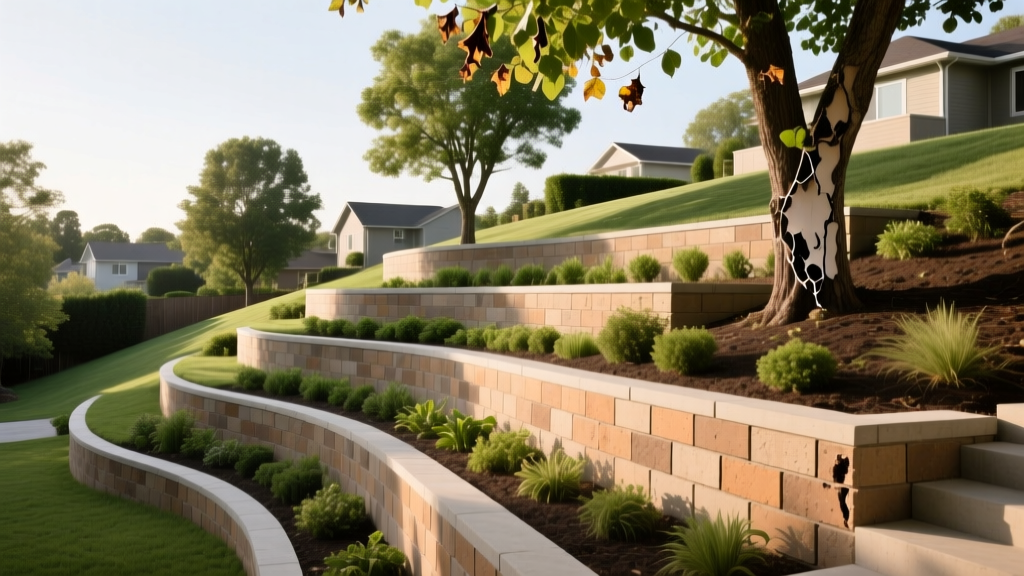
Segmental Wall Terracing: Tree Webworm Control Guide 2026
David ParkPublished
The Intersection of Sloped Terracing and Tree Health
Transforming a sloped backyard into a series of flat, usable tiers using segmental retaining walls (SRWs) is one of the most impactful landscaping upgrades you can undertake in 2026. Systems from leading manufacturers like Allan Block and Versa-Lok provide the structural integrity needed to hold back tons of soil while creating stunning outdoor living spaces, garden beds, and patios. However, when your sloped property features mature shade trees, the excavation and grade alterations required for terracing can trigger severe physiological stress in the canopy. This stress acts as a beacon for destructive pests, most notably the Fall Webworm (Hyphantria cunea).
As landscaping trends in 2026 emphasize sustainable outdoor living spaces and the preservation of mature urban canopies, homeowners and contractors must approach hardscaping and pest management as a unified discipline. Building a retaining wall on a slope alters soil compaction, drainage patterns, and root oxygenation. When a tree becomes stressed from these hardscaping activities, its natural chemical defenses drop, making it highly susceptible to defoliating insects. Understanding how to design your terraced landscape while simultaneously implementing a robust tree webworm control strategy is essential for a thriving backyard ecosystem.
Understanding Tree Stress and Webworm Vulnerability
Before laying the first base stone of your segmental retaining wall, it is crucial to understand why terracing invites webworms. Fall Webworms are opportunistic pests. According to Penn State Extension, these caterpillars preferentially target trees that are already experiencing environmental or mechanical stress. When you excavate a trench for a retaining wall base or install geogrid reinforcement into a slope, you inevitably sever portions of the tree's Critical Root Zone (CRZ).
The CRZ is generally defined as a circle with a radius of one foot for every inch of the tree's trunk diameter at breast height. Severing these roots limits the tree's ability to uptake water and nutrients. Furthermore, adding fill soil behind a retaining wall to create a flat terrace can suffocate roots by reducing soil oxygen levels. A stressed tree emits specific volatile organic compounds (VOCs) that signal to overwintering webworm moths that the host is vulnerable. Once the moths lay eggs in the canopy, the resulting caterpillars spin large, unsightly silken webs over the foliage, devouring the leaves and further weakening the tree during the crucial late-summer photosynthesis period.
Designing Segmental Walls to Protect the Root Zone
To minimize webworm susceptibility, your 2026 terracing design must prioritize tree health. Here are the best practices for integrating SRWs into sloped, tree-heavy landscapes:
- Respect the Drip Line: Whenever possible, design your terrace walls to sit outside the tree's drip line. If the wall must cross the CRZ, consider a cantilevered deck design or a stepped wall that minimizes continuous trenching.
- Use Air Spades for Excavation: Instead of using mechanical excavators near the trunk, hire an arborist to use an air spade. This tool uses compressed air to safely remove soil and expose roots without cutting them, allowing you to place wall base aggregate without causing fatal root damage.
- Permeable Base Materials: Use clear, angular 3/4-inch crushed stone for the wall base and backfill rather than compacted clay or road base. This ensures that water and oxygen can still penetrate the soil profile behind the wall, keeping the root system healthy and resilient against pests.
Identifying Webworms in the Terraced Canopy
Accurate identification is the first step in effective control. Homeowners often confuse Fall Webworms with Eastern Tent Caterpillars, but their behaviors and treatment timelines differ significantly. The University of Minnesota Extension notes that Fall Webworms construct their large, messy webs at the tips of branches, usually appearing in late summer or early autumn. In contrast, Eastern Tent Caterpillars build webs in the crotches of branches in the spring. Because terracing projects often occur in the spring and early summer, the stress induced by construction will perfectly prime the tree for a late-summer Fall Webworm invasion. Monitoring the branch tips of your oaks, hickories, walnuts, and fruit trees in August and September is critical.
2026 Integrated Pest Management (IPM) for Webworms
If your newly terraced backyard shows signs of webworm activity, immediate action is required to prevent total defoliation. Modern IPM strategies in 2026 focus on targeted, environmentally responsible treatments that protect the surrounding garden beds you have just installed on your new terraces.
Mechanical and Cultural Controls
Because your yard is now terraced, you may have improved physical access to the lower canopy of your trees. Use a long-reach pole pruner to physically remove the silken webs and the caterpillars inside. Drop the infested branches directly into a bucket of soapy water. This mechanical removal is highly effective for small, localized infestations and prevents the need for broad-spectrum chemical sprays that could harm the beneficial pollinators visiting your new terrace garden beds.
Biological Controls: Btk and Spinosad
For larger infestations where pruning is impractical, biological insecticides are the gold standard. Bacillus thuringiensis var. kurstaki (Btk) is a naturally occurring soil bacterium that specifically targets caterpillars. When applied to the foliage inside and around the web, the caterpillars ingest the bacteria and stop feeding within hours. Another highly effective 2026 biological option is Spinosad, a fermentation-derived product that offers excellent residual control against webworms while remaining safe for most beneficial insects once it has dried.
Systemic Trunk Injections
If your retaining wall design required significant root disruption, the tree's vascular system may be compromised, making soil drench treatments ineffective. In these cases, professional arborists can utilize emamectin benzoate trunk injections. This method delivers the active ingredient directly into the tree's xylem, bypassing the damaged root zone and providing multi-year protection against webworms and borers without any soil contamination or spray drift over your terraced living spaces.
Retaining Wall Drainage and Tree Health Matrix
Proper drainage is a cornerstone of segmental retaining wall engineering, but it also plays a massive role in tree health. Poor drainage leads to waterlogged soils, which causes root rot and mimics drought stress—both of which attract webworms. Below is a comparison of terracing techniques and their impact on tree health and pest vulnerability.
| Terracing Technique | Root Zone Impact | Tree Stress Level | Webworm Susceptibility | Recommended Mitigation |
|---|---|---|---|---|
| Traditional Cut & Fill with Clay Backfill | High (Severing roots, soil compaction) | Severe | Extreme | Air spade excavation, trunk injection |
| Geogrid Reinforced with Clear Stone | Moderate (Soil nailing, good drainage) | Moderate | Moderate | Soil aeration, Spinosad foliar spray |
| Cantilevered SRW Decking | Low (Spans over critical roots) | Minimal | Low | Standard monitoring, mechanical pruning |
| Stepped Terracing with French Drains | Low to Moderate (Diverts water safely) | Low | Low | Btk application during late summer |
Post-Construction Soil and Canopy Care
Once the segmental retaining walls are capped and the terraces are backfilled, the recovery phase begins. To help the tree overcome construction stress and build its natural resistance to webworms, apply a 2-to-3-inch layer of organic hardwood mulch over the exposed root zones on the terraces. Keep the mulch at least three inches away from the trunk flare to prevent collar rot. Ensure that the weep holes and drainage pipes installed behind your SRW are functioning correctly; standing water behind a retaining wall will drown the tree's feeder roots, leading to rapid canopy decline and immediate pest colonization.
Furthermore, avoid using high-nitrogen synthetic fertilizers on your new terrace lawns or garden beds. Excess nitrogen runoff into the tree's root zone promotes rapid, sappy canopy growth that is highly attractive to webworms and aphids. Instead, rely on slow-release, organic compost top-dressings to maintain steady, healthy growth.
Conclusion
Terracing a sloped backyard with segmental retaining walls is a transformative project that adds immense functional and aesthetic value to your property. However, the heavy construction involved poses a hidden threat to your mature trees by inducing stress that invites Fall Webworm infestations. By respecting the Critical Root Zone during excavation, utilizing permeable base materials, and implementing a proactive 2026 IPM strategy featuring mechanical removal and biological controls like Btk, you can ensure that both your hardscape and your canopy thrive for decades to come. Protecting your trees from webworms is not just about pest control; it is an integral part of sustainable, professional-grade landscape engineering.

