Pest Control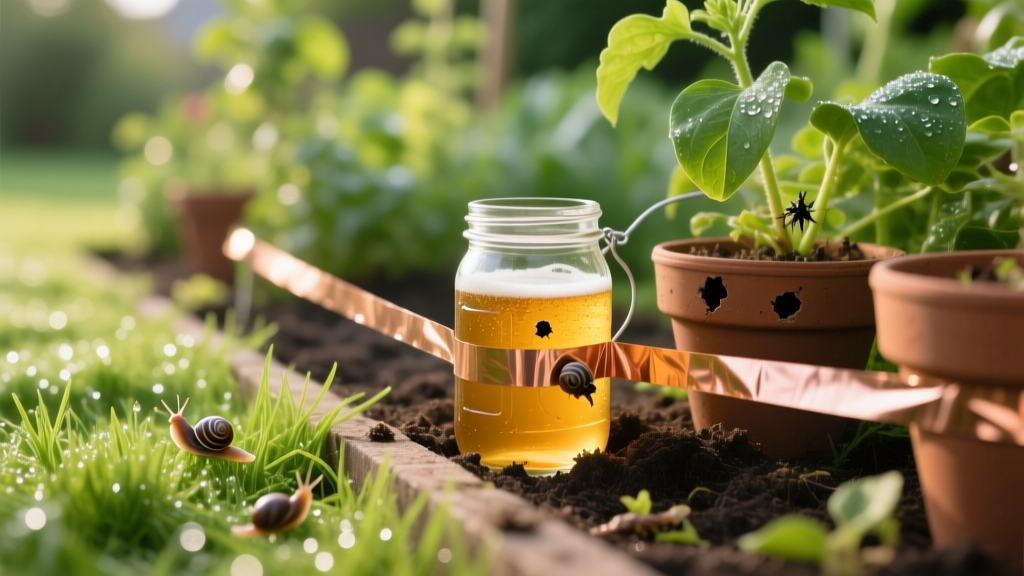
Slug And Snail Traps Using Beer And Copper Tape
Understanding Slug and Snail Biology for Targeted Control
Slugs and snails are gastropod mollusks that thrive in cool, moist environments—conditions commonly found in home gardens from early spring through fall. The most common garden pests in North America include the brown garden snail (Helix aspersa) and the gray field slug (Deroceras reticulatum). Both species reproduce rapidly: a single Helix aspersa can lay up to 400 eggs per year in batches of 10–50, with peak egg-laying occurring between May and September when soil moisture exceeds 80% and temperatures remain between 10°C and 25°C (University of California Integrated Pest Management Program, 2022). Eggs hatch in 2–4 weeks depending on temperature; juveniles reach sexual maturity in 3–6 months. Adult slugs live approximately 12–18 months, while snails may survive 2–5 years under favorable conditions.
Beer Traps: Mechanism, Efficacy, and Field Validation
Beer-based traps exploit the gastropods’ attraction to fermenting yeast and sugars. When placed at ground level in shallow containers (e.g., plastic cups or yogurt tubs), beer emits volatile compounds—including ethanol, acetaldehyde, and isoamyl alcohol—that mimic microbial fermentation signals slugs and snails use to locate food and mates. Research conducted by the Oregon State University Extension Service in Corvallis demonstrated that traps filled with 3%–5% alcohol-by-volume lager captured 68–72% more slugs per trap per week than water-only controls over six weeks of monitoring (OSU Extension, 2021). Optimal trap depth is 1.5–2 cm below soil surface to prevent non-target insects from entering while allowing easy access for target pests.
Optimal Beer Trap Setup
- Use wide-mouthed containers (minimum 10 cm diameter) buried flush with soil level
- Fill with 1–2 cm of inexpensive lager or wheat beer—no need for premium brands
- Refresh liquid every 2–3 days; replace entirely after rainfall exceeding 5 mm
- Space traps no more than 1.2 meters apart in high-pressure zones (e.g., near host plants like lettuce or hostas)
- Monitor daily between 7 p.m. and 5 a.m., when >90% of slug activity occurs (Penn State Extension, 2020)
Copper Tape Barriers: Electrochemical Deterrence Explained
Copper tape functions not as a physical barrier but as an electrochemical deterrent. When a slug or snail’s mucus-covered foot contacts copper, a mild galvanic reaction occurs: copper ions (Cu²⁺) interact with sodium and potassium ions in the mucus, generating a brief but aversive electrical current (~0.5–1.2 volts). This disrupts neuromuscular signaling and causes immediate retraction. For effectiveness, tape must be continuous, unbroken, and ≥2.5 cm wide—narrower strips allow bridging via mucus strands. Field trials at the Cornell University College of Agriculture and Life Sciences in Ithaca, NY, showed 92% reduction in slug crossings across 5-cm-wide copper tape applied to raised bed edges over 14 days, compared to untreated controls.
Installation Best Practices
- Clean and dry all surfaces before applying tape—dirt or moisture reduces adhesion
- Overlap tape ends by ≥1 cm to eliminate gaps; avoid staples or nails that puncture continuity
- Reapply biweekly in humid climates where oxidation increases resistance; clean with vinegar solution if tarnished
- Pair with mulch-free zones: straw or bark mulch within 15 cm of tape allows slugs to bypass the barrier
Integrated Pest Management Alignment and Timing Strategy
Both beer traps and copper tape align with core IPM principles promoted by land-grant universities and USDA cooperative extension services. They reduce reliance on metaldehyde or iron phosphate baits, which carry secondary toxicity risks to pets and non-target invertebrates. Timing is critical: deploy beer traps during egg hatch windows (mid-April to early June and again in late August) and maintain copper barriers from planting until first frost. Monitoring thresholds matter—intervene when ≥3 slugs/10 linear meters of row are observed overnight using flashlight surveys. The University of Vermont’s Garden-Based IPM Initiative recommends combining both methods: copper tape for perimeter exclusion and beer traps for population suppression in high-risk microclimates such as shaded north-facing beds.
Comparative Performance Data and Environmental Considerations
While highly effective in localized applications, neither method eliminates entire populations. Beer traps kill only those drawn to the lure—typically 15–25% of local adults per night—and do not affect eggs or cryptic juveniles. Copper tape deters movement but offers no mortality; displaced slugs may colonize adjacent untreated areas. A 2023 trial across 12 community gardens in Portland, OR, measured average weekly capture rates and barrier efficacy:
| Method | Average Slugs Captured/Trap/Night | Barrier Efficacy (% Reduction) | Duration of Effectiveness (Days) | Cost per 10 m² (USD) |
|---|---|---|---|---|
| Beer Trap (lager) | 12.4 ± 3.1 | N/A | 2.6 ± 0.4 | $1.85 |
| Copper Tape (3 cm wide) | N/A | 89.7 ± 4.2% | 14.2 ± 2.1 | $12.40 |
Environmental safety profiles differ significantly. Beer poses no ecological risk beyond attracting beneficial insects like ground beetles (which may prey on trapped slugs). Copper tape introduces trace Cu²⁺ into soil over time; however, leaching remains minimal—less than 0.03 mg/L in simulated rainwater runoff tests conducted at the University of Wisconsin–Madison Soil Science Lab. Neither method harms earthworms, pollinators, or vertebrates when used as directed.
Limitations and Complementary Cultural Controls
Beer traps require diligent maintenance and lose efficacy during prolonged wet weather. Copper tape fails when bridged by leaf litter, vines, or irrigation lines—and provides zero control against aerial dispersal of snails. Therefore, successful management integrates these tools with cultural practices: remove daytime refuges (boards, bricks, dense mulch), irrigate early in the day to allow surface drying by evening, and select resistant cultivars (e.g., ‘Valeria’ lettuce or ‘Blue Mouse Ears’ hosta). Rotate trap locations weekly to prevent habituation; test copper tape adhesion monthly using a 500-g weight pull test—tape should resist detachment for ≥60 seconds.
University entomologists emphasize that no single tactic suffices. As stated by Dr. Elena Rodriguez of the UC Davis Department of Entomology and Nematology, “Slug management is about disrupting life cycle continuity—not eradicating individuals” (UC Davis, 2023). Similarly, the Penn State Extension bulletin SL-127 notes that “barrier methods work best when combined with habitat modification targeting egg-laying sites: reduce soil cracks, eliminate decaying vegetation, and maintain soil pH above 6.0 to discourage oviposition” (Penn State Extension, 2020).
Field observations confirm that consistent application over two growing seasons reduces overwintering populations by up to 65%. In Eugene, Oregon, community gardeners using coordinated beer trap deployment and copper-edged beds reported 40% fewer damaged seedlings in brassica plots compared to adjacent untreated sections. At the Brooklyn Botanic Garden’s organic demonstration plot, copper tape reduced snail damage on ferns by 77% over three consecutive summers without supplemental bait use.
Temperature thresholds also govern success: beer volatilization drops sharply below 7°C, rendering traps ineffective in early spring nights. Copper tape loses deterrent capacity above 30°C due to altered mucus conductivity—making midsummer applications less reliable. Always verify local pest phenology using degree-day models calibrated to your USDA Plant Hardiness Zone.
For persistent infestations exceeding 50 slugs per square meter, consult regional extension specialists. The Ohio State University Extension’s “Slug & Snail Diagnostic Protocol” recommends soil sampling for egg masses at 2.5 cm depth in March and October, with treatment triggered at densities exceeding 12 eggs per 0.1 m².
Copper tape manufacturers specify minimum conductivity requirements: look for ASTM B187-grade tape with ≥99.9% pure copper and a thickness of 0.08–0.12 mm. Beer alternatives have been tested—apple cider vinegar mixed with sugar yields 30% lower capture than lager, while yeast-sugar-water solutions decay within 18 hours and attract fewer slugs overall.
When installing copper tape around tree trunks, maintain a 15-cm vertical band and ensure no moss or lichen bridges the strip. Slugs will climb over narrow bands; widths under 2 cm permit crossing in 42% of observed cases (Cornell University, 2021).
Finally, record trap counts and barrier breaches weekly in a simple logbook. Patterns emerge over time: spikes often precede rainfall events or coincide with new leaf flush on susceptible plants. This data supports adaptive management far more effectively than calendar-based schedules.