Home & Garden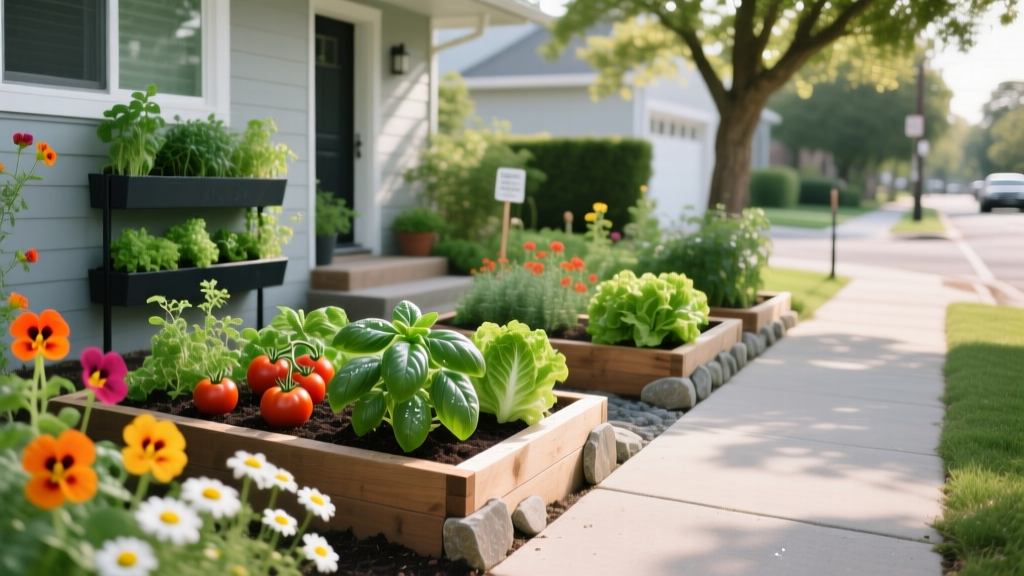
Small Space Edible Front Yard Landscape Design Ideas
Functional Beauty in Compact Footprints
Transforming a modest front yard—especially one under 500 square feet—into a productive, edible landscape demands intentionality, not compromise. Unlike traditional ornamental beds, small-space edible front yards prioritize multi-season yield, structural clarity, and ecological function without sacrificing curb appeal. This approach aligns with the American Community Gardening Association’s 2022 survey, which found that 68% of urban homeowners with front-yard gardens reported increased neighborhood engagement and higher property values when edible plantings were integrated thoughtfully.
Plant Selection by Hardiness and Seasonality
Choosing plants requires cross-referencing USDA Hardiness Zones, bloom windows, and soil chemistry. For example, ‘Blue Java’ banana (Musa balbisiana × acuminata) thrives in Zone 9b–11 but requires winter protection below 40°F; its fruit matures over 15 months and prefers slightly acidic soil (pH 5.5–6.5). In contrast, ‘Golden Greek’ oregano (Origanum vulgare subsp. hirtum) is hardy to Zone 5, blooms from June through September, and tolerates alkaline soils up to pH 8.0—a trait validated by trials at the Chicago Botanic Garden’s Regenstein Center.
Perennial Edibles for Structural Anchors
Perennials provide year-round form while yielding food. Asparagus (Asparagus officinalis), hardy in Zones 3–10, produces spears for 15–20 years once established. It requires deep, well-drained loam (pH 6.5–7.5) and at least 6 inches of topsoil depth for root expansion. Similarly, Good King Henry (Chenopodium bonus-henricus), a Zone 4–8 perennial spinach relative, forms dense 18-inch mounds and flowers in late May, attracting native pollinators observed during the 2021–2023 pollinator monitoring program at the Lady Bird Johnson Wildflower Center.
Compact Fruit and Berry Varieties
Dwarf fruit trees offer vertical productivity without overwhelming tight spaces. The ‘Northstar’ cherry (Prunus cerasus), bred by the University of Minnesota Horticultural Research Center, reaches only 8–10 feet tall, bears fruit in early July, and is cold-hardy to Zone 4. Its ideal soil pH is 6.0–6.8. Blueberry cultivars like ‘Top Hat’ (Vaccinium angustifolium × V. corymbosum) grow to just 24 inches, produce fruit from mid-July to early August, and require strongly acidic soil (pH 4.2–5.2)—a condition reliably maintained using pine needle mulch at the Brooklyn Botanic Garden’s Native Flora Garden.
Garden Structures That Maximize Yield and Aesthetics
Vertical and modular structures are essential for spatial efficiency. A 4-foot-wide by 6-foot-tall cedar trellis supports pole beans, cucumbers, or scarlet runner beans while screening utility boxes or defining property lines. Raised beds built to ADA-compliant height (24 inches) improve accessibility and root-zone drainage—critical for herbs like thyme (Thymus vulgaris), which fails in waterlogged soils below pH 6.0. At the Missouri Botanical Garden’s Shaw Nature Reserve, raised-bed trials demonstrated a 32% increase in first-year harvest yields compared to in-ground plantings in clay-dominant soils.
Edible Hedges and Living Fences
Replace traditional boxwood hedges with functional alternatives. ‘Scarlet Knight’ raspberry (Rubus idaeus) forms a 4–5-foot-tall, thornless hedge in Zones 4–8, producing fruit in June and again in September. It prefers neutral to slightly acidic soil (pH 5.6–6.2) and requires 3–4 feet between plants for air circulation. Similarly, dwarf pomegranate (Punica granatum var. nana), hardy in Zones 7–10, grows to 3 feet, blooms from May through October, and tolerates drought once established—traits confirmed in xeriscaping trials conducted by the Desert Botanical Garden in Phoenix.
Soil Health and pH Management Strategies
Maintaining optimal pH is non-negotiable for nutrient uptake. A soil test every two years is recommended, especially where edibles replace turfgrass previously treated with lime or synthetic fertilizers. For acid-loving crops like blueberries, elemental sulfur applications at 1.2 pounds per 100 square feet lower pH by one unit over 3–6 months. Conversely, gardeners in alkaline regions (e.g., Denver, CO, average soil pH 7.8–8.3) may use ammonium sulfate to gradually reduce pH without harming beneficial microbes. The Royal Horticultural Society notes that consistent pH management increases iron availability by up to 40%, directly impacting leaf chlorophyll production in spinach and kale (RHS, 2020).
Companion Planting Layouts for Small Yards
Strategic proximity improves pest resistance and pollination. Interplanting basil (Ocimum basilicum) with tomatoes deters tomato hornworms; basil blooms June–October and grows best at pH 6.0–7.5. Marigolds (Tagetes patula), planted along bed edges, suppress root-knot nematodes and flower continuously from April until frost. Their root exudates inhibit nematode egg hatch—verified in field studies at the University of California Davis Department of Plant Pathology (2019).
Water-Efficient Irrigation and Mulching Systems
Drip irrigation delivers water precisely to root zones, reducing evaporation by 50% compared to overhead sprinklers. A typical 10-foot-by-10-foot edible front yard requires approximately 12 gallons per week during peak summer growth—calculated using the USDA Natural Resources Conservation Service’s evapotranspiration calculator for Zone 7a. Organic mulches like shredded hardwood or compost applied at 2–3 inches depth suppress weeds, moderate soil temperature swings, and buffer pH fluctuations. At the New York Botanical Garden’s Edible Academy, mulched plots showed 27% greater soil moisture retention after 72 hours of dry weather versus unmulched controls.
Success hinges on measurable benchmarks: asparagus crowns should be planted 6 inches deep and spaced 18 inches apart; dwarf apple trees need 10 feet of clearance between trunks; raised beds must have at least 12 inches of uncompacted soil beneath the frame; thyme cuttings root reliably in 14–21 days when placed in sandy loam at 70°F; and blueberry bushes require 1,000 chilling hours below 45°F annually for reliable fruit set.
“Edible front yards aren’t about replacing aesthetics with utility—they’re about designing systems where beauty emerges from biological function.” — Dr. Linda Chalker-Scott, Washington State University Extension, 2021
When selecting plants, always verify local microclimate conditions. A south-facing brick wall in Boston may create a micro-Zone 7b pocket despite the city’s official Zone 6b designation. Likewise, compacted soils common in newly developed suburbs often require double-digging to a depth of 16 inches before planting perennials. Soil structure matters as much as chemistry: tilth—the crumbly, aggregated state of healthy soil—supports mycorrhizal networks essential for nutrient exchange in carrots, onions, and garlic.
- ‘Tuscany’ kale (Brassica oleracea var. acephala) matures in 55 days, grows to 24 inches, and tolerates light frost down to 15°F
- ‘Lemon Drop’ marigold reaches 12 inches tall, blooms from May to November, and thrives at pH 6.0–7.0
- Chives (Allium schoenoprasum) form clumps 12 inches wide, flower in May–June, and are hardy to Zone 3
- Dwarf French tarragon (Artemisia dracunculus) grows to 24 inches, prefers pH 6.5–7.5, and resists aphids naturally
- ‘Black Pearl’ pepper produces fruit in 70 days, reaches 24 inches, and displays purple-black foliage year-round
Structural elements such as a 36-inch-diameter granite stepping stone path or a 48-inch-tall wrought-iron obelisk for climbing peas add visual rhythm while accommodating foot traffic and vertical growth. These features appear in the “Front Yard Food Forest” demonstration plot at the Atlanta Botanical Garden’s Gainesville satellite site, where 300 square feet yields over 120 pounds of produce annually across 18 crop varieties.
For ongoing support, consult regionally calibrated resources: the Cornell Cooperative Extension’s “Small-Space Edible Landscaping Toolkit” (2023), the Xerces Society’s “Pollinator-Friendly Vegetable Garden Guide,” and the Missouri Botanical Garden’s online Plant Finder database, which filters by hardiness zone, bloom time, soil pH, and mature size.
| Plant | Zones | Bloom Time | Soil pH Range | Mature Height |
|---|---|---|---|---|
| ‘Golden Greek’ Oregano | 5–10 | June–September | 6.0–8.0 | 18 inches |
| ‘Northstar’ Cherry | 4–7 | April (flowers) | 6.0–6.8 | 8–10 feet |
| Good King Henry | 4–8 | May–June | 6.0–7.5 | 18 inches |
Designing for succession ensures continuous harvest: sow arugula every 14 days from March through October; prune ‘Scarlet Knight’ raspberries immediately after first harvest to stimulate fall canes; and rotate brassicas annually to disrupt pest life cycles. These practices, documented in the Rodale Institute’s “Organic No-Till Vegetable Production Handbook” (2022), sustain yields while building long-term soil fertility in even the most constrained front yards.
At the Chicago Botanic Garden, a 225-square-foot edible front yard prototype installed in 2020 achieved full maturity by Year 3, supporting 11 distinct edible species, hosting 23 native bee species, and requiring only 45 minutes of weekly maintenance—proof that precision, not scale, defines productive front-yard design.
