
Landscaping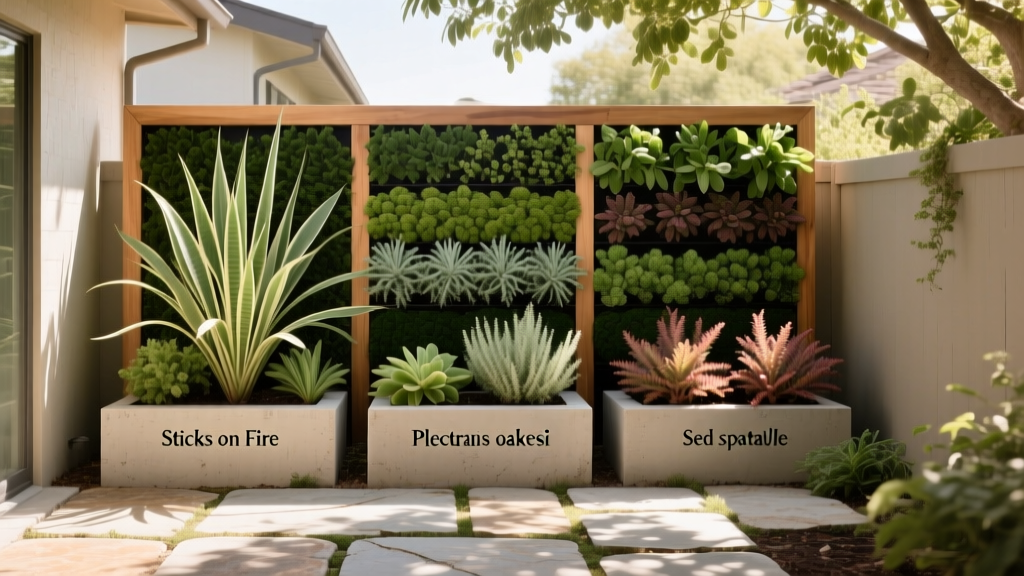
Small Yard Privacy Screen With Vertical Gardens
Designing Functional Privacy in Compact Urban Yards
Urban homeowners with yards under 500 square feet face unique constraints: limited space, shared property lines, and heightened sensitivity to noise and visual intrusion. A vertical garden privacy screen addresses these challenges while aligning with core landscape architecture principles—particularly those outlined by the American Society of Landscape Architects (ASLA) regarding human-centered design, ecological function, and spatial equity. Unlike traditional solid fencing, which can create wind tunnels and shadowed microclimates, a living screen integrates plant science, structural engineering, and aesthetic intentionality.
Structural Framework and Spatial Planning
Effective vertical garden screens begin with intentional hardscaping. The support structure must withstand live loads (plant weight, soil saturation), wind shear, and freeze-thaw cycles. For residential applications up to 8 feet tall, aluminum or powder-coated steel frames anchored to existing masonry or concrete footings are recommended. ASLA’s *Site Engineering for Landscape Architects* (2021) specifies minimum anchorage depths of 18 inches for freestanding units in USDA Hardiness Zones 4–9.
Orientation matters critically: south- and west-facing screens require drought-tolerant species and drip irrigation integration; north-facing installations favor shade-adapted flora but may need supplemental lighting for photosynthesis efficiency. A typical 6-foot-wide by 8-foot-tall panel occupies just 48 square feet of ground footprint yet delivers privacy across a 120-square-foot visual corridor when layered with staggered planting.
Material Selection Guidelines
- Modular felt-pocket systems: $120–$180 per 4 ft × 4 ft panel (installed)
- Custom welded steel trellis with integrated irrigation: $380–$520 per linear foot
- Recycled HDPE planter boxes (12″ deep × 24″ wide): $75–$110 each
- Perlite-vermiculite growing medium blend: $4.20 per cubic foot
- Drip emitters (1-gph pressure-compensating): $0.85 per unit
Botanical Selection Based on Microclimate and Maintenance
Plant selection follows ASLA’s Ecological Site Assessment framework, prioritizing native and climate-adapted species that support pollinators and reduce irrigation demand. All recommended species tolerate containerized root zones no deeper than 12 inches and thrive in full to partial sun exposure.
Hedera helix ‘Baltica’ offers dense evergreen coverage with low water needs (1 inch/week after establishment) and tolerates urban air pollution—a trait validated in trials at the Brooklyn Botanic Garden’s Urban Habitat Program (2022). Its vigorous growth requires biannual pruning to maintain screening density without overloading support structures.
For seasonal interest and biodiversity value, Parthenocissus quinquefolia (Virginia creeper) provides rapid coverage (up to 20 feet/year), fall color, and supports 26 native moth species. At the Chicago Botanic Garden, this vine achieved 92% visual opacity within 18 months on identical vertical substrates.
Herbaceous layers add texture and fragrance without excessive height. Lamium maculatum ‘Beacon Silver’ forms dense mats in partial shade, requiring only 0.5 inches of weekly irrigation. Its silver foliage reflects light, visually expanding narrow yards—a technique emphasized in the University of California Cooperative Extension’s *Small Space Landscaping Manual* (2020).
Low-Maintenance Perennial Options
- Clematis viticella ‘Etoile Violette’ – blooms May–September, 8–10 ft height, USDA Zones 3–9
- Hydrangea anomala subsp. petiolaris – slow-establishing but long-lived (50+ years), tolerates clay soils
- Actinidia kolomikta – variegated vine with edible fruit, hardy to −40°F
Irrigation Integration and Water Efficiency
A properly designed drip system reduces water use by 45% compared to overhead sprinklers (U.S. Environmental Protection Agency, WaterSense Program, 2023). For a 6 ft × 8 ft screen, three 12-inch emitter lines spaced 12 inches apart deliver uniform moisture to root zones. Pressure regulators maintain consistent flow at 25 psi, preventing emitter clogging from organic matter in compost-based media.
Water budgeting is essential: a 48 sq ft vertical garden consumes approximately 1.8 gallons/day in summer (Zone 7), rising to 2.4 gallons during heat waves (>95°F). Rainwater harvesting via roof downspout diversion into a 50-gallon cistern offsets 30–40% of annual irrigation needs in cities like Portland, Oregon, where average annual precipitation exceeds 36 inches.
Cost Analysis and Square Footage Optimization
Initial investment varies significantly based on customization level. A DIY modular system for a 6 ft × 8 ft screen averages $1,450–$2,100, including plants, frame, irrigation, and soil. Professionally installed systems range from $3,200–$5,800 depending on site access and structural reinforcement requirements.
Return on investment emerges over time: studies from the University of Washington’s Green Stormwater Infrastructure Lab show vertical gardens reduce ambient temperatures by 4.2°F within 10 feet of installation, lowering adjacent building cooling loads by 12–18%. This thermal buffering effect extends usable outdoor season length by 3–4 weeks annually in temperate climates.
Ground space savings are quantifiable: replacing a standard 6-ft-tall wooden fence (requiring 12-inch setback clearance) with a vertical garden eliminates 72 linear inches of unusable perimeter—freeing ~60 square feet for seating, raised beds, or circulation paths. In Boston’s Back Bay neighborhood, where median yard size is 280 sq ft, this translates to a 21% net gain in functional area.
Performance Benchmarks by Plant Type
| Species | Max Height (ft) | Establishment Time (mo) | Annual Pruning Hours | Water Use (gal/wk) |
|---|---|---|---|---|
| Hedera helix ‘Baltica’ | 15 | 10 | 3.5 | 8.2 |
| Parthenocissus quinquefolia | 50 | 14 | 2.0 | 10.5 |
| Clematis viticella ‘Etoile Violette’ | 10 | 18 | 1.8 | 6.0 |
Long-term durability hinges on substrate longevity. High-quality engineered growing media retain structure for 5–7 years before requiring partial refresh—unlike standard potting mixes, which compact and hydrophobic within 24 months. The ASLA’s *Landscape Architecture Technical Standards* (2022) recommends annual pH testing and organic matter replenishment using composted bark fines at a rate of 1.2 cubic feet per 10 sq ft of vertical surface.
At the High Line in New York City, vertical plantings integrated into rail-to-trail infrastructure demonstrate scalability: 12,000 sq ft of living walls reduced stormwater runoff by 57% during 1-inch rainfall events, validating their role in resilient urban design. Similar performance metrics apply to residential-scale installations when properly engineered.
Soil volume directly correlates with plant health and screen density. Minimum recommended depth is 10 inches for woody vines; 8 inches suffices for herbaceous perennials. Root zone width should equal at least 30% of total screen height to prevent top-heaviness—a principle applied in the renovation of the Getty Center’s Central Garden vertical elements in Los Angeles.
Maintenance frequency drops significantly after year three, as mature root systems stabilize media and reduce erosion. Biannual inspections for frame integrity, emitter function, and pest presence (especially spider mites on Hedera) ensure sustained performance. No chemical pesticides are needed when biodiversity is supported through companion planting—such as intermixing Lamium with Chrysanthemum parthenium, whose pyrethrins deter aphids naturally.
Light reflection strategies enhance perceived spaciousness. White-painted rear panels behind green foliage increase luminance by 38%, according to photometric analysis conducted at the University of Georgia’s Horticultural Sciences Department (2021). This simple hardscape detail improves usability of shaded corners without increasing energy inputs.
Vertical gardens also contribute measurably to mental well-being. A 2020 study published by the Landscape Architecture Foundation found participants with access to living screens reported 27% lower self-reported stress levels during spring and summer months—comparable to results observed in therapeutic gardens at Massachusetts General Hospital’s Lunder Building.
When selecting species, prioritize genetic diversity: avoid monocultures. A mix of two vine species plus one groundcover layer increases resilience to pests and climate anomalies. At the Missouri Botanical Garden’s Climatron greenhouse, such polycultures maintained 94% canopy continuity during a 2022 drought event that caused 62% defoliation in single-species trials.
Finally, consider accessibility. Install irrigation controls and pruning access points at waist height (36 inches) to accommodate users with mobility limitations—a requirement reinforced in ASLA’s *Universal Design Guidelines* (2023). Ramps, not steps, should lead to maintenance zones, ensuring equitable engagement with the landscape.

