Pest Control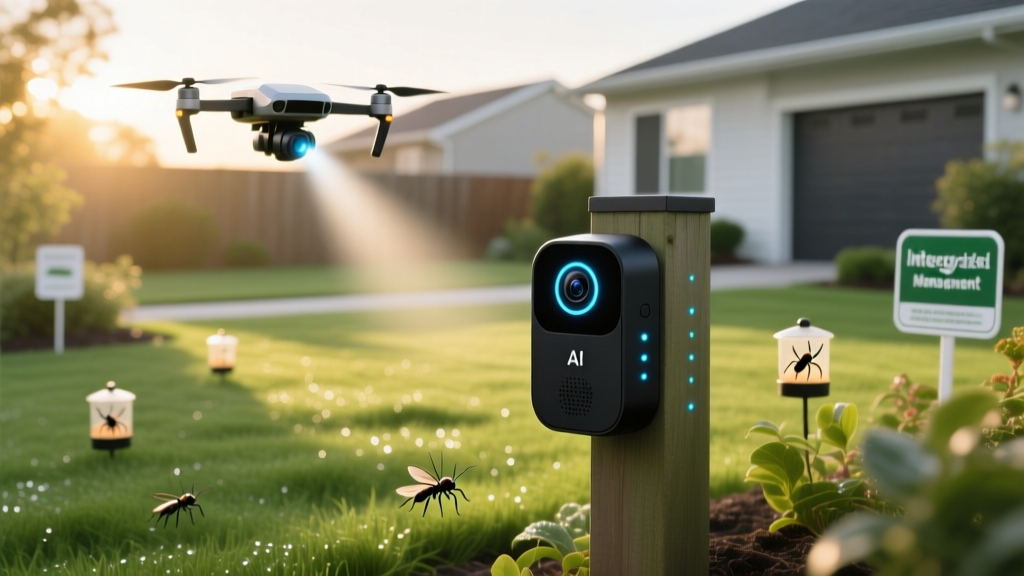
Smart Pest Control: Automate Your Lawn Defense System
James MillerPublished
The Intersection of Smart Home Tech and Lawn Care
As homeowners increasingly adopt smart home ecosystems, the boundaries between indoor automation and outdoor landscaping are rapidly dissolving. One of the most innovative frontiers in this space is smart pest control. Traditionally, managing lawn and garden pests required constant manual monitoring, reactive chemical applications, and guesswork. Today, integrated smart home devices—ranging from AI-powered security cameras to automated irrigation controllers—allow you to build a proactive, automated perimeter defense system. By leveraging technology, you can identify pests early, deter them humanely, and drastically reduce your reliance on broad-spectrum pesticides.
Automated pest management aligns perfectly with modern sustainability goals. Instead of blanket-spraying your yard, you can use targeted, tech-driven interventions that protect your turf and ornamental plants while preserving beneficial insects. Below, we explore how to build a comprehensive, automated pest defense system for your lawn and garden.
AI-Powered Cameras for Pest Identification
The first step in any effective pest management strategy is accurate identification. According to the University of California Statewide IPM Program, monitoring and identifying pests accurately is crucial to ensure that control methods are both necessary and effective. Smart outdoor cameras equipped with machine learning algorithms can now distinguish between a swaying tree branch, a neighborhood cat, and a destructive foraging animal like a raccoon, deer, or groundhog.
Top Smart Cameras for Yard Monitoring
- Netatmo Smart Outdoor Camera: This camera features built-in AI that specifically recognizes humans, cars, and animals. When it detects an animal, it can trigger an automated response, such as turning on floodlights or sending a push notification to your phone. Priced around $200, it offers local storage and integrates seamlessly with Apple HomeKit and IFTTT (If This Then That).
- Wyze Cam v3: A budget-friendly option (under $50) that boasts Starlight Sensors for color night vision. This is invaluable for identifying nocturnal pests like skunks, opossums, and armadillos that destroy lawns under the cover of darkness. You can use Wyze's motion zones to focus exclusively on your garden beds.
- Ring Floodlight Cam Wired Pro: While primarily a security camera, its 3D motion detection and bird's-eye view capabilities make it excellent for tracking the movement patterns of larger pests like deer across wide lawn areas.
Optimal Camera Placement for Pest Tracking
To get the most out of your AI cameras, placement is critical. Mount cameras 4 to 6 feet off the ground to capture the eye level of mid-sized mammals like raccoons and foxes. For smaller burrowing pests or ground-foraging rabbits, angle secondary cameras lower, about 2 feet off the ground, pointing toward known entry points or damaged garden beds. Ensure the camera's field of view is not obstructed by tall ornamental grasses or overhanging branches, which can trigger false motion alerts.
Automated Deterrence: Smart Irrigation and Lighting
Once a pest is detected, the next phase of automation is deterrence. Many common lawn pests are highly sensitive to sudden environmental changes, particularly water and light. By linking your smart cameras to your smart irrigation and lighting systems via platforms like IFTTT or Amazon Alexa Routines, you can create automated scare tactics.
Smart Sprinklers as a Deterrent
Controllers like the Rachio 3 Smart Sprinkler Controller (approx. $230) or the Orbit B-hyve (approx. $100) allow for highly customized watering schedules. However, they can also be weaponized against pests. Armadillos, moles, and voles prefer dry, loose soil for digging and foraging for grubs. By programming your smart sprinkler to deliver random, 2-minute "phantom rain" bursts in specific problem zones between 1:00 AM and 4:00 AM, you can make the soil environment unappealing to burrowers without overwatering your lawn. Furthermore, a sudden burst of water is an excellent, humane way to startle and chase away nocturnal foragers like deer and feral cats.
Smart Lighting Integration
Deer and rabbits are notoriously skittish. By pairing a smart camera with smart outdoor lighting (such as Philips Hue outdoor fixtures), you can set a routine where the detection of an animal instantly triggers a bright, flashing strobe effect or a sudden shift to high-lumen daylight tones. This sudden illumination disrupts their feeding cycle and conditions them to avoid your yard entirely.
Smart Traps and Perimeter Sensors
For pests that breach the perimeter and target your shed, garage, or the immediate edges of your patio, smart traps offer a hands-off monitoring solution. The Victor Smart-Kill Wi-Fi Rat Trap (approx. $60) is an excellent example. While primarily designed for rodents, it is highly effective for protecting the perimeters of your garden where mice and voles might nest. The trap connects to your home Wi-Fi and sends an email or text alert the moment a catch is made, eliminating the need for daily manual checks and ensuring humane, timely disposal.
Additionally, wireless perimeter sensors and smart ultrasonic repellents can be placed along fence lines. Devices like the Yard Sentinel RC use motion sensors to emit high-frequency ultrasonic waves that are inaudible to humans but highly irritating to pests like squirrels, birds, and rodents. Some of these devices can be integrated into smart outdoor plugs, allowing you to automate their active hours via a smart home hub.
Comparison Chart: Smart Pest Control Devices
| Device Type | Product Example | Target Pests | Est. Cost | Automation Feature |
|---|---|---|---|---|
| AI Camera | Netatmo Smart Outdoor | Deer, Raccoons, Foxes | $200 | Animal recognition triggers lights/alerts |
| Smart Sprinkler | Rachio 3 Controller | Moles, Voles, Armadillos | $230 | Randomized micro-bursts to disrupt digging |
| Smart Trap | Victor Smart-Kill Wi-Fi | Mice, Voles, Rats | $60 | Instant smartphone notification upon catch |
| Ultrasonic Repellent | Yard Sentinel RC | Squirrels, Birds, Cats | $50 | Motion-activated sonic deterrence |
| Smart Lighting | Philips Hue Outdoor | Deer, Rabbits, Opossums | $100+ | Flashing/strobe routines triggered by camera |
Integrating Automation with IPM Principles
It is vital to remember that technology should support, not replace, foundational horticultural practices. The Environmental Protection Agency (EPA) outlines Integrated Pest Management (IPM) as an effective and environmentally sensitive approach that relies on a combination of common-sense practices. IPM emphasizes understanding the life cycles of pests and their interaction with the environment, using this information to manage damage by the most economical means, and with the least possible hazard to people, property, and the environment.
Smart home automation perfectly fulfills the "Monitoring and Identification" and "Prevention" pillars of IPM. According to the National Pesticide Information Center (NPIC), prevention is the first line of defense. Automated cameras help you identify exactly which pest is causing damage, preventing the misapplication of treatments. For instance, if your camera reveals that skunks are tearing up your lawn, you know they are hunting for white grubs. This targeted intelligence tells you that applying a biological control like beneficial nematodes or milky spore to the soil is the correct IPM response, rather than setting out toxic baits that could harm local wildlife.
Pro Tip: Use your smart camera's time-lapse and motion history features to map out the exact hours pests are most active. If deer consistently browse your hostas at 5:30 AM, you can program your smart sprinklers to run a 1-minute cycle at 5:15 AM to deter them before they arrive.
Step-by-Step Implementation Guide
Ready to automate your lawn's pest defense? Follow this actionable checklist to get started:
- Audit Your Vulnerabilities: Walk your property at dusk. Note where fencing is low, where garden beds meet the woods, and where you see active digging or chewing damage.
- Deploy the Eyes: Install a Wi-Fi-enabled outdoor camera covering the primary damage zone. Ensure it has access to a strong 2.4GHz Wi-Fi signal, which penetrates exterior walls better than 5GHz networks.
- Establish the Trigger: Use an automation hub like Samsung SmartThings, Apple HomeKit, or IFTTT. Create a routine: IF [Camera] detects animal motion, THEN turn on [Outdoor Smart Plug/Light] for 5 minutes.
- Adjust Irrigation Logic: Open your smart sprinkler app and create a secondary "Deterrence Schedule" for problem zones. Set it to run for only 2 minutes on alternating nights to keep the topsoil slightly damp, discouraging burrowers without causing root rot.
- Review and Adapt: Check your camera logs weekly. Pests are highly adaptable; if raccoons learn to ignore a static light, update your automation routine to flash the lights or trigger the sprinklers instead.
Conclusion
The modern lawn is no longer just a patch of grass; it is a dynamic ecosystem that can be actively managed through the lens of smart home technology. By integrating AI cameras, automated irrigation, and smart lighting, you transform your yard into a responsive environment that naturally deters pests. This tech-forward approach not only saves you time and money but also champions the core tenets of Integrated Pest Management, ensuring your garden remains a lush, thriving, and ecologically balanced sanctuary for years to come.