Home & Garden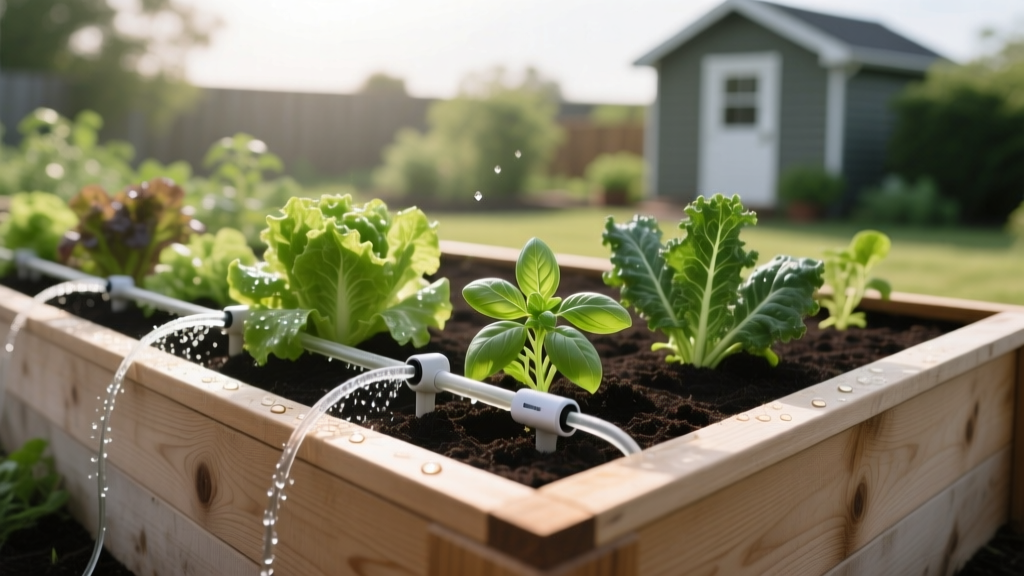
How to Install a Smart Drip Irrigation System for Raised Beds
James MillerPublished
Why Upgrade to a Smart Drip Irrigation System?
Bridging the gap between modern smart home technology and traditional garden-to-table cultivation is one of the most rewarding DIY projects a homeowner can undertake. If you are growing tomatoes, peppers, and leafy greens in raised beds, consistent moisture is the secret to a bountiful harvest. However, hand-watering is time-consuming, and overhead sprinklers waste water while promoting fungal diseases on wet foliage. Upgrading to a smart drip irrigation system solves these issues by delivering water directly to the root zone, precisely when your plants need it.
A smart irrigation controller connects to your home Wi-Fi network and uses local weather data, soil moisture levels, and evapotranspiration rates to automatically adjust watering schedules. This practical how-to guide will walk you through the exact steps, materials, and costs required to install a highly efficient smart drip irrigation system for your raised garden beds, ensuring your outdoor living space remains lush, productive, and energy-efficient.
Tools and Materials Needed
Before beginning your installation, gather the following components. This setup is designed for a standard 4-foot by 8-foot raised garden bed. The total estimated cost for this DIY project ranges from $250 to $320, depending on the smart controller you choose.
- Smart Irrigation Controller: Rachio 3 or Orbit B-hyve (Approx. $129 - $229)
- Backflow Preventer: Hose bibb vacuum breaker to protect your home drinking water ($12)
- 120-Mesh Water Filter: Prevents sediment from clogging drip emitters ($15)
- Pressure Regulator: Reduces household water pressure (60+ PSI) to a safe 25 PSI for drip lines ($15)
- 1/2-Inch Poly Tubing: Mainline distribution tubing, 100-foot roll ($35)
- 1/4-Inch Micro-Tubing: For connecting emitters to the mainline, 50-foot roll ($12)
- 2 GPH Drip Emitters: 2 Gallons-Per-Hour pressure-compensating drippers, 50-pack ($10)
- Barbed Connectors and Goof Plugs: For securing micro-tubing and fixing mistakes ($10)
- Landscape Staples: U-shaped pins to hold tubing in place ($8)
- Tools: Tubing cutter or heavy scissors, drip hole punch tool, and a flathead screwdriver.
Step-by-Step Installation Guide
Step 1: Connect the Smart Controller and Mainline Assembly
The heart of your system is the smart controller, which will mount near your outdoor faucet (hose bibb) or indoors near a power outlet, depending on the model. If mounting outdoors, ensure you use a weatherproof enclosure. Once the controller is powered and connected to your faucet via a standard garden hose, you must build the mainline assembly in a very specific order to ensure proper function and longevity.
First, screw the backflow preventer directly onto the faucet. Next, attach the smart controller's inline valve or connect the hose from the controller. Following the valve, screw on the 120-mesh filter. This is critical; without it, tiny mineral deposits will quickly clog your drip emitters. Finally, attach the 25 PSI pressure regulator to the filter. Drip irrigation components are not designed to handle standard household water pressure, and skipping the regulator will result in blown fittings and flooding. Connect your 1/2-inch poly tubing adapter to the end of the pressure regulator, and snap your mainline tubing into place.
Step 2: Lay Out the Distribution Tubing
Unroll your 1/2-inch poly tubing and let it sit in the sun for about 30 minutes. The heat will soften the plastic, making it much easier to work with and preventing it from kinking. Snake the mainline tubing around the perimeter of your raised bed, or run it straight down the center if you have a single, wide bed. Use landscape staples every 3 to 4 feet to secure the tubing to the soil or the wooden frame of the raised bed.
If you are connecting multiple raised beds, use 1/2-inch barbed tees and elbows to split the mainline. Keep in mind that a standard 1/2-inch mainline can support up to 200 gallons per hour (GPH) of total emitter output. For a typical 4x8 vegetable bed using 2 GPH emitters, you will easily stay well within this capacity limit.
Step 3: Install the Drip Emitters and Micro-Tubing
Vegetable roots need targeted hydration. Using your drip hole punch tool, pierce the 1/2-inch mainline tubing directly adjacent to the base of each plant. Insert a barbed connector into the hole, then attach a length of 1/4-inch micro-tubing. Run the micro-tubing to the base of the plant stem and insert your 2 GPH pressure-compensating drip emitter at the very end.
Why 2 GPH? Pressure-compensating emitters ensure that the plant at the very end of the line receives the exact same amount of water as the plant closest to the faucet. For heavy clay soils, a 1 GPH emitter is preferable to allow for slow absorption, while sandy soils benefit from 4 GPH emitters to prevent the water from draining past the root zone before it can be absorbed. If you make a mistake and punch a hole in the wrong spot, simply push a rubber goof plug into the hole to seal it.
Step 4: Connect to Wi-Fi and Configure Zones
With the physical installation complete, download your smart controller's mobile app and connect the device to your home's 2.4 GHz Wi-Fi network. The app will prompt you to configure your specific zone. This is where the magic of smart home integration happens. You will input the following data:
- Vegetation Type: Select 'Vegetable Garden' or 'Annuals'.
- Soil Type: Choose 'Loam' for standard raised bed mixes, or 'Sandy' if you use a highly porous mix.
- Sun Exposure: Select 'Full Sun' if your beds receive 6-8 hours of direct light.
- Sprinkler Head Type: Select 'Drip' or 'Bubbler'. The app uses this to calculate the precipitation rate accurately.
Enable the 'Weather Intelligence' or 'Smart Cycle' features in the app. This allows the system to automatically skip watering if rain is in the forecast or if the soil moisture is already sufficient, seamlessly integrating your garden care with local meteorological data.
Smart Controller Comparison Chart
Choosing the right brain for your irrigation system is crucial. Below is a comparison of the top smart controllers suited for residential drip irrigation setups.
| Model | Avg. Cost | Max Zones | EPA WaterSense Certified | Best Feature |
|---|---|---|---|---|
| Rachio 3 | $229 | 8 or 16 | Yes | Hyper-local weather forecasting and IFTTT integration |
| Orbit B-hyve | $129 | 6 | Yes | Built-in screen and budget-friendly price point |
| Netro Smart | $130 | 6 | No | AI-driven plant care database and soil moisture alerts |
Expert Insights on Water Efficiency
Transitioning from manual watering to a smart drip system is not just a convenience; it is an environmentally responsible choice backed by agricultural science. According to the University of California Agriculture and Natural Resources (UC ANR), traditional overhead spray sprinklers operate at roughly 65% to 75% efficiency due to wind drift and surface evaporation. In stark contrast, drip irrigation systems operate at up to 90% efficiency.
'Drip irrigation applies water directly to the root zone, minimizing evaporation and runoff. When paired with smart controllers that adjust to real-time evapotranspiration data, homeowners can reduce outdoor water usage by 30% to 50% while simultaneously increasing crop yields in vegetable gardens.' - UC ANR Water Conservation Guidelines.
By keeping the foliage dry, drip irrigation also drastically reduces the incidence of powdery mildew, blight, and other moisture-borne fungal diseases that frequently plague garden-to-table crops like tomatoes and squash.
Seasonal Maintenance and Winterization
To ensure your smart drip irrigation system lasts for years, seasonal maintenance is mandatory. In early spring, flush the mainline by removing the end cap and letting the water run for two minutes to clear out any debris or mineral buildup that accumulated over the winter. Inspect all 1/4-inch micro-tubing for cracks caused by UV exposure and replace any brittle sections.
If you live in a climate where temperatures drop below freezing, winterization is critical to prevent cracked fittings and ruined smart valves. In late autumn, after your final harvest, shut off the water supply at the hose bibb. Disconnect the smart controller, filter, and pressure regulator, and store them indoors. Open all manual drain valves on the mainline tubing. For added protection, use a portable air compressor set to a low PSI (under 30 PSI) to blow out any remaining water from the drip lines. By following this practical guide, your raised beds will be perfectly primed for a highly productive, water-efficient growing season year after year.
