Pest Control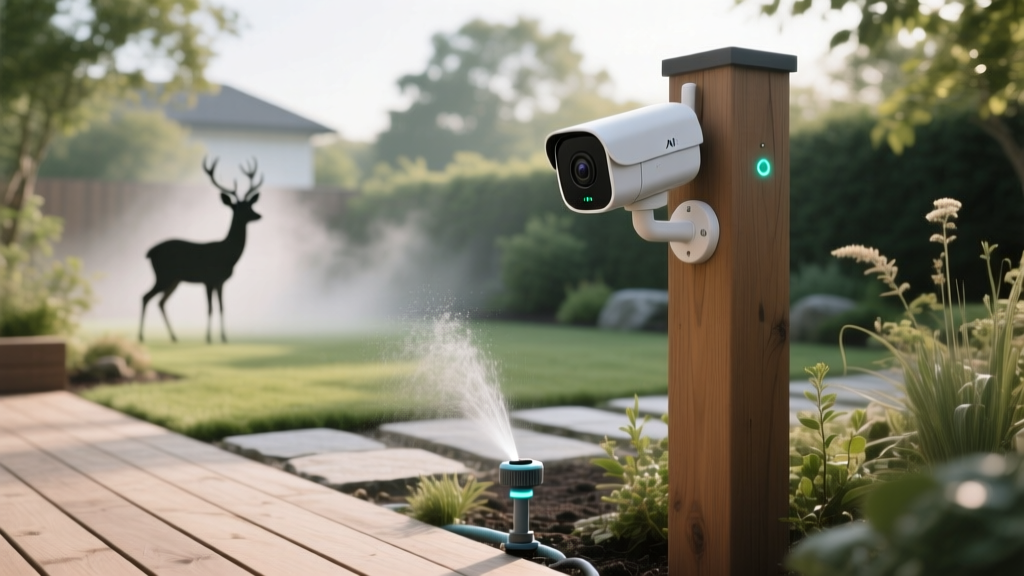
Smart Pest Control: Automating Garden Wildlife Deterrence
Lisa ThompsonPublished
The Evolution of IPM: Welcome to the Smart Garden
For decades, home gardeners and lawn care enthusiasts have waged a relentless war against wildlife pests. Deer nibbling on prized hostas, rabbits decimating vegetable seedlings, and raccoons tearing up freshly laid sod are universal frustrations. Traditionally, the solutions have been binary: either install expensive, unsightly physical barriers like eight-foot fencing, or apply chemical repellents that wash away in the rain and introduce unwanted toxins into the local ecosystem. However, the rise of smart home technology and outdoor automation has introduced a highly effective, humane, and cost-efficient third option. By integrating artificial intelligence (AI) cameras, smart irrigation valves, and automated sensory deterrents, homeowners can now build a dynamic, automated Integrated Pest Management (IPM) system right in their backyards.
The Role of Automation in Integrated Pest Management (IPM)
Integrated Pest Management is a science-based, ecosystem-focused strategy that emphasizes long-term prevention of pests or their damage through a combination of techniques. According to the University of California Agriculture and Natural Resources (UC ANR), IPM programs combine biological, cultural, physical, and chemical tools in a way that minimizes economic, health, and environmental risks. In the context of wildlife deterrence, automation supercharges the "physical and mechanical control" tier of IPM. Instead of relying on static scarecrows or passive ultrasonic stakes that pests quickly learn to ignore, smart home automation allows for randomized, multi-sensory deterrence that mimics human presence and unpredictable environmental hazards, effectively keeping wildlife on high alert and out of your garden.
AI-Powered Outdoor Cameras: The Eyes of Your IPM Strategy
The foundation of any automated pest control system is accurate detection. Older motion-sensor lights relied on basic Passive Infrared (PIR) sensors, which frequently triggered false alarms from swaying tree branches or passing cars. Modern smart outdoor cameras utilize edge-computing AI to differentiate between humans, vehicles, pets, and generic motion. Devices like the Wyze Cam v3 (priced around $35 to $50) or the Ring Stick Up Cam Battery feature IP65 weather-resistant ratings and advanced night vision, making them ideal for 24/7 garden monitoring.
By configuring custom "Detection Zones" within the camera's native app, you can draw a digital perimeter around your most vulnerable garden beds. When the camera's AI detects an animal breaking this perimeter, it can instantly trigger an automated response. Furthermore, many of these cameras feature built-in sirens and two-way audio. For nocturnal pests like raccoons and opossums, an automated spotlight combined with a sudden burst of white noise or a recorded human voice can be enough to send them fleeing without ever needing to leave your couch.
Automated Mechanical Control: Smart Motion-Activated Sprinklers
When visual and auditory deterrents fail, water is the ultimate equalizer. The Orbit 62100 Yard Enforcer Motion-Activated Sprinkler is the gold standard for automated mechanical pest control. Unlike standard smart irrigation systems that operate on a schedule, the Yard Enforcer utilizes a highly sensitive PIR sensor with a 35-foot detection range and a 70-degree field of view to detect the body heat and movement of approaching animals.
Upon detecting a pest, the device releases a sudden, loud burst of water. The mechanical "clack" of the valve opening, combined with the visual and physical shock of the water spray, creates a deeply negative reinforcement loop for animals like deer, groundhogs, and stray cats. Crucially, this method is highly water-efficient. Each burst uses only 2 to 4 cups of water, aligning perfectly with water conservation guidelines promoted by the Environmental Protection Agency (EPA) regarding smart irrigation technologies. Running on four AA batteries, it can deliver up to 7,500 activation cycles, making it a low-maintenance, set-and-forget solution for the peak summer pest season.
Preventing Habituation Through Smart Randomization
The greatest point of failure in traditional pest control is habituation. If a deer realizes that the motion-activated owl statue never actually moves, or that the ultrasonic emitter never causes physical harm, it will ignore the deterrent and eat your tomatoes. Habituation occurs when pests are exposed to predictable, static stimuli. Smart home automation solves this through randomization and multi-sensory layering.
By utilizing smart plugs (such as the Kasa Smart Plug Mini, roughly $15 for a two-pack) connected to secondary deterrents like strobe lights or ultrasonic noise emitters, you can use platforms like IFTTT (If This Then That) or Samsung SmartThings to create complex routines. For example, you can program a routine where the camera detects motion, triggers the smart sprinkler valve 50% of the time, and triggers the smart plug-connected strobe light the other 50% of the time. This unpredictability prevents pests from adapting to the deterrent, ensuring long-term efficacy.
Comparison Chart: Smart Pest Deterrence Devices
| Device Type | Top Product Example | Avg Cost | Target Pests | Automation Level |
|---|---|---|---|---|
| AI Outdoor Camera | Wyze Cam v3 / Blink Outdoor 4 | $40 - $100 | All (Monitoring & Audio/Visual Deterrence) | High (App & IFTTT Integration) |
| Motion Sprinkler | Orbit 62100 Yard Enforcer | $70 - $85 | Deer, Rabbits, Raccoons, Cats, Dogs | Medium (Standalone PIR Sensor) |
| Smart Plug | Kasa Smart Plug Mini (EP25) | $15 - $25 | N/A (Controls secondary devices) | High (Voice & Routine Integration) |
| Smart Strobe/Siren | Yard Stake Strobe Light | $20 - $30 | Nocturnal Pests (Raccoons, Skunks) | Low (Requires Smart Plug for Automation) |
| Smart Irrigation Valve | Rachio 3 / Orbit B-hyve | $100 - $200 | Mosquitoes/Fungus Gnats (via soil moisture control) | High (Weather & Soil Sensor Based) |
Step-by-Step: Building Your Automated Deterrence Routine
Creating a cohesive smart pest control network requires linking your hardware through a central hub. Here is a practical guide to setting up an automated perimeter defense using a smart camera and a smart plug:
- Step 1: Placement. Mount your AI camera at a 45-degree angle covering the primary entry point of the pests (e.g., a gap in the hedges). Ensure it is within range of your 2.4 GHz Wi-Fi network.
- Step 2: Define Zones. Open the camera app and draw a detection zone strictly over the garden bed. Exclude the sidewalk or street to prevent false triggers from passing cars.
- Step 3: Connect Secondary Deterrents. Plug an outdoor-rated strobe light or a high-frequency audio emitter into a weatherproof smart plug. Place the plug in a protected outdoor outlet box.
- Step 4: Program the Routine. Using an automation platform like SmartThings or Amazon Alexa Routines, create a rule: "When [Camera Name] detects motion in [Garden Zone], turn on [Smart Plug Name] for 30 seconds."
- Step 5: Add Randomization. Use IFTTT to add a secondary trigger that activates a smart water valve or the camera's built-in siren on alternating days, ensuring the pests never learn the pattern.
Cost Analysis and ROI
When evaluating pest control methods, the return on investment (ROI) is a critical factor. A professional deer fence installation for a standard suburban backyard can easily exceed $2,500 to $5,000, not including the cost of gates and ongoing maintenance. Chemical repellents require continuous reapplication, costing upwards of $150 to $300 annually, and they degrade rapidly under UV light and rain.
In contrast, a comprehensive smart IPM setup—consisting of two AI cameras ($80), one motion-activated sprinkler ($75), and two smart plugs ($30)—totals approximately $185. This one-time investment covers a wide perimeter, requires minimal maintenance (changing AA batteries once a season), and operates 24/7 without introducing harmful chemicals into your soil or local watershed.
Ethical Wildlife Management and Best Practices
While protecting your landscape is important, it is equally vital to practice ethical wildlife management. The goal of an automated IPM system is to deter and startle, not to harm. According to Penn State Extension, effective wildlife damage management relies on making the environment unappealing rather than lethal. Motion-activated water and sudden bursts of light exploit an animal's natural flight response without causing physical injury. Always ensure that your automated sprinklers are not directed at public sidewalks or neighboring properties to avoid creating slip hazards or nuisance complaints. Additionally, during the winter months, be sure to drain and store your motion-activated sprinklers to prevent internal valve damage from freezing temperatures.
Conclusion
The integration of smart home technology into garden pest control represents a massive leap forward for homeowners seeking sustainable, effective, and hands-off solutions. By leveraging AI cameras for precise detection, motion-activated sprinklers for humane mechanical deterrence, and smart plugs for randomized sensory disruption, you can build a dynamic fortress around your landscape. This automated approach not only saves time and money but also aligns perfectly with the core principles of Integrated Pest Management, ensuring your garden remains a thriving sanctuary for plants and beneficial insects, while safely showing wildlife the exit.