Home & Garden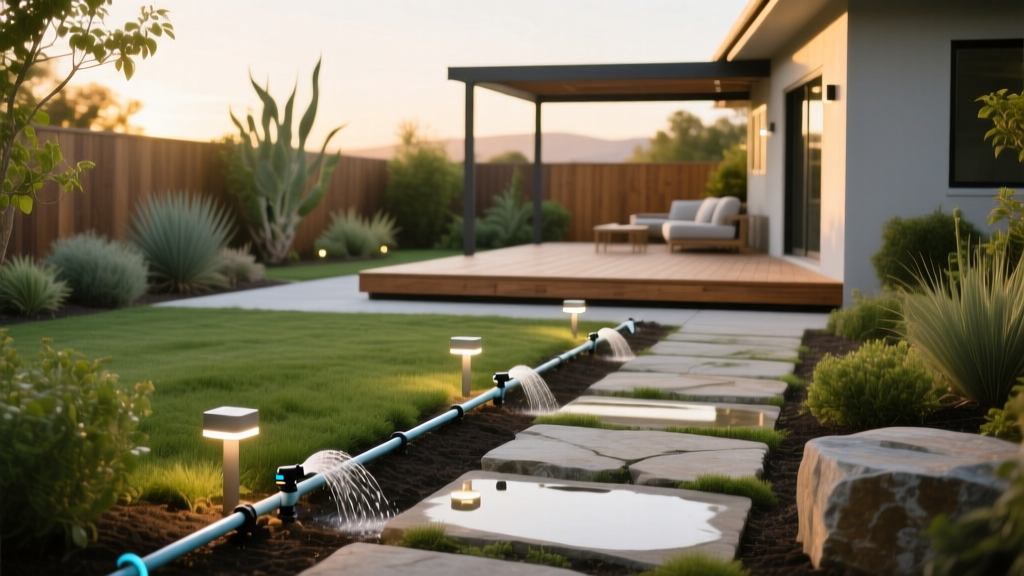
Expert Guide to Smart Irrigation and Landscape Lighting
Emily WatsonPublished
Transforming Your Yard with Smart Home Integration
The modern outdoor living space is no longer just a patch of grass and a few patio chairs; it is a fully integrated extension of the home. For homeowners looking to bridge the gap between indoor comfort and outdoor aesthetics, smart home integration for irrigation and landscape lighting represents the pinnacle of convenience and sustainability. By leveraging weather-based data, soil telemetry, and automated astronomical timers, you can cultivate a lush garden while drastically reducing water and energy consumption. This guide provides expert-level best practices, technical specifications, and actionable advice for designing a cohesive smart outdoor ecosystem.
Smart Irrigation: Best Practices for Maximum Water Efficiency
Upgrading to a smart irrigation system is one of the highest-ROI home improvement projects you can undertake, typically yielding a return through water savings within two to three years. Traditional timers operate on rigid schedules, ignoring recent rainfall, humidity levels, and soil saturation. Smart controllers, however, utilize local weather stations and on-site sensors to deliver water precisely when and where it is needed. To achieve optimal results, homeowners must move beyond simple Wi-Fi timers and embrace a multi-layered approach to landscape hydration.
Selecting the Right Weather-Based Controller
When selecting a smart controller, prioritize models that pull hyper-local weather data rather than relying solely on regional airport weather stations. The Rachio 3 Smart Sprinkler Controller (retailing around $229) and the Orbit B-hyve XR (around $189) are industry leaders. Both offer EPA WaterSense certification, which guarantees they meet strict water-efficiency criteria. For properties with varying microclimates—such as a shaded backyard and a sun-baked front lawn—ensure the controller supports independent zone scheduling and cycle-soak features. Cycle-soaking prevents runoff on sloped terrain or compacted clay soils by dividing watering times into shorter intervals, allowing the soil time to absorb moisture.
Soil Moisture Sensors: Placement and Calibration
While weather data is crucial, it cannot measure the actual moisture content in your root zone. Integrating wired or wireless soil moisture sensors is a non-negotiable best practice for expert-tier irrigation. According to the University of Georgia Cooperative Extension, sensors should be installed in the driest, most representative area of each irrigation zone, buried at a depth of 3 to 6 inches to target the primary root zone of turfgrass. Avoid placing sensors near downspouts, in deep shade, or directly under sprinkler heads, as these locations will yield false readings. The Hunter Soil-Clik or Toro Precision Soil Sensor (approximately $60 to $85 each) are excellent choices that physically interrupt the watering cycle when adequate moisture is detected, overriding the smart controller's schedule.
According to the EPA WaterSense program, smart irrigation controllers can save the average home nearly 7,600 gallons of water annually, translating to significant utility savings while preserving local aquifers.
Landscape Lighting: Energy-Efficient Automation
Bridging indoor and outdoor living requires seamless transitions when the sun goes down. Smart landscape lighting not only enhances security and architectural aesthetics but also minimizes light pollution and energy waste. The foundation of a professional-grade smart lighting system relies on low-voltage LED fixtures paired with an intelligent, multi-tap transformer.
Transformer Sizing and Smart Upgrades
Before purchasing fixtures, calculate your total wattage. A common rule of thumb is to keep your total fixture wattage at or below 80 percent of the transformer's capacity to account for voltage drop over long wire runs. For a typical residential setup drawing 150 watts, a 200-watt or 300-watt transformer is required. The Kichler Design Pro LED Smart Transformer (approximately $350) allows for app-based dimming, zone control, and astronomical timing. By utilizing an astronomical timer, the transformer automatically adjusts turn-on and turn-off times based on your exact GPS coordinates and the daily sunset, eliminating the need to manually adjust analog dials as seasons change.
Strategic Fixture Placement and Beam Angles
Opt for integrated LED fixtures with adjustable color temperatures (2700K for warm, inviting patios; 3000K for highlighting architectural stone or foliage). Use 15-degree spotlights for uplighting mature trees, and 60-degree wash lights for illuminating retaining walls or shrub borders. To integrate these with your smart home hub, consider systems like the Ring Smart Lighting or Lutron RADEONL, which allow you to sync outdoor lighting scenes with indoor smart switches, creating a unified 'Entertain' or 'Away' mode.
Equipment Comparison: Smart Controllers and Lighting Hubs
| Product Category | Top Recommendation | Estimated Cost | Key Smart Features | Best Application |
|---|---|---|---|---|
| Smart Irrigation Controller | Rachio 3 (8-Zone) | $229 | Weather intelligence, cycle-soak, IFTTT integration | Complex lawns with diverse microclimates |
| Soil Moisture Sensor | Hunter Soil-Clik | $65 | Hardwired override, adjustable moisture thresholds | Clay soils and sloped terrain prone to runoff |
| Smart Transformer | Kichler Design Pro LED | $350 | App-based dimming, astronomical timer, zone control | Multi-zone low-voltage LED lighting layouts |
| Smart Path Lights | Ring Smart Lighting | $30/fixture | Motion-sensing, app alerts, group scheduling | Perimeter security and walkway illumination |
Step-by-Step Integration and Network Best Practices
Integrating these systems requires a robust outdoor network. Wi-Fi signals degrade significantly when passing through exterior walls, especially those with foil-backed insulation or brick veneers. Follow these best practices for a reliable connection:
- Install an Outdoor Mesh Node: Place a weatherproof mesh Wi-Fi node (like the Orbi Outdoor or Eero) in a protected eave or soffit near the equipment pad to ensure strong 2.4GHz coverage for irrigation controllers and lighting hubs.
- Use 2.4GHz Networks: Most smart outdoor devices operate exclusively on the 2.4GHz band due to its superior range and wall-penetration capabilities. Create a dedicated IoT SSID on your router to prevent bandwidth congestion from indoor streaming devices.
- Protect Wiring with Conduit: Run low-voltage lighting wires and sensor cables through PVC conduit where they cross under hardscapes or driveways. Use 12-gauge wire for main runs exceeding 50 feet to mitigate voltage drop, and 16-gauge for short spur connections.
- Automate via IFTTT or SmartThings: Create cross-platform routines. For example, program your smart lighting to turn on at 20 percent brightness if the irrigation system is actively watering, providing a subtle visual cue that the sprinklers are running.
Seasonal Maintenance and Winterization Protocols
Smart technology does not eliminate the need for seasonal maintenance. In late autumn, before the first hard freeze, you must winterize your irrigation system. While smart controllers can be set to 'rain delay' or 'off' for the winter, the physical pipes must be blown out using an air compressor capable of delivering 50 to 80 CFM at no more than 50 PSI to prevent damaging the poly pipes or smart valves. For your smart lighting system, perform an annual voltage drop test using a digital multimeter at the furthest fixture from the transformer. If the voltage reads below 10.5V on a 12V system, adjust the multi-tap settings on your transformer or upgrade to a heavier gauge wire. Additionally, clean LED lenses with a soft microfiber cloth and a mild, non-abrasive glass cleaner to maintain optimal lumen output and prevent heat buildup inside the fixture housing.
Conclusion
By treating your outdoor space as a dynamic, data-driven environment, you elevate both the functionality and beauty of your property. Smart irrigation and lighting systems, when installed with precision and maintained with care, offer unparalleled convenience. They ensure your landscape thrives in the harshest conditions while your home remains secure and inviting, proving that the future of outdoor living is undeniably intelligent.
