Home & Garden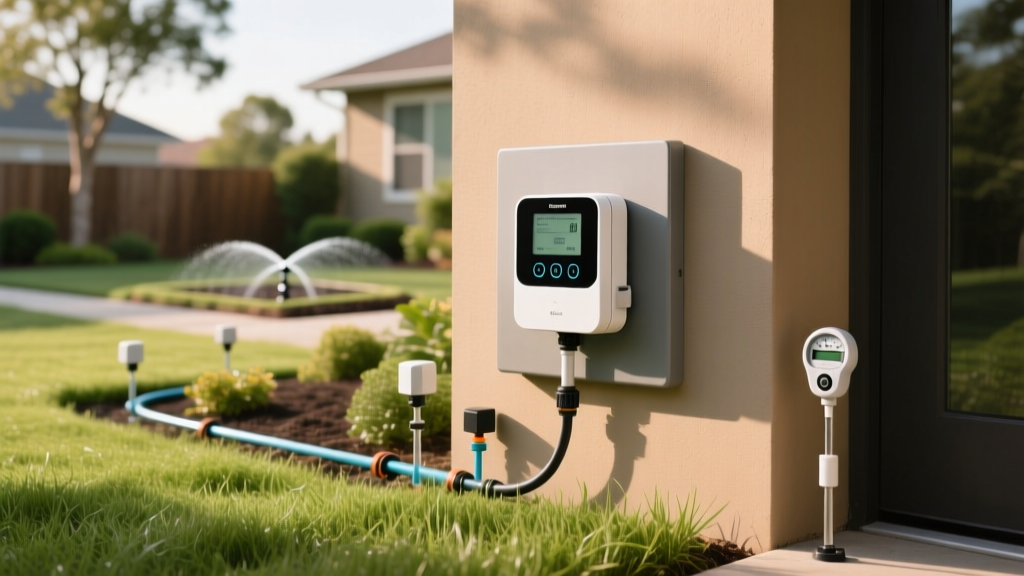
Expert Guide to Smart Irrigation Controllers & Water Savings
Robert HayesPublished
The Evolution of Lawn Care: Smart Irrigation Controllers
The transition from traditional timer-based sprinkler systems to smart irrigation controllers represents one of the most significant advancements in modern, energy-efficient landscaping. For decades, homeowners relied on rudimentary mechanical timers that operated on rigid schedules, completely ignoring the dynamic environmental conditions that dictate actual plant water needs. This outdated approach inevitably led to overwatering during rainy spells and underwatering during unexpected heatwaves, resulting in shallow root systems, increased weed pressure, and inflated municipal water bills. Today, bridging the gap between indoor smart home ecosystems and outdoor landscape management is not just a luxury; it is a fundamental best practice for sustainable property management. By leveraging real-time weather data, soil moisture metrics, and evapotranspiration (ET) rates, modern smart controllers deliver precise hydration exactly when and where your turf and garden beds need it.
As a senior horticulturist and landscaping expert, I frequently see homeowners invest thousands in premium drought-tolerant plants and high-efficiency rotary nozzles, only to pair them with an archaic clock timer. The controller is the brain of your irrigation system. Upgrading this single component yields a higher return on investment for water conservation than almost any other landscape modification. Whether you are managing a sprawling suburban lawn or an intricate urban courtyard garden, mastering the setup and optimization of a smart controller is essential for achieving a vibrant, resilient outdoor living space.
Why Upgrade? The Data Behind Smart Controllers
According to the Environmental Protection Agency (EPA) WaterSense program, a traditional irrigation system that is not properly maintained and adjusted can waste up to 25,000 gallons of water annually per household. In contrast, upgrading to a WaterSense labeled smart irrigation controller can save an average home nearly 7,600 gallons of water per year. The financial implications are equally compelling. With municipal water rates rising across North America, the return on investment for a premium smart controller—typically ranging from $150 to $300 for the hardware, plus $100 to $250 for professional installation—is often realized within a single outdoor season through reduced utility costs. Furthermore, many local water districts and municipalities offer aggressive rebate programs, sometimes covering the entire cost of the device, to incentivize residential water conservation.
Let us compare the operational differences between legacy systems and modern smart hubs to understand the true value of this upgrade.
| Feature | Traditional Timer | Smart Weather-Based Controller |
|---|---|---|
| Schedule Adjustment | Manual, seasonal dial changes | Automatic, daily micro-adjustments via Wi-Fi |
| Rain Response | Requires separate rain sensor shutoff | Skips cycles using hyper-local weather forecasts |
| Zone Customization | Basic time duration per zone | Customized by soil type, slope, sun exposure, and plant type |
| Remote Access | None (on-site physical interface only) | Full smartphone app control and push notifications |
Expert Best Practices for Installation and Setup
Step 1: Choose an EPA WaterSense Labeled Controller
When shopping for a smart controller, it is imperative to look for the EPA WaterSense label. This certification ensures that the product has been independently tested to meet rigorous water-efficiency and performance criteria. Industry-leading models such as the Rachio 3 Smart Sprinkler Controller, the Hunter Hydrawise Pro-HC, and the Orbit B-hyve XR offer robust Wi-Fi connectivity, integration with smart home platforms like Amazon Alexa, Apple HomeKit, and Google Home, and highly intuitive user interfaces. During installation, expert best practices dictate that you do not merely swap the wires and keep the old schedule. You must completely reprogram the system based on a comprehensive landscape audit.
Step 2: Zone Mapping and Precipitation Rates
The cornerstone of smart irrigation programming is accurate zone mapping. Every zone in your yard possesses a unique microclimate and hydrological profile. Before inputting data into your new controller, walk your property and categorize each zone by four critical factors: plant type (turfgrass, shrubs, drip beds), soil composition (clay, loam, sand), sun exposure (full sun, partial shade, full shade), and slope gradient. For instance, a zone featuring Kentucky Bluegrass in full sun on a steep clay slope requires a drastically different watering strategy than a shaded bed of hostas planted in loamy soil. Clay soils absorb water very slowly, necessitating the cycle and soak method—a feature natively supported by smart controllers—to prevent surface runoff and ensure deep root penetration. By programming the controller to apply water in short, repeated bursts, you allow the dense clay particles time to absorb the moisture.
Optimizing for Seasonal Changes and Soil Types
Evapotranspiration (ET) is the scientific metric that drives the algorithms of weather-based smart controllers. ET represents the combined loss of water from the soil surface through evaporation and from the plant foliage through transpiration. Advanced controllers pull hyper-local meteorological data from nearby weather stations or personal on-site weather sensors to calculate daily ET rates. If the local weather station reports high wind speeds, low humidity, and peak solar radiation, the controller automatically extends the watering duration to compensate for the accelerated moisture loss. Conversely, if a cold front brings high humidity and cloud cover, the system scales back the runtime, preserving water without stressing the turf.
To maximize the efficacy of ET-based scheduling, integrating physical soil moisture sensors is a highly recommended expert best practice. While weather data provides an excellent macro-level baseline, it cannot account for localized variations in soil drainage or the specific moisture retention of your garden beds. Wireless soil moisture sensors, such as the Toro Precision Soil Sensor or the Rain Bird SMRT-Y, are buried directly in the root zone of your most critical landscapes. These sensors communicate directly with the smart controller, acting as a physical override. If the sensor detects that the soil moisture is above the predetermined threshold, it will veto the scheduled irrigation cycle, regardless of what the weather forecast predicts.
Here is a structured guide to recommended soil moisture thresholds and watering strategies based on common turfgrass types and soil profiles:
| Turfgrass Type | Ideal Soil Profile | Moisture Depletion Threshold | Expert Watering Strategy |
|---|---|---|---|
| Bermudagrass | Sandy Loam | 50% depletion | Deep, infrequent watering to encourage drought tolerance |
| Kentucky Bluegrass | Clay Loam | 30% depletion | Cycle and soak method to prevent runoff on compacted soils |
| Tall Fescue | Heavy Clay | 40% depletion | Aeration required; multiple short cycles with extended soak times |
| Zoysiagrass | Well-draining Loam | 50% depletion | Moderate frequency; highly drought resistant once established |
Integrating Smart Lighting and Sensors
Bridging indoor and outdoor living also means integrating your landscape management with your outdoor entertainment spaces. Smart irrigation controllers can be seamlessly linked with smart outdoor lighting systems, such as those utilizing the Philips Hue outdoor line or Kichler smart transformers. By creating automated routines in platforms like Apple HomeKit or Samsung SmartThings, you can establish a Goodnight scene that simultaneously turns off your patio string lights, locks your smart gate, and triggers a diagnostic check on your irrigation system to ensure no valves are stuck open. Furthermore, integrating smart flow meters into your main irrigation line allows the controller to detect microscopic leaks or broken sprinkler heads in real-time, instantly shutting off the water supply and sending an emergency push notification to your smartphone, thereby preventing catastrophic landscape erosion and foundation damage.
Maintenance, Troubleshooting, and Winterization
Seasonal maintenance of your smart irrigation system is just as critical as the initial setup. In early spring, expert landscapers recommend performing a comprehensive wet-check. This involves manually running every zone through the app while physically walking the property to inspect for sunken sprinkler heads, clogged nozzles, and misaligned spray patterns that waste water on driveways and sidewalks. Ensure that the firmware on your smart controller is updated to the latest version to benefit from algorithmic improvements and enhanced weather data sources. As autumn approaches and the landscape prepares for dormancy, utilize the controller's seasonal adjustment features to gradually taper off watering, which helps harden off the turf for winter survival. For those in freezing climates, the smart controller should be used to facilitate a precise blow-out winterization process, running compressed air through each zone sequentially via the app to prevent catastrophic pipe bursts.
According to research published by the University of California Agriculture and Natural Resources (UC ANR), "Weather-based irrigation controllers (WBICs) can reduce landscape water use by 20 to 40 percent compared to traditional clock timers, provided they are correctly programmed with accurate site-specific data including plant factor, soil type, and precipitation rate." The UC ANR emphasizes that the technology is only as effective as the baseline data entered by the user, reinforcing the necessity of a thorough initial landscape audit.
In conclusion, upgrading to a smart irrigation controller is a transformative investment for any homeowner serious about energy-efficient landscaping and sustainable property management. By moving away from arbitrary, time-based watering schedules and embracing data-driven, evapotranspiration-based precision, you not only cultivate a deeper, more resilient root system that naturally resists pests and diseases, but you also contribute significantly to regional water conservation efforts. When paired with soil moisture sensors, smart outdoor lighting, and rigorous seasonal maintenance protocols, your smart irrigation ecosystem becomes the invisible, tireless caretaker of your outdoor oasis, ensuring your garden thrives in perfect harmony with the natural environment.
