Home & Garden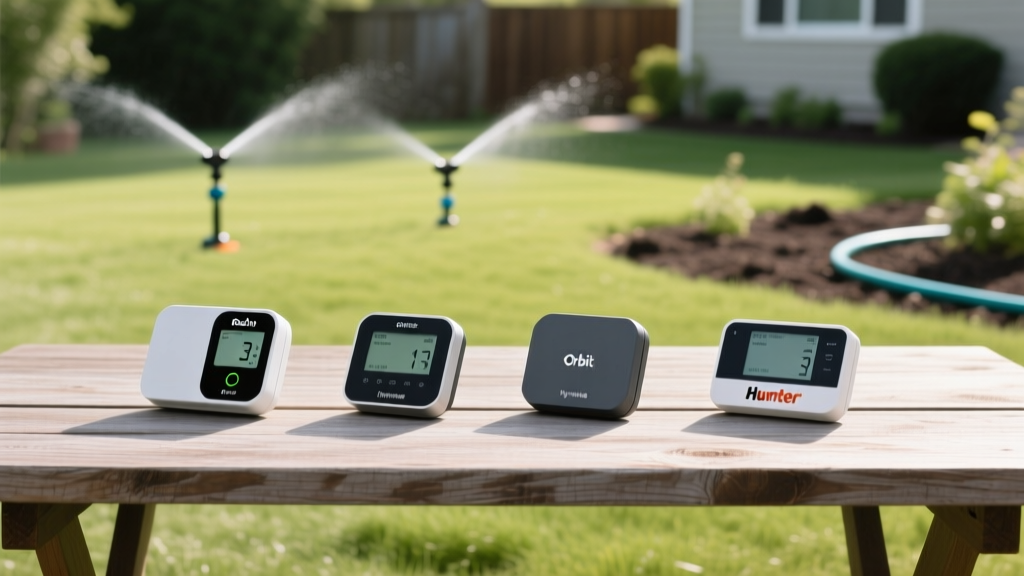
Best Smart Irrigation Controllers: Rachio vs Orbit vs Hunter
Anna KowalskiPublished
The Evolution of Residential Lawn Irrigation
The transition from traditional, timer-based sprinkler systems to smart irrigation controllers represents one of the most significant leaps in residential landscaping technology over the past decade. For homeowners looking to bridge the gap between indoor smart home automation and outdoor energy-efficient landscaping, upgrading your sprinkler timer is the most impactful project you can undertake. Traditional controllers operate on rigid schedules, watering your lawn whether it is experiencing a severe drought or a torrential downpour. Smart controllers, however, utilize local weather data, soil conditions, and evapotranspiration rates to deliver the exact amount of water your landscape needs, precisely when it needs it.
In this comprehensive product review and comparison, we evaluate three of the most popular smart irrigation controllers on the market: the Rachio 3, the Orbit B-hyve XD, and the Hunter Hydrawise Pro-HC. Whether you are a tech-savvy gardener looking for deep smart home integration or a budget-conscious homeowner seeking basic weather-based adjustments, this guide will help you choose the right brain for your sprinkler system.
Why Upgrade to a Smart Sprinkler Controller?
Before diving into specific models, it is crucial to understand the environmental and financial benefits of smart irrigation. According to the United States Environmental Protection Agency (EPA) WaterSense program, replacing a standard clock timer with a WaterSense labeled smart irrigation controller can save the average home nearly 7,600 gallons of water annually. Over a decade, this translates to massive savings on municipal water bills and a significantly reduced strain on local aquifers.
Furthermore, research from the University of Florida IFAS Extension highlights the importance of Evapotranspiration (ET) in landscape water management. ET is the sum of evaporation from the soil and transpiration from plants. Smart controllers use hyper-local weather data to calculate daily ET rates, automatically skipping watering cycles after rainfall or increasing run times during heat waves. This prevents the shallow root growth and fungal diseases often caused by overwatering, promoting a deeper, more drought-resistant root system.
Rachio 3 Smart Sprinkler Controller: The Smart Home Champion
The Rachio 3 has long been considered the gold standard for consumer-facing smart irrigation. Available in 8-zone and 16-zone configurations, the Rachio 3 retails between $229 and $279, positioning it as a premium consumer product. Its standout feature is 'Weather Intelligence Plus,' which utilizes hyper-local weather data from sources like NOAA and personal weather stations to automatically adjust schedules based on rain, wind, freeze, and seasonal shifts.
Design and App Experience
The hardware is sleek, featuring a minimalist white design with a translucent cover that houses a multi-color LED light bar, providing visual feedback on system status without needing to open the app. The Rachio app is widely regarded as the most intuitive in the industry, offering a seamless onboarding process that walks users through naming zones, selecting soil types, and inputting plant varieties. For smart home enthusiasts, the Rachio 3 integrates flawlessly with Apple HomeKit, Amazon Alexa, Google Assistant, and Samsung SmartThings, allowing you to trigger watering cycles via voice commands or geofencing routines.
Pros and Cons
- Pros: Best-in-class app interface, extensive smart home integrations, EPA WaterSense certified, highly accurate weather skip features.
- Pros: Supports master valves and pump start relays for complex landscapes.
- Cons: Higher price point than competitors; requires a strong 2.4 GHz Wi-Fi signal at the installation site; indoor-only rating requires a separate weatherproof enclosure for outdoor mounting.
Orbit B-hyve XD: The Budget-Friendly Workhorse
If you are looking for maximum functionality on a strict budget, the Orbit B-hyve XD (eXtended Duty) is a formidable contender. Priced aggressively between $100 and $150 depending on whether you choose the 6, 12, or 16-zone model, the B-hyve XD punches well above its weight class. Unlike many competitors, the B-hyve XD comes with a weather-resistant casing out of the box, making it suitable for both indoor and outdoor installation without the need to purchase a secondary metal or plastic enclosure.
Performance and Features
The B-hyve utilizes Orbit's 'WeatherSense' technology, which pulls data from local weather stations to adjust watering schedules. While the app interface is slightly more cluttered and less polished than Rachio's, it still provides robust control over run times, start times, and seasonal adjustments. The B-hyve XD also features a built-in flow meter terminal, a rare feature at this price point, which allows the system to detect broken pipes or leaking valves and shut off the water automatically to prevent landscape flooding.
Pros and Cons
- Pros: Excellent price-to-feature ratio, includes outdoor-rated enclosure, built-in flow sensor support, physical push-button interface on the device for manual watering without a smartphone.
- Cons: App experience is less intuitive, smart home integrations are limited primarily to Amazon Alexa and Google Home (no native Apple HomeKit support), Wi-Fi antenna can struggle through thick exterior walls.
Hunter Hydrawise Pro-HC: The Landscaper's Choice
Hunter Industries is a legacy brand trusted by professional landscapers worldwide, and the Hydrawise Pro-HC controller brings commercial-grade reliability to the residential market. Retailing between $250 and $300 for the 6 to 16-zone models, the Pro-HC is designed for complex, demanding landscapes. It features a heavy-duty, lockable outdoor cabinet and a massive, easy-to-read touchscreen interface that makes on-device programming a breeze, even if your Wi-Fi network goes down.
Advanced Agronomic Controls
The Hydrawise software is incredibly deep, offering predictive watering based on local weather forecasts and historical data. It allows for highly granular control, including the ability to set up multiple independent programs, configure sophisticated soil moisture sensor integrations, and manage drip irrigation zones with precise minute-by-minute accuracy. Hunter's platform also provides detailed water usage reports, making it an excellent tool for homeowners in municipalities with strict water conservation tiers and high-tier pricing structures.
Pros and Cons
- Pros: Commercial-grade build quality, lockable outdoor cabinet, advanced flow meter and sensor integration, highly detailed water usage analytics, excellent physical touchscreen.
- Cons: Steep learning curve for the software, higher initial cost, requires a 24VAC transformer that is bulkier than consumer models.
Feature Comparison Chart
To help you visualize how these three top-tier controllers stack up against one another, we have compiled a detailed comparison matrix based on current market specifications and real-world testing.
| Feature | Rachio 3 | Orbit B-hyve XD | Hunter Pro-HC |
|---|---|---|---|
| Estimated Cost | $229 - $279 | $100 - $150 | $250 - $300 |
| Zone Options | 8, 16 | 6, 12, 16 | 6, 12, 16 |
| Weather Intelligence | Weather Intelligence Plus | WeatherSense | Hydrawise Predictive |
| Indoor/Outdoor Rated | Indoor (Enclosure sold separately) | Both (Enclosure included) | Outdoor (Heavy-duty cabinet) |
| Flow Meter Support | Yes (with accessory) | Yes (Built-in terminal) | Yes (Advanced diagnostics) |
| Smart Home Integration | HomeKit, Alexa, Google, SmartThings | Alexa, Google | Alexa, Google |
| EPA WaterSense Certified | Yes | Yes | Yes |
Installation and Wiring: What You Need to Know
Regardless of which smart controller you choose, the physical installation process is remarkably similar. All three models operate on standard 24VAC (Volts Alternating Current) power, which is supplied by a transformer plugged into a standard 120V wall outlet. Before beginning any installation, it is imperative to turn off the power to your existing irrigation controller at the circuit breaker to prevent electrical shock or damage to the new unit's internal logic board.
When removing your old controller, take a clear, well-lit photograph of the existing wiring. Most systems use a common wire (usually white) connected to the 'C' or 'COM' terminal, with individual zone wires connected to numbered terminals. Label each wire with painter's tape before disconnecting them. Smart controllers require a strong 2.4 GHz Wi-Fi connection. If your controller is installed in a garage or on an exterior brick wall, you may need to invest in a Wi-Fi range extender to ensure the device stays connected to the internet for real-time weather updates.
Final Verdict: Which Controller is Right for You?
Choosing the best smart irrigation controller ultimately depends on your specific landscape needs, budget, and technical comfort level. If you are deeply invested in the Apple HomeKit ecosystem or want the most polished, user-friendly app experience on the market, the Rachio 3 is worth the premium price. It is the ultimate set-it-and-forget-it device for the modern smart home.
For budget-conscious DIYers who need an outdoor-rated unit with flow-sensor capabilities without breaking the bank, the Orbit B-hyve XD offers unparalleled value. It provides 90% of the water-saving benefits of premium models at half the cost. Finally, if you have a complex landscape featuring extensive drip irrigation, multiple soil types, or require commercial-grade durability and physical on-device controls, the Hunter Hydrawise Pro-HC is the undisputed heavyweight champion of residential irrigation control. By upgrading to any of these WaterSense-certified models, you are not just automating a chore; you are actively conserving vital water resources and cultivating a healthier, more resilient lawn.
