Home & Garden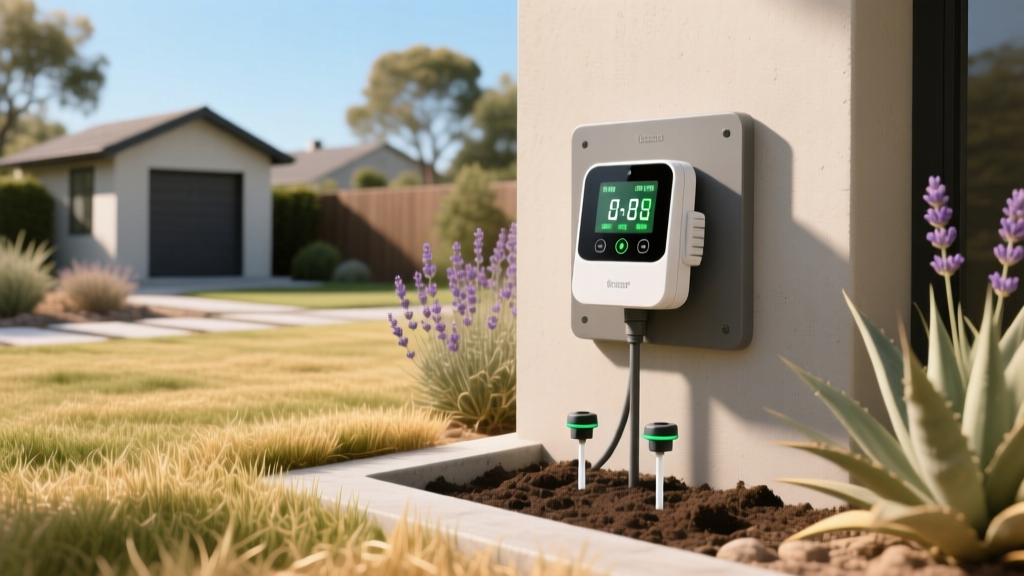
Smart Irrigation Controllers for Drought-Resilient Lawns
Lisa ThompsonPublished
The Hidden Water Waste of Traditional Timers
For decades, homeowners have relied on mechanical or basic digital sprinkler timers to maintain their landscapes. While these devices automate the watering process, they operate on a static schedule that ignores real-time environmental conditions. A traditional timer will water your lawn for the same duration whether it is 100 degrees and arid, or if a torrential downpour just occurred. This blind adherence to a schedule is a primary driver of residential water waste, particularly in drought-prone regions where water conservation is not just an environmental preference, but a legal mandate.
According to the EPA WaterSense program, outdated irrigation practices can waste up to 50 percent of the water applied to lawns due to wind, evaporation, and runoff. By transitioning to smart irrigation technology, homeowners can bridge the gap between lush, garden-to-table outdoor living spaces and rigorous drought management. Smart controllers act as the brain of your landscape, dynamically adjusting watering schedules based on real-time data, ensuring your turf and garden beds receive exactly what they need to thrive—down to the fraction of an inch.
Weather-Based vs. Soil Moisture Controllers
When upgrading your irrigation system for drought resilience, you will generally choose between two primary types of smart controllers: Evapotranspiration (ET) weather-based controllers and Soil Moisture Sensor (SMS) controllers. Both are highly effective, but they operate using different data sets and are suited for slightly different landscape profiles.
Weather-based controllers utilize local meteorological data, often pulling from hyper-local weather stations or national databases, to calculate the exact rate of evapotranspiration. ET is the sum of evaporation from the soil surface and transpiration from the plant leaves. By calculating how much moisture the atmosphere is pulling from your lawn, the controller replaces only that specific deficit. Conversely, SMS controllers rely on physical probes buried in the root zone of your lawn or garden beds. These probes measure the actual volumetric water content in the soil, overriding the scheduled irrigation cycle if the soil already holds sufficient moisture.
| Feature | Weather-Based (ET) Controllers | Soil Moisture Sensor (SMS) Controllers |
|---|---|---|
| Data Source | Local weather stations, Wi-Fi forecasts | Physical probes buried in root zones |
| Best Application | Large lawns, varied microclimates, mixed zones | Shaded areas, heavy clay soils, specific garden beds |
| Average Cost | $130 - $280 | $150 - $250 (plus $40 per sensor probe) |
| Installation Difficulty | Low (Indoor Wi-Fi connection) | Moderate (Requires burying probes and running wire) |
Top Smart Controllers for Drought-Prone Regions
1. Rachio 3 Smart Sprinkler Controller
The Rachio 3 is widely considered the gold standard for residential weather-based smart controllers. Priced around $229 for the 8-zone model, it features Weather Intelligence Plus, which automatically skips watering based on rain, wind, freeze, and seasonal shifts. Its hyper-local weather tracking uses data from over 250,000 personal weather stations. For drought-stricken areas, the Rachio 3 allows you to set strict water budgets, capping your monthly usage to comply with municipal rationing limits while optimizing the health of your turf.
2. Orbit B-hyve Smart Indoor/Outdoor Sprinkler Controller
For budget-conscious homeowners, the Orbit B-hyve offers exceptional value at approximately $119 for a 6-zone indoor unit. It is weather-resistant and can be mounted directly in the garage or on an exterior wall. The B-hyve app provides detailed water usage reports, allowing you to track your savings in gallons and dollars. While its ET algorithms are slightly less granular than the Rachio, it remains a massive upgrade over static timers and is fully compatible with smart home ecosystems like Amazon Alexa and Google Home.
3. Hunter Hydrawise Pro-HC
Professional-grade and highly robust, the Hunter Hydrawise Pro-HC (around $275 for 6 zones) utilizes predictive analytics to adjust irrigation based on forecasted weather rather than just historical data. This is crucial during sudden drought-induced heatwaves. It also features flow meter integration; if a drip line breaks or a sprinkler head snaps off, the controller detects the abnormal water flow and automatically shuts off the zone, sending an alert to your smartphone to prevent catastrophic water waste.
Step-by-Step Installation and Zone Mapping
Upgrading to a smart controller is a highly manageable DIY garden project that typically takes under an hour. Before removing your old unit, take a clear photograph of the existing wiring. Most traditional systems use a common wire (usually white or black) and individual zone wires. Once your new smart controller is mounted and powered, follow these actionable steps for optimal drought management:
- Map Your Zones Accurately: Input the exact plant type, soil type, and sun exposure for every zone into the app. A zone with drought-tolerant creeping thyme requires vastly different watering parameters than a zone with traditional Kentucky Bluegrass.
- Calibrate Soil Intake Rates: Sandy soil absorbs water quickly but drains fast, requiring shorter, more frequent cycles. Heavy clay soil absorbs water slowly (often less than 0.2 inches per hour), necessitating the cycle and soak method to prevent runoff.
- Set Root Zone Depths: Turfgrass generally requires a root depth setting of 6 inches, while established drought-tolerant shrubs and trees should be set to 12 to 18 inches to encourage deep, resilient root growth.
- Connect to a Flow Meter (Optional): If your system supports it, installing a flow meter on your mainline provides real-time leak detection, an essential safeguard during water-restricted seasons.
Pairing Smart Tech with Drip Irrigation
To truly maximize water-wise landscaping, smart controllers should be paired with drip irrigation for all non-turf areas, including garden-to-table raised beds, perimeter shrubs, and flower borders. Drip systems deliver water directly to the root zone at low flow rates, virtually eliminating evaporation and wind drift.
When configuring your smart controller for drip zones, adjust the precipitation rate settings. Standard rotary sprinklers apply water at roughly 0.4 to 0.6 inches per hour. In contrast, drip emitters are measured in Gallons Per Hour (GPH). For raised vegetable beds in loamy soil, use 1.0 GPH emitters spaced 12 inches apart. For xeriscaped borders with native, drought-resistant plants, use 0.9 GPH emitters spaced 18 to 24 inches apart. By isolating drip zones on their own dedicated valves, the smart controller can water your thirsty vegetables daily while allowing your native shrubs to dry out appropriately between deep soaks.
Rebates, ROI, and Verifiable Water Savings
The financial argument for smart irrigation is as compelling as the environmental one. Because these devices drastically reduce outdoor water consumption, many local water municipalities and utility companies offer substantial rebates. According to the Colorado State University Extension, smart controllers can reduce landscape water use by 15 to 30 percent without compromising plant health. In arid regions where outdoor watering accounts for up to 60 percent of total household water use, this translates to hundreds of dollars in annual utility savings.
Furthermore, the EPA notes that if all homes with in-ground sprinkler systems used WaterSense labeled smart controllers, the nation could save over 390 billion gallons of water annually. By investing $150 to $250 in a smart controller today, you not only drought-proof your landscape against increasingly volatile climate patterns, but you also reclaim hours of manual seasonal adjustments, ensuring your outdoor oasis remains vibrant, sustainable, and effortlessly managed.
