Home & Garden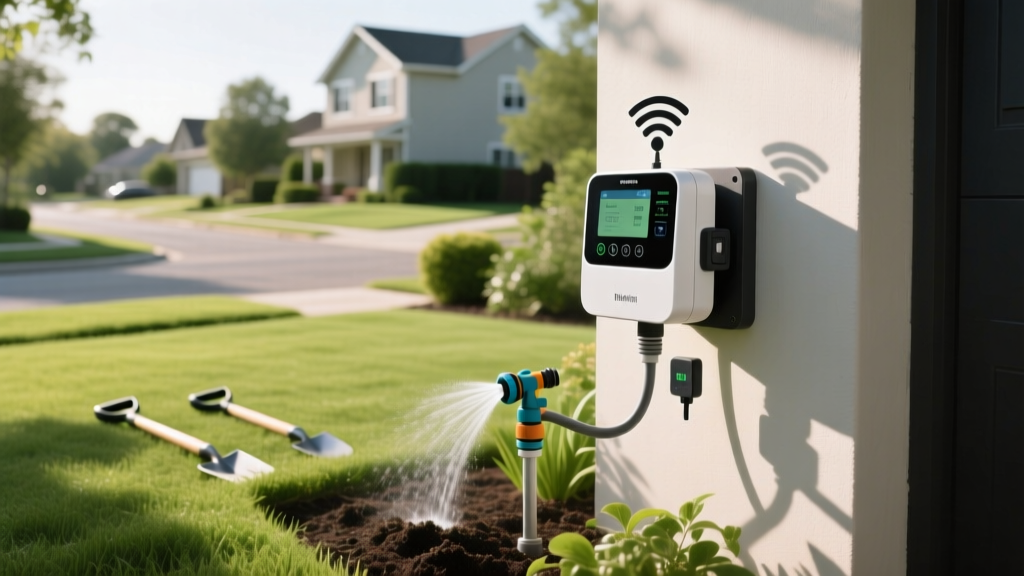
Smart Irrigation Controllers: Automate Your Lawn Care
Emily WatsonPublished
The Evolution of Lawn Care: Why Go Smart?
Watering the lawn has long been a chore dictated by guesswork, rigid timers, and the hope that it doesn't rain right after you've run your sprinklers. However, as water conservation becomes a critical priority for homeowners and municipalities alike, the transition from traditional clock-based timers to smart irrigation controllers has accelerated. According to the Environmental Protection Agency (EPA), the average American household uses more than 300 gallons of water per day, with roughly 30% dedicated to outdoor uses. In arid regions, this outdoor water usage can spike to over 60% of total household consumption.
Upgrading to an EPA WaterSense certified smart irrigation controller replaces arbitrary schedules with data-driven precision. These devices utilize local weather data, evapotranspiration (ET) rates, and soil conditions to water your lawn only when necessary. Research from the University of California Agriculture and Natural Resources (UC ANR) highlights that weather-based smart controllers can reduce landscape water use by up to 15% to 30% without compromising turf health, translating to hundreds of dollars in annual utility savings.
Top Smart Sprinkler Controllers Compared
Choosing the right controller depends on your yard's complexity, budget, and desired level of smart home integration. Below is a comparison of the top three market leaders for residential lawn automation.
| Feature | Rachio 3 | Orbit B-hyve XR | Netro Sprite |
|---|---|---|---|
| Approximate Cost | $229 (8-zone) | $119 (6-zone) | $139 (12-zone) |
| EPA WaterSense Certified | Yes | Yes | Yes |
| Weather Intelligence Plus | Yes (Hyperlocal) | Yes (Weather Sense) | Yes (AI-driven) |
| Smart Home Integration | Alexa, Google, HomeKit, IFTTT | Alexa, Google, HomeKit | Alexa, Google |
| Flow Meter Support | Yes (Proprietary add-on) | Limited | No |
1. Rachio 3 Smart Sprinkler Controller
The Rachio 3 is widely considered the gold standard for smart irrigation. Its standout feature is Weather Intelligence Plus, which pulls data from over 250,000 local weather stations to monitor rain, wind, freeze, and seasonal shifts. If a freeze is detected, the system automatically halts watering to prevent dangerous ice buildup on walkways. While it sits at a premium price point of around $229 for the 8-zone model, the ROI is typically realized within two watering seasons through reduced utility bills.
2. Orbit B-hyve XR
For budget-conscious homeowners or those with smaller lawns, the Orbit B-hyve XR offers exceptional value at roughly $119. It features a sleek, modern interface and an intuitive mobile app. While its weather data network isn't quite as hyperlocal as Rachio's, it still provides reliable rain delays and seasonal adjustments. It is also available in indoor and outdoor-rated enclosures, saving you the cost of buying a separate weatherproof box if your current timer is mounted on an exterior wall.
3. Netro Sprite
Netro Sprite takes an AI-first approach, learning your lawn's specific microclimates over time. Priced around $139 for a 12-zone system, it offers incredible zone capacity for larger, more complex landscapes. Netro's database includes over 1,000 plant and soil types, allowing you to customize watering profiles for a shady fern bed versus a sun-baked Kentucky Bluegrass lawn.
Maximizing Efficiency: Sensors and Flow Meters
A smart controller is only as intelligent as the data it receives. To bridge the gap between weather forecasts and actual ground conditions, consider integrating the following hardware:
- Soil Moisture Sensors: Devices like the Vegetronix VH400 (approx. $40) can be buried in the root zone of your turf. They measure volumetric water content and send real-time telemetry to your controller, overriding scheduled watering if the soil is already saturated.
- Flow Meters: A flow meter (such as the Rachio Flow Meter, approx. $75) installs directly onto your main irrigation line. It monitors water usage in real-time and can instantly shut off the system if it detects a massive spike in flow, indicating a broken pipe or a blown sprinkler head. This single device can prevent catastrophic water bills and landscape erosion.
- Master Valves: Installing a master valve ensures that water is completely cut off from the irrigation lines when the system is idle, protecting against slow leaks from individual zone valves.
Step-by-Step DIY Installation Guide
Replacing an old analog timer with a smart controller is a highly manageable weekend DIY project. Here is how to execute the swap safely and efficiently:
Step 1: Document Your Existing Wiring
Before disconnecting a single wire, take a high-resolution photo of your current controller's wiring terminal. You will need to identify the "Common" wire (usually white or black) and the individual zone wires (typically color-coded red, blue, green, etc.).
Step 2: Power Down and Swap
Turn off the power at the breaker or unplug the 24V AC transformer. Remove the old backplate and mount the new smart controller's backplate using drywall anchors. Feed the existing 18-gauge multi-strand irrigation wire through the new enclosure.
Step 3: Reconnect and Seal
Insert the stripped ends of the wires into the corresponding push-lever terminals on the new smart controller. If your controller is mounted outdoors, apply a bead of clear silicone sealant around the wire entry gasket to prevent moisture and insect intrusion, which can short-circuit the motherboard.
Step 4: Configure Zones in the App
Download the manufacturer's app and connect the device to your 2.4GHz Wi-Fi network (most smart home devices do not support 5GHz bands). Map each zone by specifying the sprinkler head type (rotor, spray, or drip), plant type, soil type (clay, loam, or sand), and sun exposure. This data allows the algorithm to calculate precise run times and utilize "cycle and soak" methods to prevent runoff on sloped terrain.
Smart Home Integration and Advanced Automation
The true power of smart irrigation lies in its ability to communicate with the broader smart home ecosystem. By linking your controller to platforms like Amazon Alexa, Google Home, or Apple HomeKit, you can enable voice commands and complex routines.
Pro Tip: Use IFTTT (If This Then That) to create custom automation rules. For example, you can set a trigger that pauses your irrigation system if your personal backyard weather station detects wind speeds exceeding 15 MPH, preventing water waste from wind drift.
Furthermore, integrating your irrigation system with smart home hubs allows for seasonal automations. You can program your system to automatically reduce watering durations by 20% when the autumnal equinox approaches, or trigger a "winterization" mode that shuts off all zones and sends a push notification reminding you to blow out your sprinkler lines with an air compressor before the first hard freeze.
Conclusion
Transitioning to a smart irrigation controller is one of the most impactful upgrades you can make to your home's exterior. It bridges the gap between lush, healthy landscaping and responsible environmental stewardship. By leveraging hyperlocal weather data, soil sensors, and smart home automation, you eliminate the guesswork from lawn care. Whether you opt for the premium features of the Rachio 3 or the budget-friendly efficiency of the Orbit B-hyve, the investment pays dividends in both water conservation and the effortless beauty of your outdoor living spaces.
