Home & Garden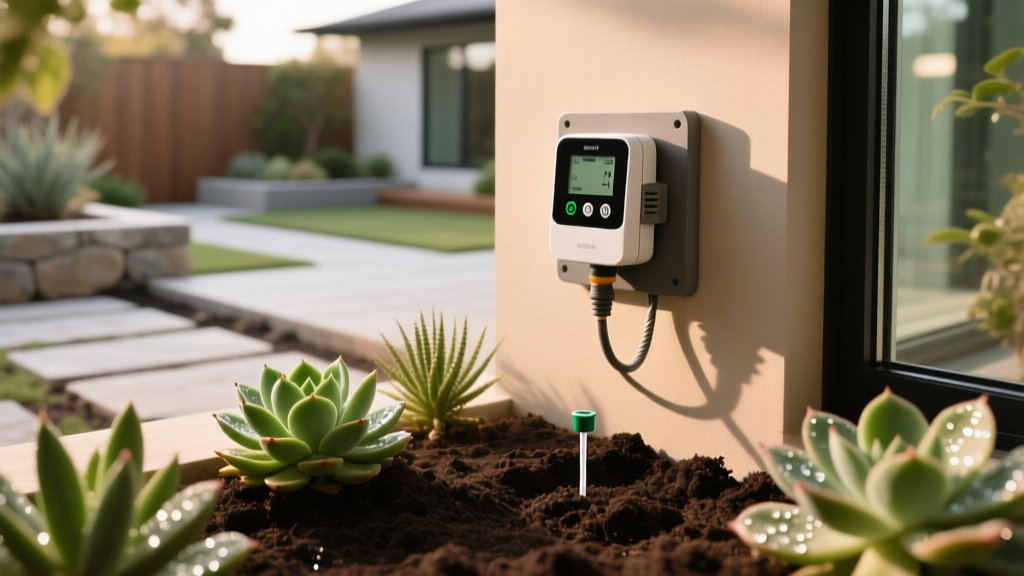
Expert Guide to Smart Irrigation Controllers & Sensors
James MillerPublished
The Shift from Traditional Timers to Smart Irrigation
For decades, homeowners have relied on standard clock timers to manage their landscape irrigation. While these traditional systems offer basic scheduling, they are notoriously inefficient. They operate on a set schedule regardless of recent rainfall, soil moisture levels, or seasonal temperature shifts. According to the Environmental Protection Agency (EPA), standard timers can waste up to 50 percent of the water used for outdoor irrigation due to evaporation, wind, and runoff. Bridging the gap between indoor smart home technology and outdoor landscape maintenance, modern smart irrigation controllers and soil moisture sensors offer a precise, data-driven approach to lawn care. By adopting expert best practices for installation and configuration, homeowners can cultivate healthier root systems, eliminate water waste, and significantly reduce utility costs.
Understanding Weather-Based vs. Soil Moisture Technologies
When upgrading your irrigation system, it is crucial to understand the two primary categories of smart water management: weather-based (Evapotranspiration) controllers and soil moisture sensor systems. Both aim to optimize water delivery, but they gather and interpret data differently.
Weather-Based (Evapotranspiration) Controllers
Weather-based controllers, often referred to as ET controllers, calculate the exact amount of water your landscape needs based on local climate conditions. Evapotranspiration is the combined process of water evaporating from the soil and transpiring from plant leaves. Advanced Wi-Fi-enabled models, such as the Rachio 3 Smart Sprinkler Controller or the Orbit B-hyve XR, connect to your home network and pull real-time hyper-local weather data from sources like the National Oceanic and Atmospheric Administration (NOAA). If a rainstorm is forecasted or humidity levels spike, the controller automatically delays or shortens the watering cycle. These units typically retail between $150 and $250 and are ideal for regions with highly variable daily weather patterns.
Soil Moisture Sensor Controllers
Rather than relying on atmospheric data, soil moisture sensors measure the actual volumetric water content in the root zone. Systems like the Toro Precision Soil Sensor or the Rain Bird SMRT-Y utilize buried probes to dictate irrigation schedules. When the soil reaches a predetermined moisture threshold, the sensor interrupts the controller's signal, preventing the valves from opening. This technology is highly recommended for clay-heavy soils that are prone to runoff, or for sloped landscapes where water absorption rates are slow. Expect to pay around $100 to $150 for the base receiver unit, plus $40 to $70 for each additional wireless or wired probe.
Comparison Chart: Smart Irrigation Technologies
To help you select the right system for your landscape, review the following comparison of traditional and smart irrigation technologies.
| Feature | Traditional Timer | Weather-Based (Wi-Fi) | Soil Moisture Sensor |
|---|---|---|---|
| Initial Hardware Cost | $40 - $80 | $150 - $250 | $140 - $220 (with 1 probe) |
| Data Source | User Input Only | Local Weather Stations | Direct Root Zone Measurement |
| Average Water Savings | 0% (Baseline) | 20% - 40% | 30% - 50% |
| Smart Home Integration | None | Alexa, Google, IFTTT | Limited to proprietary apps |
| Best Application | Small, uniform gardens | Variable climates, large lawns | Clay soils, slopes, shaded zones |
Expert Installation Best Practices
Purchasing premium equipment is only the first step; proper installation and calibration are where the true water savings are realized. Improperly placed sensors or misconfigured Wi-Fi controllers can lead to under-watered turf or flooded garden beds.
Optimal Sensor Placement and Depth
If you are installing a soil moisture sensor, placement is critical. Never place the probe in a low-lying area where water naturally pools, nor near a downspout or hardscape edge that radiates heat. Select a representative zone that receives average sunlight and drainage.
Regarding depth, the sensor must be placed within the active root zone of your specific turfgrass or plant material. For cool-season grasses like Kentucky Bluegrass and Tall Fescue, bury the probe 4 to 6 inches below the soil surface. For warm-season, deep-rooted grasses like Bermuda or Zoysia, aim for a depth of 8 to 12 inches. When integrating sensors into shrub or tree beds, increase the depth to 12 to 18 inches to target the deeper woody root systems. Always backfill the hole with the native soil and tamp it down gently to remove air pockets, which can cause false dry readings.
Wiring and Controller Configuration
For hardwired soil sensors, use direct-burial 18-gauge multi-conductor wire to connect the probe to the controller's dedicated sensor terminals. Most modern controllers feature a 'Normally Closed' (NC) sensor circuit. When the soil is adequately moist, the sensor opens the circuit, breaking the common wire path and preventing the solenoid valves from engaging.
For Wi-Fi controllers, the setup process involves mapping your sprinkler zones accurately within the companion app. Expert tip: Do not simply accept the default zone settings. Input the exact sprinkler head type (rotor vs. spray), nozzle precipitation rate, soil type (e.g., loam, clay, sand), and shade levels for each individual zone. This granular data allows the ET algorithm to calculate precise run times and utilize 'cycle and soak' methods to prevent surface runoff.
Cost Analysis and Return on Investment (ROI)
While the upfront cost of a smart irrigation system is higher than a standard timer, the return on investment is rapid. The EPA WaterSense program notes that replacing a standard clock timer with a WaterSense-labeled smart controller can save the average home nearly 7,600 gallons of water annually.
Consider a region where water and sewer rates combined equal $10 per 1,000 gallons. Saving 7,600 gallons translates to an annual utility savings of roughly $76. When you factor in potential municipal rebate programs—which frequently offer $50 to $100 in credits for installing WaterSense-certified smart controllers—the hardware essentially pays for itself within the first 12 to 18 months. Furthermore, preventing over-watering protects your landscape from fungal diseases and root rot, saving hundreds of dollars in potential lawn renovation and fungicide treatments.
Smart Home Integration and Automation
Bridging outdoor maintenance with indoor smart home ecosystems elevates the convenience of landscape management. Wi-Fi-enabled controllers integrate seamlessly with platforms like Amazon Alexa, Google Home, and Apple HomeKit. This allows for voice-activated commands, such as asking your smart speaker to 'skip today's watering schedule.'
More advanced users can leverage IFTTT (If This Then That) applets to create hyper-specific automation rules. For example, you can program your irrigation system to automatically suspend watering if local wind speeds exceed 15 miles per hour, preventing water from blowing onto driveways and sidewalks. You can also integrate smart soil sensors with smart home dashboards to receive push notifications when your garden beds drop below a critical moisture threshold, allowing you to trigger drip irrigation zones manually from your smartphone while on vacation.
Authoritative Insights and Maintenance
To ensure your system operates at peak efficiency, it requires seasonal maintenance. Before winter, perform a standard blow-out of your irrigation lines using an air compressor, but be sure to disconnect and store wireless soil moisture sensors indoors to prevent freeze damage to the internal circuitry. For wired sensors, ensure the wire connections at the controller are free of corrosion.
Industry experts and academic institutions heavily advocate for the adoption of smart irrigation. The University of Florida IFAS Extension published extensive research demonstrating that ET controllers, when properly programmed with local plant factors, reduce outdoor water use by up to 40 percent without sacrificing turf quality.
According to the EPA WaterSense program, 'Smart irrigation controllers adjust watering schedules based on weather and soil moisture conditions, acting like a thermostat for your lawn. They tell your sprinkler system when and how long to water, eliminating the guesswork and preventing overwatering.'
By transitioning to smart irrigation controllers and soil moisture sensors, homeowners embrace a proactive, energy-efficient approach to landscaping. Not only does this technology preserve vital municipal water resources, but it also guarantees that your outdoor living spaces remain lush, resilient, and perfectly calibrated to the natural environment.
