Home & Garden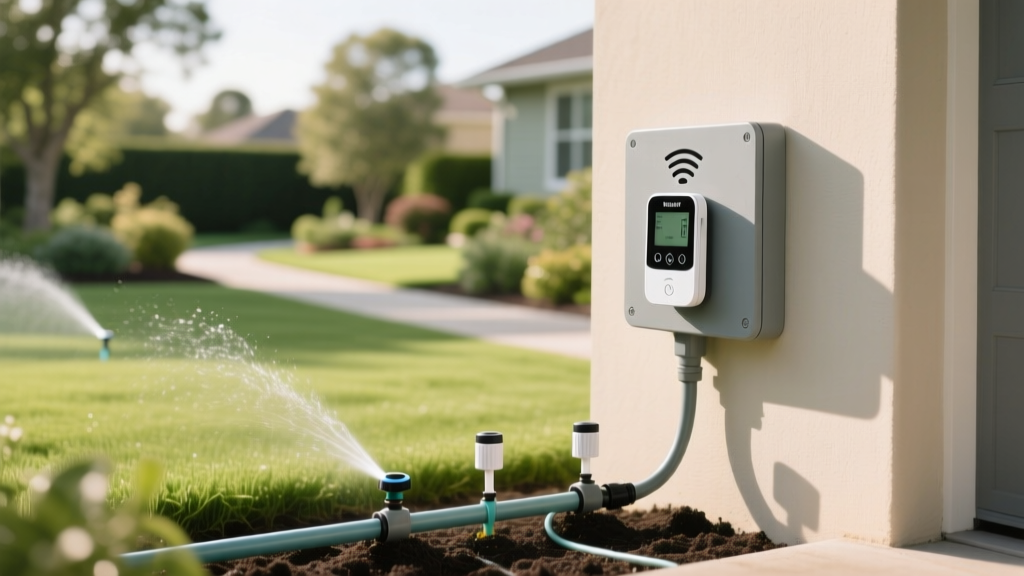
Smart Irrigation System Cost and Budget Planning Guide
Anna KowalskiPublished
Bridging Smart Home Tech and Energy-Efficient Landscaping
Upgrading your outdoor space with smart home integration is one of the most effective ways to bridge the gap between modern convenience and energy-efficient landscaping. At the heart of this transformation is the smart irrigation system. Unlike traditional timers that blindly water your lawn on a set schedule, smart controllers adapt to real-time environmental conditions. However, transitioning to a Wi-Fi-enabled, weather-based irrigation setup requires careful financial planning. This comprehensive cost and budgeting guide will break down the expenses associated with smart irrigation, from entry-level controllers to professional installation, helping you maximize your garden-to-table yields while minimizing water waste and utility bills.
Why Upgrade to a Smart Irrigation System?
Traditional sprinkler systems are notorious for overwatering, which not only wastes a precious resource but also promotes shallow root growth, fungal diseases, and nutrient runoff. Smart irrigation controllers solve this by utilizing local weather data, soil moisture levels, and evapotranspiration rates to tailor watering schedules to your lawn's exact needs. When you translate that into municipal water and sewer rates, the financial benefits become immediately apparent. Furthermore, many local water districts offer substantial rebates for installing certified smart controllers, effectively lowering your initial capital expenditure.
According to the EPA WaterSense program, a smart irrigation controller can save the average home nearly 8,800 gallons of water annually, making it a cornerstone of sustainable landscape management.
Breakdown of Smart Irrigation System Costs
1. Smart Controllers
When budgeting for a smart watering setup, you must account for both the primary hardware and the supplementary sensors that make the system truly intelligent. The controller is the brain of the operation, replacing your old mechanical or digital dial timer. Most modern smart controllers connect to your home's 2.4 GHz Wi-Fi network, pulling hyper-local weather data to skip watering during rain, high winds, or freezing temperatures. Entry-level models handle up to eight zones and are perfect for standard suburban lawns, while premium models can manage up to 16 zones and integrate with broader smart home ecosystems like Amazon Alexa, Apple HomeKit, and Google Home.
2. Environmental Sensors
To achieve maximum water efficiency, your smart controller should be paired with environmental sensors. While many controllers use virtual weather data, physical sensors provide ground-truth accuracy. Soil moisture sensors, which are buried in the root zone of your lawn or garden beds, measure the actual volumetric water content of the soil. Rain sensors act as a fail-safe, physically interrupting the irrigation cycle if precipitation occurs. Freeze sensors protect your landscape and hardscaping from ice damage by halting the system when temperatures drop below 37 degrees Fahrenheit. Budgeting for these sensors is crucial, as they typically range from $30 to $150 each, depending on whether they are wired or wireless.
Cost Comparison Chart: Popular Smart Controllers
| Brand and Model | Zone Capacity | Smart Features | Estimated Cost |
|---|---|---|---|
| Rachio 3 Smart Sprinkler | 8-Zone | Weather Intelligence Plus, IFTTT | $229 |
| Orbit B-hyve XR | 16-Zone | Indoor/Outdoor rated, Weather Sense | $199 |
| Hunter Pro-HC (Hydrawise) | 12-Zone | Professional grade, predictive analytics | $250 |
| Rain Bird ST8I-2.0 | 8-Zone | Automatic seasonal adjust, Wi-Fi | $149 |
Hidden Costs and Budgeting Pitfalls
Even with a meticulously planned budget, homeowners often encounter hidden costs during the upgrade process. First, consider your Wi-Fi coverage. Sprinkler controllers are typically located in the garage, basement, or on an exterior wall—areas notorious for poor wireless reception. You may need to purchase a Wi-Fi extender or mesh network node ($50 to $150) to ensure the controller stays connected. Second, evaluate the condition of your existing irrigation valves and wiring. Smart controllers require a consistent 24V AC power supply and intact common wires. If your existing valve manifold is suffering from voltage leaks or degraded solenoid wires, you will need to budget an additional $15 to $30 per valve for replacement parts, plus the cost of direct-burial wire connectors and waterproof sealant.
Calculating Your Return on Investment (ROI)
Understanding the Return on Investment is vital for justifying the upfront costs of a smart irrigation system. The primary ROI comes from reduced municipal water bills. The University of Georgia Cooperative Extension notes that smart controllers can reduce outdoor water use by 20% to 50% compared to traditional clock timers. If your summer water bill averages $150 per month, a 30% reduction saves you $45 monthly, or $180 over a four-month peak watering season. Additionally, you must factor in utility rebates. Many municipal water authorities offer rebates ranging from $50 to 100% of the purchase price for EPA WaterSense-certified controllers. Always check the EPA WaterSense rebate finder or your local utility provider's website before purchasing, as some programs require pre-approval or specific model numbers to qualify.
DIY vs. Professional Installation: A Cost Analysis
The installation method you choose will significantly impact your final budget. A DIY installation is highly feasible for homeowners who are comfortable with basic electrical wiring and Wi-Fi setup. Replacing an old controller with a new smart model typically takes two to three hours. You will need a screwdriver, wire strippers, a smartphone for app configuration, and perhaps a drill if you are mounting a new outdoor enclosure. The labor cost is zero, limiting your expense strictly to the hardware.
However, professional installation is recommended if your system requires a complete overhaul, such as trenching new wires, replacing a degraded valve manifold, or upgrading from a pump-start relay system. Professional landscaping or irrigation contractors typically charge between $75 and $150 per hour. A standard controller swap by a professional will cost between $200 and $350 in labor, while a full system audit, sensor installation, and controller upgrade can range from $500 to $1,200 depending on the complexity of your landscape zones.
Step-by-Step Budgeting Plan
- Conduct a Zone Audit: Map out your existing irrigation zones, noting which areas are sunny, shaded, or sloped. This helps you determine if you need a basic 8-zone controller or a premium 16-zone model.
- Check for Rebates: Visit your local water provider's website to identify available rebates for smart controllers and soil moisture sensors. Deduct these potential savings from your gross hardware budget.
- Assess Wi-Fi and Wiring: Test your smartphone's Wi-Fi signal at the controller's location. Inspect the existing wiring for brittleness or corrosion. Add a Wi-Fi extender or replacement wire to your shopping list if necessary.
- Purchase and Install: Buy a WaterSense-labeled controller to guarantee rebate eligibility. If DIYing, take a photo of your old controller's wiring before disconnecting anything.
- Optimize and Monitor: Use the first month to calibrate your soil moisture sensors and adjust the app's seasonal shift settings, ensuring your garden-to-table vegetables receive precise hydration without inflating your utility budget.
