Home & Garden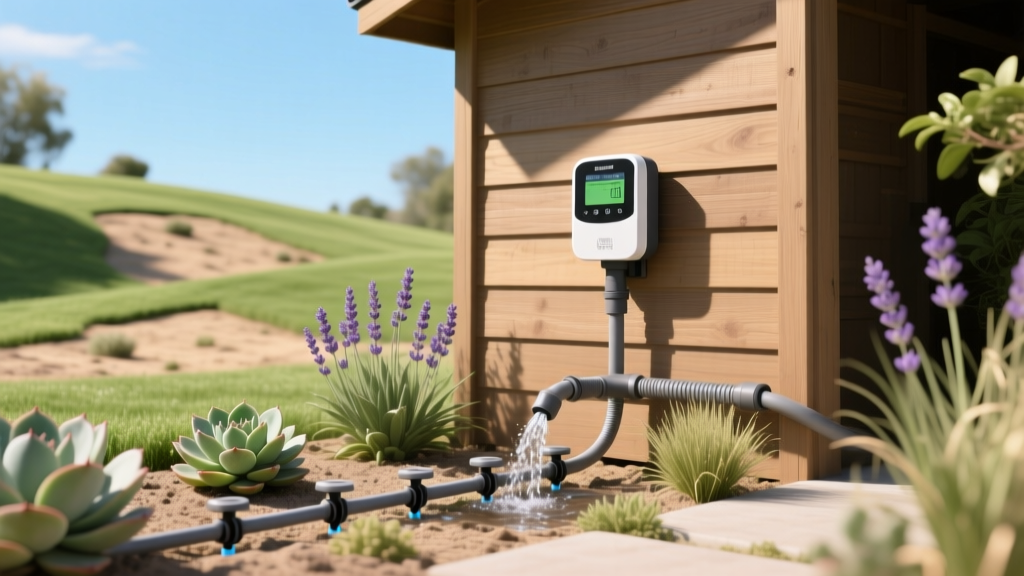
Smart Irrigation and Drip Systems for Drought Resilience
Emily WatsonPublished
The Reality of Drought and Outdoor Water Waste
As climate patterns shift and severe droughts become more frequent across North America, homeowners are facing unprecedented challenges in maintaining their landscapes. The traditional approach to lawn and garden care—relying on automated spray sprinklers running on fixed timers—is no longer sustainable. In fact, outdoor water use accounts for nearly 30 percent of total household water consumption, and in arid regions, that number can climb to 60 percent or more. Much of this water is lost to evaporation, wind drift, and surface runoff before it ever reaches the root zone of your plants.
Adopting a water-wise approach is no longer just an environmental courtesy; it is a financial necessity and a practical requirement for keeping your garden alive during municipal watering restrictions. By integrating smart irrigation technology and converting high-waste spray zones to targeted drip systems, you can drastically reduce your water footprint. This guide will walk you through the exact products, measurements, and DIY steps required to drought-proof your landscape.
The Hidden Inefficiency of Traditional Sprinklers
Traditional pop-up spray heads are designed to deliver water quickly over a wide area. While this works for uniform turfgrass, it is highly inefficient for garden beds, shrubs, and mixed borders. Spray heads typically operate at a precipitation rate of 1.5 to 2.5 inches per hour. When the soil's infiltration rate is slower than the sprinkler's application rate, the result is immediate runoff. Furthermore, spraying water into the air exposes it to wind and sun, leading to evaporation losses that can exceed 50 percent on hot, breezy afternoons.
To combat this, the EPA WaterSense program strongly advocates for the replacement of standard spray heads with water-efficient alternatives and the adoption of weather-based irrigation controllers. Upgrading your system is the first line of defense against drought-induced landscape mortality.
Smart Irrigation Controllers: The Brain of a Water-Wise Garden
A smart irrigation controller replaces the outdated 'set it and forget it' dial timer with a dynamic, data-driven hub. These devices connect to your home Wi-Fi and use real-time local weather data to adjust watering schedules automatically. If rain is in the forecast, humidity is high, or soil moisture is adequate, the controller skips the cycle entirely.
Top Smart Controller Options for Homeowners
- Rachio 3 Smart Sprinkler Controller (8-Zone): Priced around $229, the Rachio 3 is widely considered the gold standard for residential smart irrigation. It uses hyper-local weather intelligence and integrates seamlessly with smart home ecosystems like Amazon Alexa and Apple HomeKit. The EPA WaterSense label ensures it meets rigorous efficiency criteria.
- Orbit B-hyve Smart Indoor/Outdoor Sprinkler Controller: A more budget-friendly option at approximately $119 for the 6-zone model. It features a user-friendly app and weather-based adjustments, making it an excellent entry-level smart device for drought-prone regions.
- Netro Smart Sprinkler Controller: Priced around $130, Netro uses advanced AI to create customized watering schedules based on soil type, plant type, and sun exposure, ensuring deep, infrequent watering that promotes drought-resistant root growth.
Soil Moisture Sensors: The Ultimate Precision Tool
While weather-based controllers are excellent, adding a wireless soil moisture sensor takes precision to the next level. Devices like the Toro Precision Soil Sensor (approx. $110) are buried in the root zone of your most critical landscape areas. The sensor overrides the smart controller if the soil volumetric water content (VWC) is above the user-defined threshold, preventing the system from watering during a drought-induced restriction window if recent rains have sufficiently saturated the ground.
Converting Spray Zones to Drip Irrigation
Drip irrigation delivers water directly to the base of the plant at a slow, measured rate—typically between 0.5 and 2.0 Gallons Per Hour (GPH). This eliminates evaporation, prevents foliar diseases caused by wet leaves, and stops runoff on clay-heavy soils. According to research from the University of California Agriculture and Natural Resources, converting landscape beds from spray to drip can reduce water usage in those specific zones by up to 50 percent while simultaneously improving plant vigor.
'Drip irrigation is the most water-efficient method of irrigating landscapes. It applies water slowly and directly to the soil, minimizing evaporation and ensuring that moisture reaches the active root zone where plants need it most.' - UC ANR Drought Management Guidelines
System Comparison: Spray vs. Rotary vs. Drip
| Irrigation Method | Application Rate | Efficiency Rating | Best Use Case | Avg. Cost per Zone |
|---|---|---|---|---|
| Traditional Spray Heads | 1.5 - 2.5 in/hr | 60% - 75% | Small, uniform turf strips | $150 - $250 |
| MP Rotator Nozzles | 0.4 in/hr | 80% - 85% | Large turf areas, clay soils | $180 - $300 |
| Point-Source Drip | 0.5 - 2.0 GPH | 90% - 95% | Shrubs, trees, garden beds | $100 - $200 |
| Inline Drip Tubing | 0.6 - 0.9 GPH | 90% - 95% | Dense groundcover, hedgerows | $120 - $220 |
Step-by-Step Guide: Retrofitting a Sprinkler Head to Drip
You do not need to tear up your entire yard to switch to drip irrigation. You can easily retrofit existing spray heads in your garden beds using a conversion kit. Here is a practical, actionable guide to converting a single spray head into a multi-emitter drip zone.
Tools and Materials Needed
- Rain Bird 1800 Retro Drip Conversion Kit or Toro 570z Drip Kit ($15 - $20)
- 1/2-inch blank polyethylene drip tubing (approx. $25 per 100 ft roll)
- 1/4-inch micro-tubing and barbed connectors ($15)
- 2.0 GPH pressure-compensating (PC) drip emitters ($5 for a 10-pack)
- Teflon tape and a flathead screwdriver
- Punch tool for drip tubing
The Conversion Process
- Shut Off the Water: Turn off the main water supply to your irrigation system and relieve the pressure by running a manual cycle for a few seconds until the water stops.
- Remove the Spray Head: Unscrew the existing pop-up spray body from the riser or swing pipe in the ground. Cap off any other spray heads on the same valve zone using standard 1/2-inch threaded PVC or poly caps, as you cannot mix high-volume spray and low-volume drip on the same zone without severe pressure issues.
- Install the Conversion Filter and Regulator: Wrap Teflon tape around the threads of the retrofit kit's filter and pressure regulator assembly. Screw it directly into the existing riser. This step is critical: drip emitters require low pressure (15-30 PSI) and clean water to prevent clogging.
- Attach the Distribution Head: Screw the multi-port distribution head onto the regulator. This head allows you to run up to six individual 1/4-inch micro-tubes to different plants.
- Run the Micro-Tubing: Cut lengths of 1/4-inch tubing to reach the base of your target shrubs. Connect one end to the distribution head and the other to a 2.0 GPH barbed emitter. Stake the emitter directly into the root ball of the plant.
- Program the Smart Controller: Because drip applies water much slower than spray, you must adjust your smart controller's zone settings. Change the zone type to 'Drip' or 'Custom'. Instead of watering for 10 minutes daily, program the zone for 45 to 60 minutes, twice a week, encouraging deep root growth.
Hydrozoning: Grouping Plants by Water Needs
Technology alone cannot solve drought challenges if the underlying landscape design is flawed. The Alliance for Water Efficiency emphasizes the importance of 'hydrozoning'—the practice of grouping plants with similar water, sun, and soil requirements into the same irrigation zones.
If you place a high-water-use hydrangea in the same drip zone as a drought-tolerant lavender plant, one will inevitably suffer. When planning your smart irrigation and drip layout, map out your garden into distinct hydrozones:
- Zone 1 (Oasis): High water use. Vegetable gardens, new transplants, and moisture-loving perennials. Water deeply and frequently using inline drip tubing.
- Zone 2 (Moderate): Established shrubs, fruit trees, and native plants that need occasional deep watering. Use point-source 2.0 GPH emitters on a bi-weekly schedule.
- Zone 3 (Low/No Water): Mature native trees, succulents, and xeriscape elements. These may only require seasonal deep soaking via a soaker hose or temporary drip setup during peak summer heat.
Seasonal Timing and Drip Maintenance
Even the most efficient drip system requires seasonal maintenance to remain drought-resilient. At the start of spring, flush your drip lines by opening the end caps of your 1/2-inch poly tubing and letting the water run for two minutes to clear out sediment and mineral buildup. Inspect all emitters for clogs; if an emitter is blocked, simply pull it out and snap in a replacement.
During the peak of summer drought, program your smart controller to water between 4:00 AM and 6:00 AM. This window ensures that the soil is fully hydrated before the heat of the day increases soil temperature and evaporation rates. Finally, always maintain a 3-inch layer of organic mulch over your drip lines. Mulch hides the tubing from UV degradation, suppresses water-stealing weeds, and further reduces soil surface evaporation by up to 70 percent.
Conclusion: Investing in Long-Term Resilience
Transitioning to a smart irrigation controller and converting your garden beds to drip irrigation requires an upfront investment of time and roughly $300 to $500 in materials for an average-sized yard. However, the return on investment is rapid. Most homeowners see a 20 to 40 percent reduction in their summer water bills, and many municipal water districts offer rebates of up to $150 for purchasing EPA WaterSense-certified smart controllers. By embracing these water-wise technologies and techniques, you are not just surviving the drought—you are building a resilient, thriving landscape that will endure for decades to come.
