Home & Garden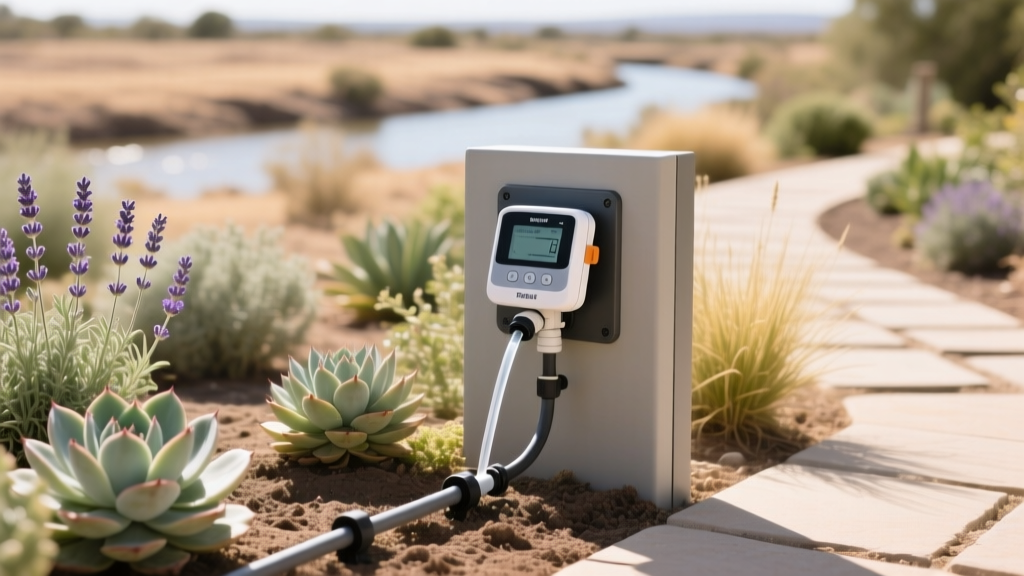
Smart Irrigation Guide: Save Water During Severe Drought
Robert HayesPublished
The Rising Challenge of Landscape Drought
As climate patterns shift and severe droughts become more frequent across North America, homeowners are facing unprecedented challenges in maintaining their outdoor spaces. Residential outdoor water use accounts for nearly 30% to 60% of total household water consumption, depending on the region. In arid and drought-prone climates, this number can spike even higher, putting immense strain on local municipal water supplies and leading to strict watering restrictions. For the modern homeowner, bridging the gap between a lush, inviting outdoor living space and responsible environmental stewardship is no longer optional; it is a necessity. Fortunately, the intersection of smart home technology and water-wise landscaping offers powerful solutions to combat drought without sacrificing the beauty of your garden.
Transitioning to a drought-resilient landscape does not mean resigning yourself to a barren yard of gravel and cacti. By integrating smart irrigation controllers, precision drip systems, and strategic hydrozoning, you can maintain a vibrant garden while drastically reducing your water footprint. This comprehensive guide will walk you through the actionable steps, specific product recommendations, and proven horticultural strategies needed to transform your yard into a water-efficient oasis capable of thriving even in the harshest dry spells.
The Flaws of Clock-Based Irrigation
The traditional clock-based irrigation timer is one of the biggest culprits of residential water waste. These rudimentary devices operate on a fixed schedule, completely blind to the environmental conditions occurring in your yard. A standard timer will activate your sprinklers during a torrential downpour just as readily as it will during a scorching heatwave. According to the EPA WaterSense program, homes with traditional automatic sprinkler systems use up to 50% more water outdoors than homes that manage their watering manually or use smart technologies. This inefficiency not only drives up your monthly utility bills but also promotes shallow root growth, fungal diseases, and nutrient runoff.
Furthermore, overhead spray heads are notoriously inefficient. When water is blasted into the air, a significant percentage is lost to wind drift and evaporation before it ever reaches the soil surface. On a hot, windy afternoon, evaporation losses from traditional spray heads can exceed 30%. To truly embrace water-wise landscaping, we must move away from the "set it and forget it" mentality and adopt systems that respond dynamically to the microclimate of our gardens.
Smart Controllers: The Brain of Water-Wise Gardens
The cornerstone of any modern drought-survival strategy is the Wi-Fi-enabled smart irrigation controller. Unlike basic timers, smart controllers utilize real-time weather data and evapotranspiration (ET) rates to calculate exactly how much water your landscape needs on any given day. ET refers to the sum of evaporation from the land surface plus transpiration from plants. By pulling hyper-local weather data from nearby meteorological stations, these devices automatically skip watering cycles when rain is in the forecast, reduce run times during high humidity, and adjust start times to comply with local seasonal restrictions.
Top-tier models like the Rachio 3 Smart Sprinkler Controller (typically priced around $229) or the Orbit B-hyve XR (around $149) integrate seamlessly with smart home ecosystems like Amazon Alexa, Google Home, and Apple HomeKit. They offer features such as "Rain Skip," "Wind Skip," and "Freeze Skip," ensuring that water is only applied when the soil can effectively absorb it. For the ultimate in precision, pairing a smart controller with wireless soil moisture sensors provides ground-truth data, overriding weather forecasts if the soil already retains adequate moisture at the root zone.
Hydrozoning: The Foundation of Drought Survival
Before upgrading your hardware, you must evaluate your landscape design through the lens of hydrozoning. Hydrozoning is the practice of clustering plants with similar water, sunlight, and soil requirements together. This prevents the common dilemma of overwatering drought-tolerant shrubs just to keep a nearby patch of thirsty turfgrass alive.
- Zone 1 (High Water / Oasis Zone): Located near the patio or entrance, this zone includes high-traffic turfgrass, annual flowers, and vegetable gardens. These areas receive the most frequent irrigation and benefit from smart rotor heads or drip lines.
- Zone 2 (Moderate Water / Transition Zone): This area features established perennials, deciduous shrubs, and fruit trees. Watering here is less frequent, relying on deep, slow soak cycles via drip irrigation to encourage deep root establishment.
- Zone 3 (Low Water / Xeric Zone): Positioned at the edges of the property, this zone relies on native plants, ornamental grasses, and succulents. Once established, Zone 3 requires little to no supplemental irrigation, surviving primarily on natural rainfall.
By separating your irrigation valves to match these distinct hydrozones, your smart controller can apply a heavy, frequent dose of water to the vegetable garden while simultaneously delivering a slow, deep monthly soak to the native oak trees at the back of the property.
Drip Irrigation vs. Traditional Sprinklers
When addressing drought solutions, replacing overhead spray heads with drip irrigation in garden beds is the single most impactful upgrade a homeowner can make. Drip systems deliver water directly to the base of the plant at a slow, measured rate, virtually eliminating evaporation and wind drift. According to research published by Penn State Extension, drip irrigation systems operate at 90% to 95% efficiency, compared to the 65% to 75% efficiency of traditional overhead sprinklers.
| System Type | Water Efficiency | Installation Cost (Per Zone) | Best Application | Maintenance Level |
|---|---|---|---|---|
| Overhead Spray Heads | 65% - 75% | $150 - $300 | Small, uniform turfgrass areas | High (clogs, wind drift) |
| Smart Rotors (MP Rotator) | 80% - 85% | $200 - $400 | Large turf areas, slopes | Moderate (filter cleaning) |
| Point-Source Drip | 90% - 95% | $100 - $250 | Individual shrubs, trees, pots | Low (emitter checks) |
| Inline Drip Tubing | 90% - 95% | $150 - $350 | Dense garden beds, hedges, rows | Low (flush lines annually) |
Step-by-Step Drip System Installation Guide
Converting your garden beds to drip irrigation is a highly accessible DIY project that yields immediate water savings. Here is a practical guide to installing a standard inline drip system for a 200-square-foot perennial bed.
1. Gather Your Materials
You will need a backflow preventer, a 25 PSI pressure regulator, a 200-mesh filter, a 1/2-inch polyethylene mainline tubing, 1/2-inch inline drip tubing with 1 GPH (gallon per hour) emitters spaced 12 inches apart, barbed fittings, and landscape staples. The total cost for these materials usually ranges between $120 and $180 at local home improvement stores.
2. Connect to the Water Source
Attach the backflow preventer, filter, and pressure regulator to your outdoor faucet or existing irrigation valve. Drip systems require low pressure; failing to use a pressure regulator will cause the tubing to blow apart at the fittings.
3. Lay the Mainline and Drip Tubing
Run the solid 1/2-inch poly tubing along the perimeter of your garden bed to act as the mainline. Use a punch tool to insert barbed connectors, then attach the inline drip tubing. Snake the drip tubing back and forth across the bed, spacing the rows 12 to 18 inches apart to ensure even soil moisture distribution. Secure the tubing every 3 feet using metal landscape staples to prevent it from shifting or floating when watered.
4. Flush and Cap
Before attaching the end caps, turn on the water for 60 seconds to flush out any plastic shavings or debris from the lines. Once flushed, attach the end caps and program your smart controller for a deep, 45-minute soak twice a week, adjusting based on seasonal ET rates.
Soil Health and Mulching for Moisture Retention
Even the most advanced smart irrigation system cannot compensate for poor soil management. In drought conditions, bare soil bakes in the sun, forming a hard crust that repels water and accelerates evaporation. Applying a 2 to 3-inch layer of organic mulch—such as arborist wood chips or shredded bark—acts as an insulating barrier. Mulch reduces soil surface evaporation by up to 70%, keeps root zones cool, and suppresses water-stealing weeds.
Additionally, amending your soil with organic compost improves its water-holding capacity. Sandy soils drain too quickly, requiring frequent, short watering cycles. By incorporating compost, you increase the soil's organic matter, allowing it to act like a sponge that retains moisture longer between irrigation cycles. The Irrigation Association's SWAT program highly recommends pairing smart technologies with proper soil amendment and mulching practices to achieve maximum landscape water efficiency.
Leveraging Financial Incentives and Utility Rebates
Upgrading to a water-wise irrigation system is an investment that pays for itself, but you do not necessarily have to bear the full cost alone. Many municipal water districts and regional water authorities offer aggressive rebate programs to incentivize drought-resistant landscaping. It is common to find rebates covering 50% to 100% of the purchase price of EPA WaterSense-labeled smart controllers. Furthermore, some utilities offer "cash for grass" programs, paying homeowners a per-square-foot bounty to remove thirsty turfgrass and replace it with drought-tolerant xeriscaping and drip irrigation. Always check with your local water provider before purchasing equipment or removing sod to ensure you meet the specific documentation and inspection requirements for these financial incentives.
Conclusion
Adapting to a drought-prone environment requires a shift in how we view our outdoor spaces. By abandoning wasteful clock-based timers in favor of intelligent, weather-responsive controllers, and by replacing overhead sprays with precision drip irrigation, homeowners can drastically reduce their outdoor water consumption. When combined with thoughtful hydrozoning and proper mulching, these water-wise strategies ensure that your garden remains a beautiful, thriving extension of your home, resilient enough to weather even the most severe droughts while keeping your water bills firmly under control.
