Pest Control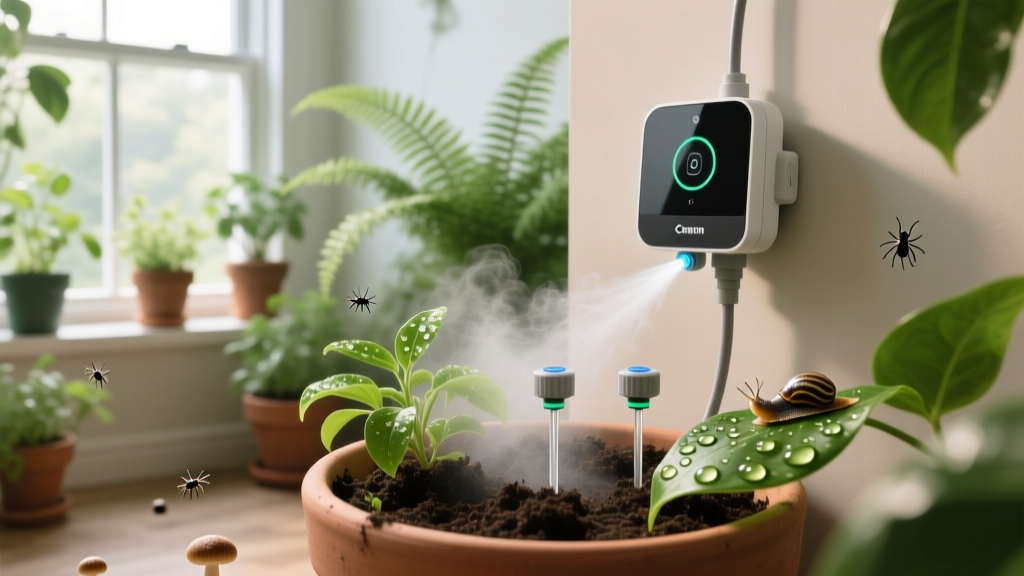
Smart Irrigation for Pest Control: Stop Mosquitoes & Gnats
James MillerPublished
The Intersection of Smart Home Technology and IPM
Integrated Pest Management (IPM) is a cornerstone of modern, eco-friendly lawn and garden care. Rather than relying solely on chemical pesticides, IPM focuses on altering the environment to make it inhospitable to pests. While many gardeners focus on organic sprays and beneficial insects, one of the most critical—and frequently overlooked—aspects of IPM is moisture control. Overwatering and poor drainage are the primary catalysts for some of the most frustrating lawn and garden pests. Today, the rise of smart home automation and Internet of Things (IoT) irrigation devices allows homeowners to precisely manage soil moisture, effectively starving pests of the environments they need to breed and thrive.
The Hidden Link Between Overwatering and Garden Pests
To understand how automated irrigation acts as a pest deterrent, we must first examine the biology of moisture-dependent pests. According to the EPA's Integrated Pest Management Principles, modifying the habitat is the first line of defense in any IPM strategy. When you overwater your lawn or garden beds, you inadvertently create a paradise for three major pest categories:
1. Fungus Gnats (Bradysia spp.)
Fungus gnats are a notorious nuisance in both indoor houseplants and outdoor garden beds. Adult females lay their eggs in the top 1 to 2 inches of moist, organic-rich soil. The larvae feed on fungi and algae that naturally bloom in damp conditions. If your soil remains constantly wet due to a poorly calibrated sprinkler timer, fungus gnat populations will explode. The University of California Statewide Integrated Pest Management Program notes that allowing the top layer of soil to dry out between waterings is the single most effective cultural control method for these insects.
2. Mosquitoes (Culex and Aedes species)
Mosquitoes require standing water to complete their life cycle. While most homeowners know to empty birdbaths and gutters, they often forget about micro-puddles caused by uneven sprinkler coverage, compacted clay soils, or excessive watering schedules. Smart irrigation systems eliminate these accidental breeding grounds by ensuring water is applied only at the rate the soil can absorb it.
3. Slugs and Snails
Gastropods require high humidity and wet surfaces to prevent desiccation (drying out). Overwatered mulch beds and soggy lawns provide the perfect nighttime highway for slugs to travel and feed on your prized hostas and vegetables. By automating your watering to occur only when necessary, and allowing surfaces to dry by dusk, you severely restrict their mobility.
How Smart Irrigation Controllers Revolutionize IPM
Traditional sprinkler timers are blind. They operate on rigid schedules, watering your lawn even if it rained the day before or if the soil is already saturated. Smart irrigation controllers, on the other hand, act as the brain of your landscape. They connect to your home Wi-Fi network and pull real-time local weather data to calculate Evapotranspiration (ET) rates. ET is the sum of evaporation from the land surface and transpiration from plants. By utilizing ET data, smart controllers adjust watering durations dynamically, ensuring your landscape receives the exact amount of water it needs—down to the minute—without creating the soggy conditions that attract pests.
The EPA WaterSense Smart Irrigation Controllers program highlights that weather-based smart controllers can save the average home thousands of gallons of water annually while simultaneously promoting deeper, healthier root systems that are more resistant to pest damage.
Essential Smart Devices for Moisture-Based Pest Control
Building an automated pest-prevention irrigation system requires a combination of smart controllers and localized sensors. Below is a comparison of top-tier devices that integrate seamlessly into smart home ecosystems like Amazon Alexa, Google Home, and Apple HomeKit.
| Device | Type | Est. Cost | Key IPM Feature | Best For |
|---|---|---|---|---|
| Rachio 3 | Smart Controller | $229 | Weather Intelligence Plus & Cycle/Soak | Whole-yard automation & mosquito prevention |
| Orbit B-hyve XR | Smart Controller | $179 | Hydro-Sense local weather integration | Budget-conscious smart home upgrades |
| Hunter Wireless Soil Moisture Sensor | Add-on Sensor | $55 | Overrides watering if soil is saturated | Shaded garden beds prone to fungus gnats |
| Spruce Smart Soil Moisture Sensor | IoT Zigbee Sensor | $79 | Real-time app alerts & hub integration | Advanced smart home hubs (Hubitat/SmartThings) |
| Kasa Smart Plug (Outdoor) | Smart Automation | $25 | Automates UV traps and bug zappers | Perimeter pest control automation |
Step-by-Step: Configuring Your Smart System for Pest Prevention
To maximize your smart home's pest control capabilities, follow this actionable configuration guide:
Step 1: Implement the 'Cycle and Soak' Method
Clay soils and compacted lawns absorb water slowly. If your sprinkler runs for 20 minutes straight, the topsoil becomes saturated, leading to runoff and puddling (mosquito breeding grounds). Configure your Rachio or B-hyve controller to use the 'Cycle and Soak' feature. This splits your watering time into shorter intervals (e.g., 5 minutes on, 15 minutes off, repeated three times). This allows water to penetrate deeply into the root zone, leaving the surface dry and inhospitable to surface-dwelling pests.
Step 2: Deploy Wireless Soil Moisture Sensors in Problem Zones
Shaded areas of your lawn or garden beds retain moisture much longer than sunny spots. Install a wireless soil moisture sensor (like the Spruce or Hunter sensor) in these high-risk zones. Bury the probe exactly 2 inches deep—the prime egg-laying zone for fungus gnats. Set your smart hub to trigger an automatic 'skip watering' command if the sensor reads a volumetric water content (VWC) above 35%.
Step 3: Automate Biological Controls via Fertigation
For advanced smart home enthusiasts, automated fertigation systems (like the EZ-FLO) can be wired to a smart plug or irrigation controller. You can fill the tank with Bacillus thuringiensis israelensis (Bti), a naturally occurring bacterium that targets mosquito and fungus gnat larvae. Program your smart system to inject a micro-dose of Bti into your drip irrigation lines once a month, providing automated, organic biological pest control without lifting a finger.
Expanding Automation: Smart Plugs for Pest Traps
Moisture control is only half the battle. Smart plugs offer a brilliant way to automate physical pest traps. By connecting outdoor UV insect traps, CO2 mosquito traps, or ultrasonic repellents to a Kasa or Wemo smart plug, you can create automated pest-control routines based on local sunset and sunrise data. For example, configure your smart home app to turn on your Dynatrap mosquito catcher exactly 30 minutes before dusk—the peak feeding time for Culex mosquitoes—and turn it off at dawn. This saves electricity, extends the lifespan of the trap's UV bulbs, and ensures the device is only active when pests are most vulnerable.
AI Cameras for Vertebrate Pest Detection
Smart home security cameras equipped with AI object detection (such as the Ring Floodlight Cam or Google Nest Cam) are increasingly being used for garden pest monitoring. By configuring custom 'activity zones' over your garden beds and enabling alerts for 'animals' or 'people,' you can instantly identify if larger pests like deer, rabbits, or groundhogs are invading your landscape. Some advanced users integrate these camera triggers with smart home routines that automatically activate motion-sensor sprinklers (like the Orbit Yard Enforcer) to humanely scare off vertebrate pests the moment they cross the property line.
Conclusion
Smart home automation is no longer just about convenience; it is a powerful tool for ecological garden management. By replacing blind, timer-based watering with intelligent, sensor-driven irrigation, you eliminate the damp, stagnant environments that breed mosquitoes, fungus gnats, and slugs. Combining smart controllers, soil moisture sensors, and automated trapping routines creates a robust, proactive Integrated Pest Management system. You will not only save money on water bills and chemical pesticides, but you will also cultivate a healthier, more resilient lawn and garden ecosystem.