Home & Garden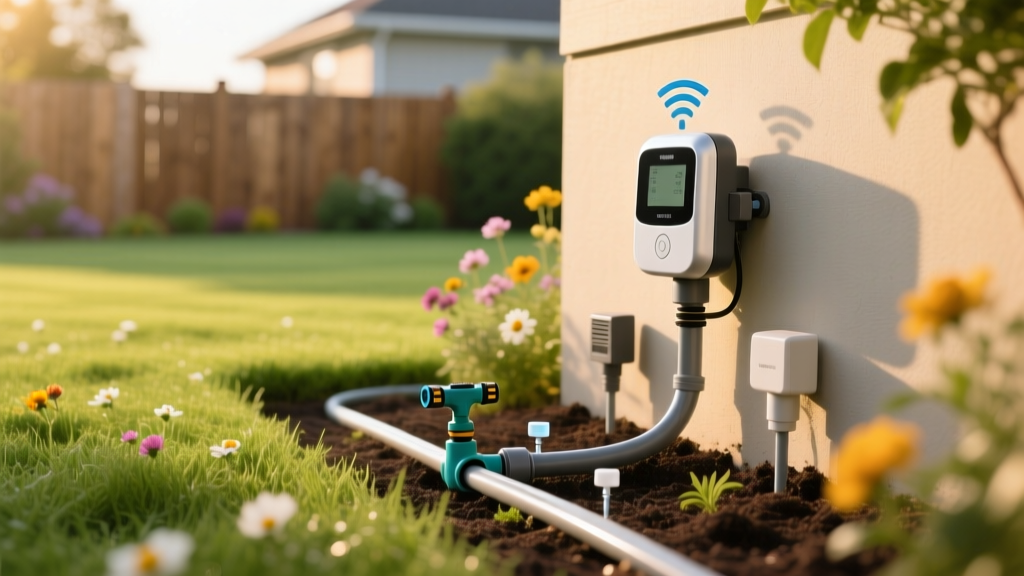
The True Cost of Smart Irrigation Systems: Budget Guide
Lisa ThompsonPublished
Why Upgrade to a Smart Irrigation System?
Upgrading your outdoor space with smart home integration is one of the most effective ways to bridge the gap between modern convenience and energy-efficient landscaping. At the heart of this transformation is the smart irrigation system. But before you start wiring your yard for Wi-Fi-enabled watering, you need a clear financial roadmap. This comprehensive cost and budgeting guide breaks down the exact expenses, hidden fees, and long-term savings associated with installing a smart irrigation system, ensuring your lawn stays lush without draining your bank account.
Core Components and Equipment Costs
To build an accurate budget, you must first understand the hardware required. A smart irrigation system is not a single device but an ecosystem of connected components. Here is a breakdown of the primary equipment costs you will encounter.
Smart Irrigation Controllers
The brain of your system is the smart controller. These Wi-Fi-enabled devices replace your traditional timer, using local weather data, soil conditions, and evapotranspiration (ET) rates to adjust watering schedules automatically.
- Entry-Level Models (e.g., Orbit B-hyve, Wyze Sprinkler): Typically range from $100 to $150. These are excellent for small lawns with 4 to 6 zones and offer basic weather-based adjustments.
- Mid-Range Models (e.g., Rachio 3, Rain Bird ST8I-2.0): Priced between $170 and $230. These offer 8 to 16 zones, advanced weather intelligence, and seamless integration with smart home hubs like Amazon Alexa and Apple HomeKit.
- Commercial/High-End Models (e.g., Hunter Hydrawise PRO-HC): Costing $300 to $500+, these are designed for expansive properties with complex landscaping and up to 24 zones.
Soil Moisture Sensors and Flow Meters
While weather-based controllers are highly efficient, adding ground-truth data via soil moisture sensors takes precision to the next level.
- Wireless Soil Moisture Sensors: Expect to pay $40 to $80 per sensor. For a standard suburban lawn, placing two sensors (one in a sunny area, one in the shade) provides optimal data.
- Flow Meters: Priced around $60 to $120, these devices attach to your main water line and alert your smartphone if a pipe bursts or a sprinkler head breaks, preventing catastrophic water bills.
High-Efficiency Nozzles and Rotors
A smart controller cannot fix poor water distribution. Upgrading to high-efficiency rotary nozzles (like the Hunter MP Rotator or Rain Bird R-VAN) ensures water is applied slowly and evenly, reducing runoff. Budget $5 to $12 per nozzle. An average yard with 20 sprinkler heads will require a nozzle upgrade budget of roughly $100 to $240.
Professional Installation vs. DIY Costs
Labor represents a significant portion of your total budget. Your technical comfort level and the current state of your irrigation wiring will dictate whether you should hire a professional or tackle the project yourself.
| Service / Task | DIY Cost Estimate | Professional Cost Estimate | Time Required |
|---|---|---|---|
| Controller Replacement (Retrofit) | $0 (Your Labor) | $100 - $250 | 1 - 3 Hours |
| Wiring and Valve Troubleshooting | $20 - $50 (Tools/Multimeter) | $75 - $150 per hour | 2 - 5 Hours |
| Sensor Installation & Calibration | $0 (Your Labor) | $150 - $200 | 1 - 2 Hours |
| Full System Overhaul (Nozzles + Controller) | $0 (Your Labor) | $400 - $800+ | 4 - 8 Hours |
Note: Professional irrigation contractors typically charge a flat service call fee of $75 to $125, plus an hourly rate of $65 to $100 for subsequent labor.
Calculating the ROI and Water Savings
When budgeting for home and garden upgrades, it is crucial to look beyond the initial capital expenditure and calculate the Return on Investment (ROI). Smart irrigation systems pay for themselves through drastic reductions in municipal water bills.
According to the U.S. Environmental Protection Agency (EPA) WaterSense program, replacing a standard clock timer with a WaterSense-labeled smart irrigation controller can save the average home nearly 8,800 gallons of water annually.
If your local water utility charges $5.00 per 1,000 gallons (a conservative national average accounting for water and sewer fees), you are looking at an annual savings of roughly $44 to $60 just from the controller upgrade.
Furthermore, the University of Florida IFAS Extension notes that smart controllers utilizing soil moisture sensors can reduce outdoor water use by 30% to 50% compared to traditional time-based schedules. In drought-prone regions like California, Texas, and Arizona, where tiered water pricing penalizes heavy usage, the financial savings can exceed $200 per year, allowing the system to pay for itself in less than two irrigation seasons.
Hidden Costs and Maintenance Budgeting
A common budgeting mistake is assuming the hardware cost is the final expense. To avoid financial surprises, allocate funds for the following hidden costs:
Wi-Fi Extenders and Connectivity
Smart controllers require a stable 2.4 GHz Wi-Fi signal. If your router is located on the opposite side of your home from the garage or exterior wall where the controller lives, you may experience connection drops. Budget $30 to $60 for a weatherproof outdoor Wi-Fi extender or a dedicated mesh node to ensure uninterrupted communication.
Winterization and Spring Activation
If you live in a climate with freezing winters, your irrigation system must be blown out with compressed air to prevent cracked pipes and ruined smart valves. Professional winterization costs between $50 and $150 per season, depending on the number of zones. Factor this recurring annual cost into your long-term landscaping budget.
Subscription Fees
Fortunately, the vast majority of top-tier smart irrigation brands (including Rachio, Orbit, and Rain Bird) do not charge monthly subscription fees for app access or weather data. However, always verify this at the point of purchase, as some niche commercial systems require a $3 to $5 monthly cloud-hosting fee.
Leveraging Rebates and Incentives
Before finalizing your budget, research local utility rebates. Many municipal water districts actively subsidize the cost of smart irrigation equipment to conserve regional water supplies.
- WaterSense Rebate Locator: Use the EPA WaterSense rebate finder tool online to search your zip code.
- Typical Rebate Values: It is common to find rebates covering 50% to 100% of the cost of a smart controller, up to a maximum cap of $150 to $300.
- Eligibility Rules: Most rebates require the controller to be on the EPA WaterSense certified list and may require proof of professional installation or a post-installation inspection.
By strategically timing your purchase in early spring and applying for utility rebates, you can effectively cut your equipment budget in half.
Step-by-Step Budgeting Strategy for Homeowners
To execute this project smoothly, follow this actionable budgeting checklist:
- Audit Your Current Zones: Open your existing controller and count the wires. A standard 8-zone controller is sufficient for most homes; buying a 16-zone model is an unnecessary expense if you only have 5 active zones.
- Test Your Wi-Fi Signal: Take your smartphone to the controller location. If you have less than two bars of 2.4 GHz Wi-Fi, add a $40 extender to your budget immediately.
- Map Your Sun/Shade Areas: Determine if you need soil moisture sensors. If your lawn has distinct microclimates, budget $80 for a wireless sensor kit to prevent overwatering shaded areas.
- Check for Rebates First: Visit your local water provider's website before buying. Some utilities require pre-approval before you purchase the equipment.
- Buy Off-Season: The best time to purchase smart controllers is late fall or mid-winter when home improvement retailers clear out seasonal inventory, often yielding 20% to 30% discounts.
Conclusion
Budgeting for a smart irrigation system requires balancing upfront hardware and labor costs against long-term ecological and financial benefits. By carefully selecting the right tier of smart controller, deciding between DIY and professional installation, and capitalizing on local water utility rebates, you can modernize your outdoor living space efficiently. Not only will you protect your garden-to-table harvest and ornamental landscaping from drought stress, but you will also embrace true energy-efficient landscaping that respects both your wallet and the environment.
