Home & Garden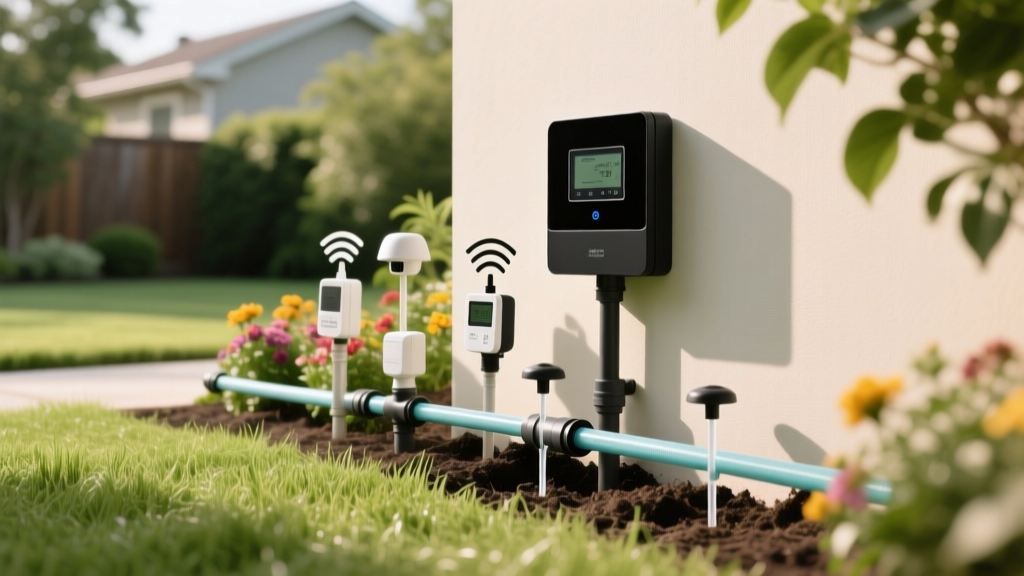
Complete Smart Irrigation System Cost and Budget Guide
Emily WatsonPublished
Introduction to Smart Irrigation Budgeting
As homeowners increasingly look to bridge the gap between indoor convenience and outdoor maintenance, smart home integration for landscaping has become a top priority. A smart irrigation system does more than just water your lawn on a schedule; it uses real-time weather data, soil moisture levels, and evapotranspiration rates to deliver the exact amount of water your garden needs. However, before you rip out your old timer and start digging trenches, it is crucial to understand the financial commitment. Budgeting for a smart irrigation system requires a careful analysis of hardware costs, installation fees, and long-term water savings. This comprehensive cost and budgeting guide will break down every expense, helping you make an informed decision for your home and garden.
Understanding Smart Irrigation Components and Costs
To build an accurate budget, you must first understand the individual components that make up a modern, water-efficient irrigation system. Unlike traditional clock-based timers, smart systems rely on a network of connected devices.
Smart Controllers and Wi-Fi Hubs
The brain of your system is the smart controller. These devices connect to your home Wi-Fi network and adjust watering schedules based on local weather forecasts. Entry-level smart controllers, such as the Wyze Sprinkler Controller, typically cost between $100 and $150. Mid-range options like the Orbit B-hyve XR range from $180 to $250, offering better build quality and more zone support. Premium models, such as the Rachio 3 Smart Sprinkler Controller, cost between $275 and $350. The Rachio 3 is widely considered the industry standard for smart home integration, offering seamless compatibility with Alexa, Google Home, and Apple HomeKit, as well as advanced weather intelligence features.
Soil Moisture Sensors and Flow Meters
While weather-based controllers are excellent, adding soil moisture sensors provides hyper-local data about your garden beds and lawn. A standard wireless soil moisture sensor kit costs between $40 and $80 per zone. If you have a diverse landscape with both drought-tolerant shrubs and water-hungry turf, budgeting for two or three sensors is highly recommended. Additionally, smart flow meters, which attach to your main water line to detect leaks and measure exact water usage, cost between $120 and $200. These are essential for homeowners focused on strict water conservation and leak prevention.
Smart Valves and High-Efficiency Sprinkler Heads
Your controller needs physical valves to release water. Standard irrigation valves cost about $20 to $40 each, but smart-compatible valves with built-in flow control can cost $50 to $75. Furthermore, upgrading your sprinkler heads to high-efficiency rotary nozzles (like the Rain Bird R-VAN or Hunter MP Rotator) is a vital part of a water-saving budget. These nozzles apply water slowly and evenly, reducing runoff. Budget approximately $8 to $15 per nozzle. For an average lawn with 50 sprinkler heads, a complete nozzle upgrade will cost between $400 and $750 in materials alone.
Cost Comparison Table: Traditional vs. Smart Systems
To visualize the financial differences between maintaining an outdated system and upgrading to a smart setup, review the comparison chart below. This table assumes an average 8-zone residential landscape.
| System Component | Traditional Clock Timer | Smart Controller (DIY) | Full Smart System (Pro) |
|---|---|---|---|
| Controller / Timer | $40 - $80 | $150 - $300 | $250 - $400 |
| Weather / Soil Sensors | $0 (Not included) | $50 - $150 | $200 - $400 |
| Valves & Wiring | $150 - $250 | $150 - $250 | $300 - $500 |
| High-Efficiency Nozzles | $0 (Standard spray) | $400 - $600 | $500 - $800 |
| Installation Labor | $0 (DIY) | $0 (DIY) | $800 - $1,500 |
| Total Estimated Upfront Cost | $190 - $330 | $750 - $1,300 | $2,050 - $3,600 |
DIY vs. Professional Installation Costs
One of the most significant budget variables is labor. If you are simply retrofitting an existing irrigation system with a smart controller, the DIY route is highly cost-effective. Swapping out an old Rain Bird or Hunter timer for a Rachio or Orbit B-hyve typically takes one to two hours and requires only a screwdriver, wire strippers, and a smartphone. In this scenario, your labor cost is zero, and your total budget remains under $400.
However, if you are installing a brand-new irrigation system from scratch, or if your existing system requires extensive trenching, valve replacement, and pipe repairs, professional installation is usually necessary. Landscape irrigation contractors typically charge between $75 and $150 per zone for a complete smart system installation. For an 8-zone property, professional labor and materials will push your budget to the $2,500 to $4,000 range. While this is a substantial upfront investment, professional installation ensures proper head-to-head coverage, correct pipe sizing, and optimal water pressure management, which prevents costly water waste down the line.
Calculating Long-Term ROI and Water Savings
When budgeting for home and garden improvements, it is vital to look beyond the initial price tag and calculate the return on investment (ROI). Smart irrigation systems pay for themselves through drastic reductions in municipal water bills.
According to the EPA WaterSense program, smart irrigation controllers can save the average home nearly 7,600 gallons of water annually. In regions with tiered water pricing or high municipal water rates, such as California, Texas, or the Southwest, this translates to savings of $100 to $250 per year. Furthermore, research from the University of Florida IFAS Extension indicates that combining smart controllers with soil moisture sensors can reduce outdoor water use by up to 50% compared to traditional clock-based timers without harming turf health.
If you spend $1,500 on a smart controller, sensors, and high-efficiency nozzles, and you save $200 a year on your water bill, your system will pay for itself in roughly 7.5 years. Given that high-quality smart controllers last 10 to 15 years, the long-term financial and environmental benefits are undeniable.
Hidden Costs and Budgeting Pitfalls
Even the most meticulous budgets can be derailed by hidden costs. When planning your smart irrigation project, be sure to account for the following potential expenses:
- Wi-Fi Range Extenders: Smart controllers require a strong 2.4 GHz Wi-Fi signal. If your router is located on the opposite side of your home from your garage or outdoor shed, you may need to purchase a weatherproof outdoor Wi-Fi extender, costing $50 to $100.
- Master Valve and Pump Start Relays: If your home relies on a well pump or requires a master valve to prevent constant water pressure in your lateral lines, you will need a smart controller that supports these features, which may require specialized wiring and an extra $100 in parts.
- Permit Fees: Some municipalities require permits for new irrigation installations or backflow preventer replacements. Check with your local water authority, as permit fees can range from $50 to $200.
- Winterization and Spring Start-Up: If you live in a climate with freezing winters, budget $75 to $150 annually for a professional to blow out your system with compressed air to prevent cracked pipes and ruined smart valves.
Step-by-Step Budgeting Strategy
To keep your project on track, follow this phased budgeting strategy. Phase one should focus on the highest ROI upgrades: replacing the outdated clock timer with a Wi-Fi-enabled smart controller and swapping standard spray nozzles for rotary nozzles in high-runoff areas. This can often be done for under $600. Phase two involves integrating soil moisture sensors in your most problematic garden beds or sun-baked lawn zones. Phase three, which can be deferred to a future season, includes upgrading aging valves, installing a master flow meter, and integrating the system with your broader smart home ecosystem for automated seasonal adjustments. By breaking the project into manageable phases, you can achieve a highly efficient, garden-to-table ready landscape without overwhelming your household budget.
Conclusion
Budgeting for a smart irrigation system is an exercise in balancing upfront hardware and labor costs against long-term water conservation and landscape health. Whether you opt for a simple DIY controller swap or a comprehensive professionally installed network of sensors and rotary nozzles, the investment aligns perfectly with modern, energy-efficient landscaping goals. By understanding the true costs of components, anticipating hidden fees, and leveraging utility rebates, you can build a resilient, water-wise garden that thrives season after season while keeping your household budget firmly in the green.
