Home & Garden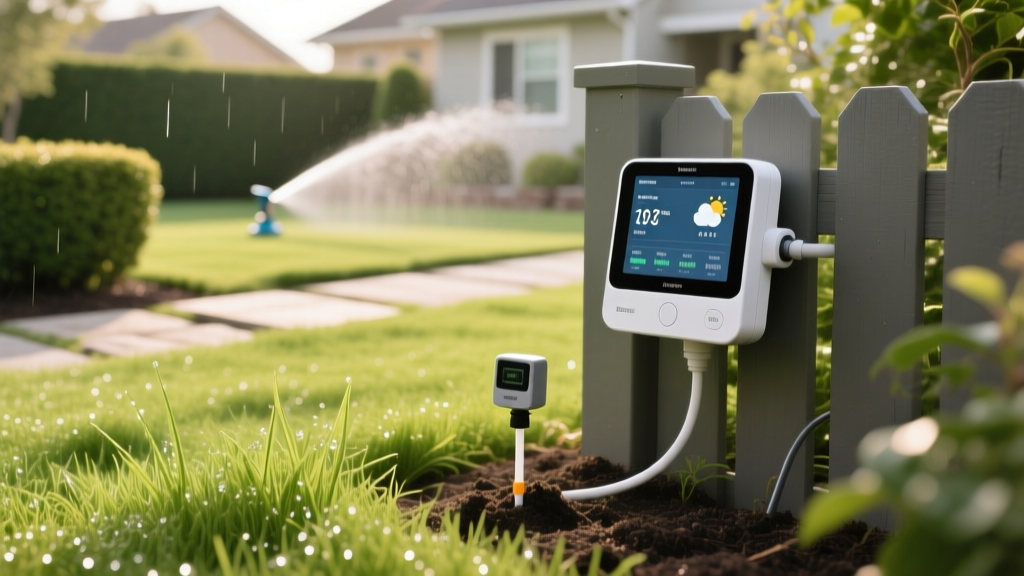
Smart Irrigation Systems: Save Water and Automate Your Lawn
Robert HayesPublished
The Hidden Cost of Traditional Timers
For decades, the standard clock-based irrigation timer has been the backbone of lawn care. You set the dial, choose your run times, and let the machine handle the rest. But there is a fundamental flaw in this approach: traditional timers are entirely blind to the environment. They will water your lawn during a torrential downpour, immediately after a heavy rainstorm, or during high-wind events that blow water straight onto your driveway. According to the Environmental Protection Agency (EPA), outdoor water use accounts for nearly 30% of total household water consumption, and a significant portion of that is wasted due to overwatering and inefficient scheduling.
This blind scheduling doesn't just harm your local watershed; it drains your wallet. Watering a lawn on a rigid schedule regardless of weather conditions leads to shallow root systems, fungal diseases, and skyrocketing utility bills. The modern solution? Smart irrigation controllers that integrate real-time data to automate and optimize your landscape's hydration.
How Smart Irrigation Controllers Work
Smart irrigation systems replace the arbitrary clock timer with a dynamic, data-driven brain. These devices connect to your home Wi-Fi network and pull in hyper-local weather data to adjust watering schedules automatically. There are two primary types of smart controllers recognized by the EPA WaterSense program:
Weather-Based (Evapotranspiration) Controllers
These controllers use a metric called Evapotranspiration (ET), which measures the loss of water from the soil by evaporation and from plants by transpiration. By monitoring local temperature, humidity, solar radiation, and wind speed, the controller calculates exactly how much water your specific grass type has lost and replaces only that exact amount. If a cold front moves in and ET drops, the system automatically scales back the run time.
Soil Moisture Sensor Controllers
Instead of looking at the sky, these systems look at the dirt. Sensors buried in the root zone of your lawn measure the actual volumetric water content of the soil. The controller will bypass a scheduled watering cycle if the soil moisture is already above a predefined threshold. This is particularly effective for clay-heavy soils that retain water longer and are prone to runoff.
Top Smart Irrigation Systems Compared
Choosing the right hardware depends on your yard's complexity, your budget, and your desired level of smart home integration. Below is a comparison of the industry's leading smart controllers:
| Brand & Model | Zones | Key Smart Features | Avg. Cost | WaterSense Certified |
|---|---|---|---|---|
| Rachio 3 | 8 or 16 | Weather Intelligence Plus, IFTTT, Alexa/Google, Satellites | $229 - $279 | Yes |
| Orbit B-hyve | 6, 8, or 12 | WeatherSense, Smart Home compatible, Indoor/Outdoor mount | $119 - $159 | Yes |
| Rain Bird ST8I-2.0S | 8 | Automatic seasonal adjust, Wi-Fi, LNK2 module included | $139 - $169 | No |
| Netro Whisper | 6 or 12 | AI-driven plant database, solar-powered sensor options | $129 - $169 | Yes |
Step-by-Step Installation Guide
Upgrading to a smart controller is a highly accessible DIY project that typically takes under an hour. Here is how to swap out your old timer for a new smart hub:
- Step 1: Cut the Power. Locate your irrigation controller and unplug it, or turn off the dedicated circuit breaker to ensure safety.
- Step 2: Document Your Wiring. Before removing a single wire, take a high-resolution, well-lit photograph of the existing terminal board. Ensure every zone number and the common (C) wire are clearly legible.
- Step 3: Remove the Old Unit. Loosen the terminal screws, detach the wires, and unscrew the old mounting bracket from the wall.
- Step 4: Mount the New Backplate. Use a level to mark your drill holes. If mounting outdoors, ensure you are using a weather-resistant enclosure and silicone sealant around the drill holes to prevent moisture intrusion.
- Step 5: Reconnect the Wires. Strip about 1/4 inch of insulation from the wire tips if they are frayed. Insert them into the corresponding terminals on your new smart controller based on the photo you took. The Common (C) wire is crucial for completing the circuit.
- Step 6: Power Up and Configure. Restore power, download the manufacturer's app, and connect the device to your 2.4GHz Wi-Fi network (most smart home devices do not support 5GHz bands).
Calculating Your ROI and Water Savings
The financial argument for smart irrigation is compelling. The Natural Resources Defense Council (NRDC) highlights that optimizing outdoor water use is one of the most effective ways to reduce a household's overall water footprint. According to EPA WaterSense data, replacing a standard clock timer with a WaterSense labeled smart irrigation controller can save an average home nearly 7,600 gallons of water annually.
If all U.S. homes using clock-based timers switched to WaterSense labeled smart controllers, the nation would save over $435 million in water costs and 120 billion gallons of water each year.
Furthermore, many local water municipalities offer aggressive rebates for installing EPA WaterSense-certified controllers. Depending on your zip code, rebates can range from $50 to over $150, effectively covering the entire cost of entry-level models like the Orbit B-hyve. Always check the EPA WaterSense rebate finder or your local utility provider's website before purchasing.
Integrating with Your Broader Smart Home Ecosystem
Where smart irrigation truly shines is in its ability to integrate with your broader home automation setup. Platforms like Rachio and Orbit B-hyve offer robust IFTTT (If This Then That) applets and native support for Amazon Alexa, Google Home, and Apple HomeKit.
Geofencing and Presence Detection
By linking your irrigation controller to your smart home hub, you can create geofencing routines. For example, if you are hosting a backyard barbecue, you can set a routine that automatically pauses all sprinkler zones when your smartphone enters the driveway, ensuring your guests aren't accidentally misted during dinner.
Hyper-Local Weather Triggers
While the controllers have built-in weather intelligence, integrating them with a personal backyard weather station allows for micro-climate adjustments. If your personal rain gauge detects 0.5 inches of precipitation, it can instantly trigger an IFTTT webhook to skip the next 48 hours of scheduled watering, overriding regional forecast data that might be inaccurate for your specific neighborhood.
Seasonal Automation
Combine your smart irrigation with smart outdoor lighting. As the days grow shorter in autumn, you can program a master routine that shifts your watering schedule to earlier in the morning to prevent freezing, while simultaneously adjusting your smart landscape path lights to turn on 15 minutes earlier to accommodate the shifting dusk.
Maintenance and Best Practices
A smart controller cannot fix broken hardware. To maximize the efficiency of your automated system, pair it with routine physical maintenance. Inspect your sprinkler heads monthly for clogs or misalignment. A single head spraying onto a concrete driveway can waste hundreds of gallons a month, entirely negating the software's efficiency. Additionally, consider upgrading standard spray nozzles to high-efficiency rotary nozzles, which apply water at a slower rate, allowing it to soak deeply into the soil rather than running off into the storm drain. By combining smart software with efficient hardware, you create a resilient, drought-tolerant landscape that thrives with minimal intervention.
