Home & Garden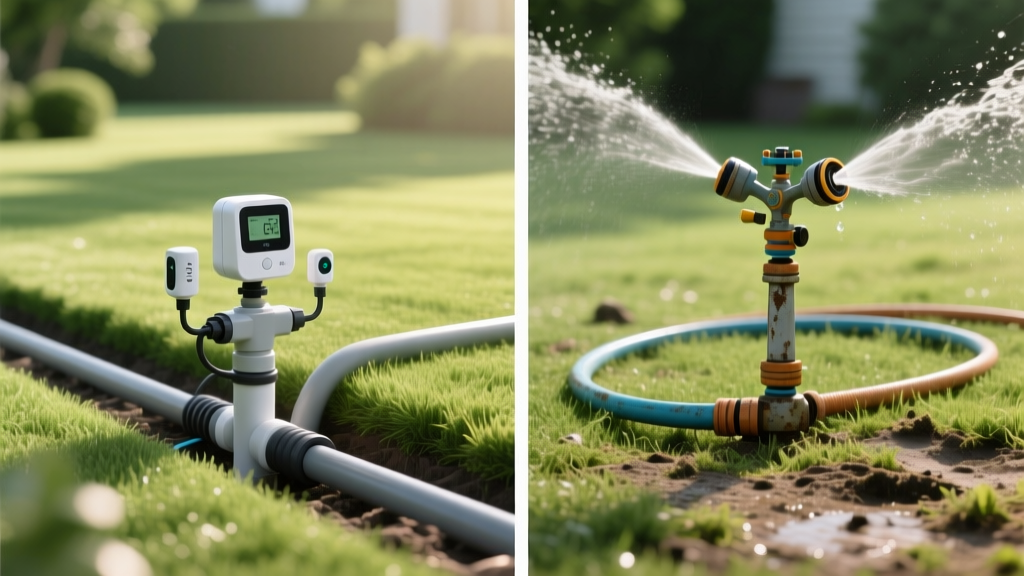
Smart Irrigation vs Traditional Sprinkler Cost Guide
Mike RodriguezPublished
Bridging the Gap: Outdoor Landscaping Meets Smart Home Tech
When planning your outdoor landscaping budget, irrigation is often the most critical yet overlooked investment. A thriving, garden-to-table vegetable patch and a lush, energy-efficient lawn both rely on precise watering. However, homeowners are increasingly faced with a modern dilemma: should you stick with a traditional clock-timer sprinkler system, or upgrade to a Wi-Fi-enabled smart irrigation controller? Bridging the gap between outdoor living and smart home integration requires a careful look at the numbers. This comprehensive cost and budgeting guide breaks down the upfront expenses, hidden fees, and long-term return on investment (ROI) of traditional versus smart sprinkler systems, helping you make the most financially sound decision for your yard.
Understanding the Baseline: Traditional Sprinkler Systems
Traditional sprinkler systems rely on a standard clock timer, usually mounted in a garage or basement. These controllers operate on a fixed schedule, turning zones on and off at predetermined times regardless of the weather. While they are the industry standard and familiar to most landscapers, their lack of environmental awareness can lead to significant water waste and inflated utility bills.
Upfront Equipment and Labor Costs
For an average 5,000-square-foot lawn divided into six to eight zones, a traditional system requires a basic controller, valves, PVC piping, and spray heads or rotors. Popular traditional models, such as the Rain Bird SST600IN or Hunter Pro-C, typically cost between $50 and $120. If you are hiring a professional landscaping contractor to install a complete new system from scratch, including trenching and piping, labor and materials will generally range from $2,500 to $4,500. If you already have the pipes and valves in place and only need to replace the controller, a professional will charge roughly $150 to $250 for the service call and installation labor.
The Limitations of Fixed Scheduling
The primary drawback of a traditional system from a budgeting perspective is operational inefficiency. Because these timers do not account for rainfall, humidity, or seasonal shifts, they frequently water the lawn during or immediately after a rainstorm. This not only wastes water but can also promote fungal diseases in your grass and vegetable garden, leading to additional costs for fungicides and lawn repair.
The Modern Upgrade: Smart Irrigation Controllers
Smart irrigation controllers replace the standard dial with a Wi-Fi-connected hub that communicates with local weather stations, soil moisture sensors, and smart home ecosystems like Amazon Alexa or Apple HomeKit. These devices automatically adjust watering schedules based on real-time evapotranspiration (ET) data, ensuring your lawn receives exactly the amount of water it needs to thrive.
Equipment Costs and Popular Models
The market for smart irrigation has matured, offering options for various budgets. The Orbit B-hyve is a highly rated budget-friendly option, costing around $120 for a 6-zone indoor model or $180 for an 8-zone outdoor weatherproof model. On the premium end, the Rachio 3 Smart Sprinkler Controller (8-zone) retails for approximately $230, while the 16-zone version costs around $280. These controllers feature advanced flow meters, freeze-skip technology, and seasonal shift adjustments that optimize water usage without any manual programming.
Installation and Setup
If you are reasonably handy, swapping a traditional controller for a smart one is a straightforward DIY project that takes about 45 minutes. Most smart controllers come with step-by-step app-based wiring guides. However, if you prefer to hire an electrician or irrigation specialist, expect to pay an additional $150 to $300 for labor, depending on whether new wiring or a weatherproof outdoor enclosure is required.
Head-to-Head Cost Comparison Chart
To visualize the budget differences, review the breakdown below for an average 8-zone residential property. This table assumes the existing underground piping and sprinkler heads are in good condition and only compares the control technology and associated accessories.
| Component | Traditional System Cost | Smart System Cost | Budgeting Notes |
|---|---|---|---|
| Base Controller (8-Zone) | $60 - $120 | $180 - $250 | Smart models include Wi-Fi chips and weather APIs. |
| Weather / Rain Sensor | $30 - $50 | Included (via Internet) | Traditional requires physical wiring to the eaves. |
| Soil Moisture Sensors (2) | N/A | $80 - $120 | Optional for smart systems, but highly recommended for gardens. |
| Professional Installation | $150 - $200 | $150 - $250 | Smart setups may require outdoor enclosures or Wi-Fi extenders. |
| Estimated Year 1 Total | $240 - $370 | $410 - $740 | Smart systems carry a higher initial capital expenditure. |
Calculating the ROI: Water Savings and Utility Rebates
The true financial advantage of a smart irrigation system reveals itself in the long-term ROI through water conservation. To understand the savings, we must look at authoritative data regarding outdoor water usage.
According to the U.S. Environmental Protection Agency (EPA) WaterSense program, replacing a standard clock timer with a WaterSense labeled smart irrigation controller can save the average home nearly 7,600 gallons of water annually. Furthermore, the EPA notes that outdoor water use accounts for nearly 30% of total household water consumption, making irrigation efficiency a primary target for budget-conscious homeowners.
Crunching the Numbers on Utility Bills
Let us translate those 7,600 gallons into actual dollars. The national average cost for water and sewer combined is approximately $2.00 per 1,000 gallons, though this can be significantly higher in drought-prone regions like California or the Southwest, where tiered pricing can push rates past $5.00 per 1,000 gallons. At the national average, a smart controller saves roughly $15.20 per year. However, in regions with high water costs and strict summer watering restrictions, savings can easily exceed $75 to $120 annually. For a premium controller costing $230, the break-even point in a high-cost water market is often less than three years.
Hunting for Municipal Rebates
One of the most effective budgeting strategies for smart landscaping is leveraging local utility rebates. Many municipal water districts actively subsidize the cost of EPA WaterSense-certified smart controllers to reduce strain on local water treatment facilities. It is common to find rebates ranging from $50 to $150, which can instantly offset the premium price of a Rachio or Orbit B-hyve unit. Always check your local water provider's website before purchasing to ensure you select a qualifying model and submit your receipt in time.
Hidden Costs to Include in Your Landscaping Budget
When drafting your garden-to-table or lawn care budget, be sure to account for the hidden costs associated with integrating smart outdoor technology into your home network.
- Wi-Fi Range Extenders: Sprinkler controllers are often located in basements, garages, or behind concrete retaining walls where home Wi-Fi signals struggle to reach. You may need to purchase an outdoor-rated Wi-Fi extender, such as the TP-Link N300 Outdoor Access Point (approx. $60), to maintain a stable connection.
- Weatherproof Enclosures: If you are upgrading an older indoor traditional controller to an outdoor smart model, or if you are mounting an indoor smart model in a garage prone to extreme temperature fluctuations, a weatherproof metal or heavy-plastic enclosure ($40 to $80) is a necessary investment to protect the electronics.
- Winterization and Blowouts: Both traditional and smart systems require annual autumn winterization in freezing climates. Compressed air blowouts typically cost $50 to $100 per visit. Smart controllers make this easier by offering a dedicated 'blowout mode' that cycles zones automatically, potentially saving you a specialized service call fee.
- Flow Meters and Master Valves: To unlock advanced leak-detection features on premium smart controllers, you may need to have a plumber install a master valve and a digital flow meter, adding $200 to $400 to your initial budget.
DIY vs. Professional Installation: Which Fits Your Budget?
If your goal is strictly cost reduction, a DIY smart controller swap is one of the highest-yielding weekend projects a homeowner can undertake. The wiring for 90% of residential irrigation systems is standardized. By taking a photo of your old controller's wiring before removing it, and utilizing the interactive app provided by modern smart brands, you can safely complete the upgrade for the cost of the hardware alone. This approach is ideal for tech-savvy homeowners looking to maximize their landscaping budget.
Conversely, if your property features complex landscaping, multiple water sources, or a mix of drip irrigation for your raised vegetable beds and high-pressure rotors for your turf, hiring a certified irrigation professional is worth the premium. A professional will not only install the smart controller but will also audit your sprinkler heads, adjust arc patterns, and ensure your smart zones are accurately mapped to the specific precipitation rates of your hardware, ensuring you get the exact water savings advertised.
Final Verdict: Budgeting for the Future of Your Lawn
While traditional sprinkler systems offer a lower barrier to entry regarding upfront hardware costs, they are fundamentally a depreciating asset that drains your monthly utility budget through inefficiency. Smart irrigation controllers represent a forward-thinking investment that bridges outdoor landscaping with modern smart home convenience. By factoring in local water rates, potential municipal rebates, and the ecological benefit of conserving thousands of gallons of water annually, the smart irrigation system emerges as the clear winner for homeowners focused on long-term cost management and sustainable garden care.
