Home & Garden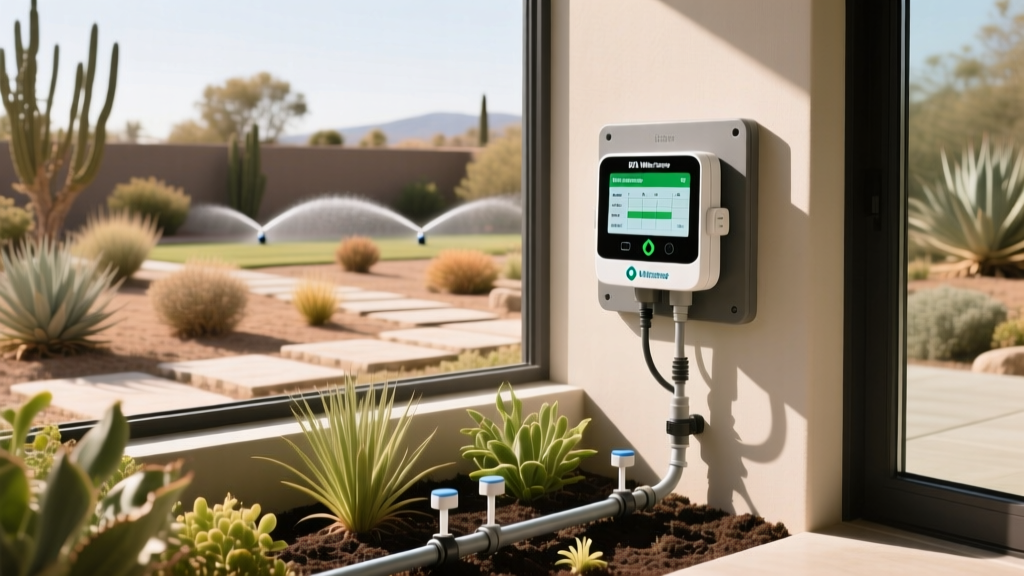
Smart Irrigation Setup: Expert Tips For Water Efficiency
Anna KowalskiPublished
The Evolution of Landscape Hydration
Transforming your outdoor space into a thriving, water-efficient oasis requires more than just a green thumb; it demands intelligent technology. As climate patterns shift and water restrictions become increasingly common across various municipalities, homeowners are turning to smart home integration to manage their landscape irrigation. The Environmental Protection Agency (EPA) notes that an average household can waste up to 50 percent of its outdoor water use due to wind, evaporation, and runoff from inefficient irrigation methods. By upgrading to an EPA WaterSense-labeled smart irrigation controller, you can reduce outdoor water use by up to 20 percent without compromising the health of your lawn or garden. This comprehensive guide dives deep into expert tips and best practices for selecting, installing, and optimizing smart irrigation systems for maximum energy and water efficiency.
According to the EPA WaterSense program, a smart irrigation controller can save the average home nearly 7,600 gallons of water annually, making it one of the most impactful upgrades for energy-efficient landscaping.
Selecting the Optimal Smart Controller
The brain of your smart irrigation setup is the controller. Unlike traditional timer-based systems that water on a rigid schedule regardless of recent rainfall, smart controllers utilize real-time data to adjust watering cycles dynamically. There are two primary types of smart controllers: weather-based (ET) and soil moisture sensor-based.
Weather-based controllers, often referred to as Evapotranspiration (ET) controllers, pull data from local weather stations via Wi-Fi. They calculate the exact amount of water your landscape loses to evaporation and plant transpiration, adjusting run times accordingly. Top-tier models like the Rachio 3 Smart Sprinkler Controller and the Hunter Hydrawise Pro-HC offer hyper-local weather intelligence, freeze skip, and rain delay features. These models typically range from $150 to $250 and are highly favored for their user-friendly smartphone applications and seamless integration with broader smart home ecosystems like Amazon Alexa, Apple HomeKit, and Google Home.
On the other hand, soil moisture sensor controllers measure the actual volumetric water content in the root zone. Brands like Rain Bird and Toro offer reliable soil sensor kits that physically prevent the system from running when the ground is already saturated. For landscapes with heavy clay soils that retain moisture longer, or sandy soils that drain rapidly, combining an ET controller with localized soil moisture sensors provides the ultimate precision.
Mastering the Art of Hydrozoning
Even the most advanced smart controller cannot compensate for poor landscape design. Hydrozoning is the practice of grouping plants with similar water, sunlight, and soil requirements into the same irrigation zone. This prevents the common mistake of overwatering drought-tolerant shrubs just to keep adjacent turfgrass alive.
When mapping out your hydrozones, consider the microclimates within your yard. A patch of Bermuda grass in full, unobstructed sunlight will have vastly different ET rates compared to a bed of hostas tucked beneath the shade of a mature oak tree. Expert landscapers recommend auditing your current sprinkler heads and re-piping zones if necessary to ensure uniform distribution.
Hydrozone Configuration Chart
| Hydrozone | Plant Types | Sun Exposure | Watering Strategy |
|---|---|---|---|
| Zone 1: Turf | Bermuda, Zoysia, Fescue | Full Sun | Deep, infrequent soak |
| Zone 2: Shrubs | Boxwood, Hydrangea | Partial Shade | Moderate, drip irrigation |
| Zone 3: Xeriscape | Succulents, Lavender | Full Sun | Rare, targeted emitter |
| Zone 4: Shade | Hostas, Ferns | Full Shade | Light, frequent misting |
Strategic Sensor Placement and Calibration
If you opt to use soil moisture sensors, placement is critical. The University of Florida IFAS Extension emphasizes that combining weather-based ET data with localized soil moisture sensors provides the highest level of irrigation efficiency, particularly in regions with highly variable microclimates. Sensors should be installed in the driest area of the irrigation zone to ensure that the entire zone receives adequate water before the system shuts off. Bury the sensor probe at the root zone depth of the primary plant type in that zone—typically 4 to 6 inches for turfgrass and 10 to 12 inches for deep-rooted shrubs.
Avoid placing sensors in low-lying areas where water naturally pools, or directly beneath a sprinkler head, as this will yield falsely high moisture readings and result in underwatering the rest of the zone. Furthermore, ensure that your wireless sensor transmitter is within the recommended range of the main controller, typically up to 300 feet with a clear line of sight, to prevent signal degradation.
Smart Home Integration and Network Best Practices
Integrating your irrigation system into your smart home hub allows for automated routines and voice control. However, a common pitfall during installation is network incompatibility. Most smart irrigation controllers, including the widely used Rachio and Orbit B-hyve models, operate exclusively on the 2.4 GHz Wi-Fi band due to its superior range and wall-penetration capabilities. If your home router uses a combined SSID for both 2.4 GHz and 5 GHz bands, the controller may struggle to maintain a stable connection.
Best practice dictates setting up a dedicated 2.4 GHz guest network or IoT (Internet of Things) network on your router specifically for outdoor smart devices. This not only resolves connectivity headaches but also enhances your home network's security by isolating outdoor hardware from your primary devices. Once connected, utilize IFTTT (If This Then That) applets or native smart home routines to trigger ancillary actions, such as turning on smart landscape lighting when the irrigation cycle completes at dusk, bridging the gap between functional maintenance and outdoor ambiance.
Seasonal Calibration and Winterization
A smart system is not a set-it-and-forget-it solution. While the controller handles daily micro-adjustments, seasonal baseline calibration is an expert best practice. In early spring, perform a comprehensive system audit. Check for sunken sprinkler heads, misaligned nozzles, and leaks at the valve manifolds. Replace standard spray nozzles with high-efficiency rotary nozzles (like the Hunter MP Rotator), which apply water at a slower rate (approximately 0.4 inches per hour), drastically reducing runoff on sloped terrain or compacted soils.
As autumn approaches, smart controllers with freeze-skip technology will automatically halt watering when temperatures drop below a user-defined threshold, typically 37 degrees Fahrenheit. However, you must still perform a manual blowout of the irrigation lines using an air compressor before the first hard freeze to prevent catastrophic pipe damage. Set your smart controller to rain delay or off for the winter months, but leave it plugged in to maintain its internal clock and Wi-Fi firmware updates.
Financial Breakdown and Return on Investment
Investing in smart irrigation technology requires upfront capital, but the long-term savings on municipal water bills and the preservation of your landscape's health offer a compelling ROI. Many local water districts and municipalities offer rebates ranging from $50 to $150 for installing EPA WaterSense-labeled controllers, which can offset the initial purchase price significantly.
Estimated ROI Breakdown
| Item | Average Cost | Annual Savings | Payback Period |
|---|---|---|---|
| Smart Controller (8-Zone) | $180 | $110 | 1.6 Years |
| Soil Moisture Sensor Kit | $65 | $45 | 1.4 Years |
| Rotary Nozzle Retrofit | $85 | $60 | 1.4 Years |
| Municipal Rebate | -$100 | N/A | Immediate |
Conclusion
Upgrading to a smart irrigation system is one of the most effective ways to modernize your home's exterior while championing environmental stewardship. By carefully selecting the right controller, adhering to strict hydrozoning principles, and leveraging smart home integrations, you can maintain a lush, vibrant landscape that adapts seamlessly to the elements. Implement these expert best practices to ensure your garden-to-table ingredients and ornamental beds receive precisely what they need, exactly when they need it, without wasting a single drop.
