Home & Garden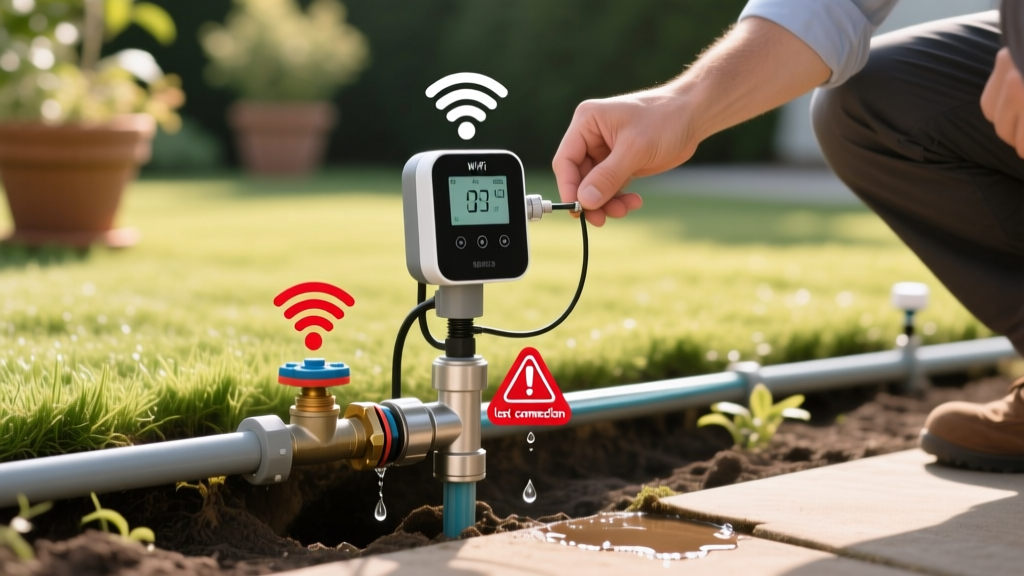
Smart Irrigation Troubleshooting: Wi-Fi and Leaks
Emily WatsonPublished
The Hidden Costs of a Malfunctioning Smart Irrigation System
Upgrading to a smart irrigation controller like the Rachio 3, Orbit B-hyve, or Rain Bird ESP-TM2 is one of the most effective ways to bridge energy-efficient landscaping with modern smart home integration. According to the EPA WaterSense program, smart weather-based irrigation controllers can save the average home nearly 7,600 gallons of water annually. However, these sophisticated devices are not immune to technical glitches. When Wi-Fi signals drop, valves fail to close, or soil moisture sensors provide false readings, your water-saving investment can quickly turn into a costly utility nightmare.
In this comprehensive diagnostic guide, we will walk through the most common smart irrigation problems, providing actionable, step-by-step solutions to restore your system to peak efficiency. Whether you are dealing with a disconnected controller or a mysterious sinkhole in your garden-to-table raised beds, this guide has the precise measurements, product recommendations, and repair protocols you need.
Problem 1: Smart Controller Wi-Fi Connectivity Drops
The most frequent complaint among smart irrigation users is the controller repeatedly showing as 'offline' in the companion app. This prevents the system from pulling local weather data, defaulting to rigid, water-wasting schedules.
Diagnosis: The 2.4GHz vs. 5GHz Dilemma
Nearly all smart irrigation controllers operate exclusively on the 2.4GHz Wi-Fi band. This frequency is chosen because it offers superior range and wall penetration compared to 5GHz. However, modern mesh routers often combine both bands under a single network name (SSID). If your controller attempts to handshake with the 5GHz band, or if the 2.4GHz signal is attenuated by exterior walls (especially stucco, brick, or metal siding), the connection will fail.
Diagnostic Step: Check the Received Signal Strength Indicator (RSSI) on your controller's diagnostic screen. An RSSI of -50 dBm is excellent, while anything weaker than -75 dBm will cause chronic disconnects.
Solutions for Wi-Fi Instability
- Split Your Router Bands: Access your router settings and separate the 2.4GHz and 5GHz networks. Name the 2.4GHz network something distinct (e.g., 'HomeNetwork_2G') and connect your irrigation controller exclusively to this band.
- Install a Dedicated Extender: If your controller is mounted in a garage or on an exterior brick wall, install a weather-resistant Wi-Fi extender. The TP-Link RE315 AC1200 Extender (approx. $35) is highly recommended. Mount it halfway between your router and the controller to bridge the signal gap.
- Upgrade the Antenna: For controllers with external antenna ports, upgrading to a high-gain 2.4GHz directional antenna can punch through dense exterior walls.
Problem 2: Ghost Zones, Valve Leaks, and Pressure Drops
A 'ghost zone' occurs when a sprinkler zone continues to leak water from the lowest head in the zone long after the controller has sent the shut-off signal. Alternatively, you might notice a sudden drop in water pressure across multiple zones, accompanied by a soggy patch of soil near the valve manifold.
Diagnosis: Debris and Diaphragm Failure
Smart controllers send a 24VAC electrical signal to the solenoid to open the valve, but the actual shut-off mechanism relies on water pressure and a rubber diaphragm. If a grain of sand or a piece of degraded PVC glue lodges in the valve seat, the diaphragm cannot seal. Over time, the rubber diaphragm itself can warp, tear, or become brittle, leading to continuous weeping.
Valve Repair and Replacement Data
Before digging up your entire yard, identify your valve brand. Below is a comparison chart of the most common residential irrigation valves and their specific replacement diaphragm part numbers and average costs.
| Valve Brand & Series | Diaphragm Part Number | Average Cost | Common Failure Symptom |
|---|---|---|---|
| Rain Bird DV / DVF Series | 203600 | $12.50 | Weeping at lowest head |
| Hunter PGV / SRV Series | 458200 | $14.00 | Valve chatters or hums |
| Toro 2000 / 2090 Series | 89-0114 | $11.00 | Slow shut-off delay |
| Orbit 57894 / Pro Series | 57203 | $9.50 | Complete failure to close |
Step-by-Step Diaphragm Replacement
- Shut Off the Water: Turn off the main irrigation shut-off valve, usually located in a basement or an exterior green valve box near the water meter.
- Relieve Pressure: Manually bleed the valve by turning the solenoid counter-clockwise one full turn, or open the manual bleed screw on the valve bonnet.
- Remove the Bonnet: Using a Phillips screwdriver, remove the 4 to 6 stainless steel screws holding the top half (bonnet) of the valve. Pro Tip: Do not use a power drill, as overtightening during reassembly can crack the PVC body.
- Inspect and Clean: Remove the old diaphragm and the metal spring. Inspect the valve seat for debris. Flush the valve body with a brief burst of water from the main line to clear out any trapped sand.
- Reassemble: Install the new diaphragm, ensuring the alignment pin matches the hole in the valve body. Hand-tighten the bonnet screws in a star pattern to ensure even pressure distribution.
Diagnosing Lateral Line Leaks
If the valve is shutting off completely but you still have a marshy area in your lawn, you likely have a lateral line leak. Smart systems with flow sensors (like the Rachio Flow Meter) will alert you to abnormal water usage. To repair a cracked PVC lateral line without excavating a massive trench, use a PVC Slip-Fix Expansion Coupling. Cut out the damaged section of pipe, prime and glue the Slip-Fix in place, and expand it to bridge the gap. Allow 2 hours for the PVC cement to cure before pressurizing the system.
Problem 3: Soil Moisture Sensor False Readings
Integrating soil moisture sensors into your smart home ecosystem allows for hyper-localized, garden-to-table crop watering. However, users often report that their system skips watering cycles even when the vegetable garden is visibly dry.
Diagnosis: Poor Placement and Sensor Corrosion
Soil moisture sensors measure the electrical resistance between two probes. If the sensor is placed in heavy clay soil while the rest of the garden is loam, or if it is positioned in a shaded depression where water pools, it will read 'moist' long after the raised beds have dried out. Additionally, galvanized probes can corrode within a single season if exposed to highly acidic soil or synthetic fertilizers.
Solutions for Accurate Moisture Tracking
- Optimal Placement: Bury the sensor probes at the exact depth of the root zone you are targeting. For shallow turfgrass, place probes 2 to 3 inches deep. For deep-rooted tomatoes and peppers in raised beds, bury the probes 6 to 8 inches deep within the primary dripline of the plants.
- Upgrade to Capacitive Sensors: Resistive sensors suffer from rapid galvanic corrosion. Upgrade to a capacitive soil moisture sensor (such as the Vegetronix VH400, approx. $45), which measures dielectric permittivity without passing direct current through the soil, effectively eliminating corrosion.
- Calibrate the Thresholds: Access your smart controller's app and adjust the 'skip threshold.' For water-intensive garden-to-table crops, set the moisture skip threshold to 30% volumetric water content (VWC), rather than the default 40% used for drought-tolerant lawns.
Preventative Seasonal Maintenance Checklist
Preventing smart irrigation failures is significantly cheaper than diagnosing them mid-summer. Follow this seasonal maintenance checklist to protect your investment:
- Spring Start-Up: Inspect all valve boxes for standing water. Clean the controller's exterior vents to prevent overheating in direct sunlight. Verify that the controller's firmware is updated to the latest version via the app.
- Mid-Summer Audit: Perform a 'catch cup test' in each zone to measure precipitation rates. Adjust the smart controller's 'crop coefficient' settings based on the specific plant types in each zone.
- Autumn Winterization: If you live in a freezing climate, smart controllers cannot prevent pipe bursts. You must hire a professional to blow out the system with an air compressor. Crucial Measurement: Never exceed 50 PSI of compressed air for PVC pipes, or 80 PSI for polyethylene pipes, to avoid shattering the lateral lines.
- Winter Storage: Disconnect the smart controller from the wall mount and store it indoors if it is not rated for sub-zero temperatures. Leave the transformer plugged in to maintain the internal memory battery, but cap the exposed low-voltage wires with wire nuts to prevent short circuits from moisture.
Expert Insights and Authoritative Citations
When troubleshooting complex irrigation issues, relying on peer-reviewed data and government guidelines ensures your landscape remains both beautiful and ecologically responsible. The integration of smart technology must always be paired with sound agronomic practices.
'Weather-based smart irrigation controllers can reduce outdoor water use by up to 30 percent compared to conventional clock timers. However, these savings are only realized if the system is properly maintained, the Wi-Fi connection remains stable to receive daily evapotranspiration (ET) data, and the physical valves are free of debris that could cause continuous weeping.'
— U.S. Environmental Protection Agency (EPA) WaterSense Program
Furthermore, university agricultural extensions emphasize the importance of matching the technology to the soil type. According to the Utah State University Extension, 'Smart controllers utilizing soil moisture sensors must be calibrated to the specific water-holding capacity of the local soil profile. A sensor calibrated for sandy loam will severely underwater a landscape planted in heavy clay, leading to root desiccation and plant death despite the system functioning perfectly from an electrical standpoint.'
By methodically diagnosing Wi-Fi connectivity, maintaining valve diaphragms, and properly calibrating soil sensors, you can ensure your smart irrigation system operates flawlessly. This proactive approach not only protects your home's foundation and garden-to-table harvests from water damage and drought stress but also maximizes the energy-efficient landscaping benefits that smart home technology promises.
