Home & Garden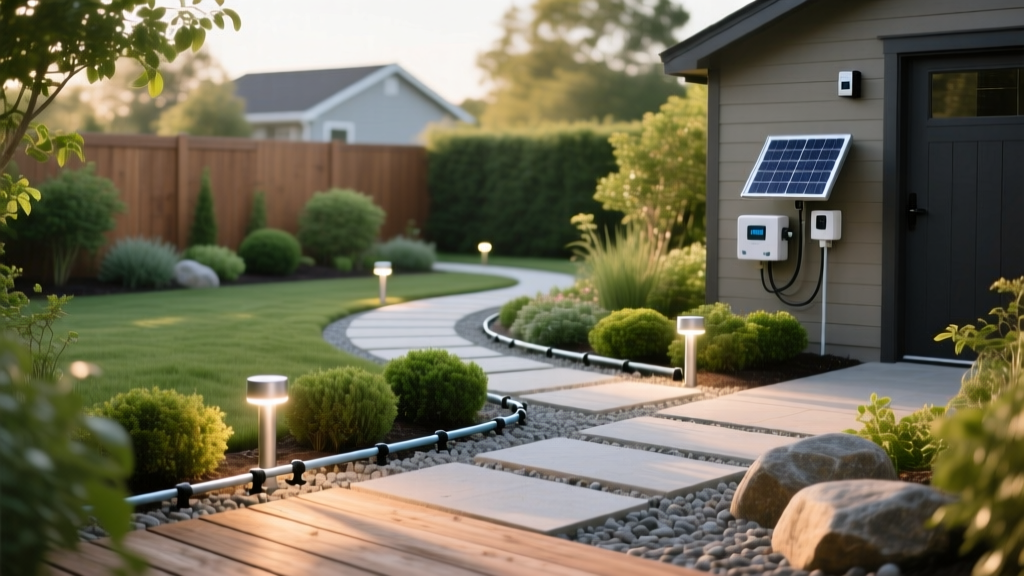
Design Smart Outdoor Lighting and Irrigation Systems
Lisa ThompsonPublished
Transforming Your Yard with Smart Landscape Design
Bridging the gap between indoor comfort and outdoor beauty requires more than just selecting the right patio furniture or planting vibrant perennials. True modern landscape design integrates technology seamlessly into the environment, creating spaces that are not only visually stunning but also highly efficient. By planning a smart outdoor lighting and irrigation layout, homeowners can extend their living space into the yard while drastically reducing water and energy consumption. This comprehensive guide will walk you through the essential design phases, from initial site mapping to advanced smart home integration, ensuring your landscape is as intelligent as it is beautiful.
Phase 1: Mapping Your Landscape Zones
Before purchasing a single smart valve or LED fixture, you must conduct a comprehensive site analysis. A successful smart landscape relies on precise zoning. Start by drawing a scaled map of your property, noting the location of existing structures, trees, garden beds, and hardscaping. Next, track the sun and shade patterns throughout the day. Areas that receive full sun for six or more hours will have vastly different irrigation needs and lighting requirements compared to deeply shaded corners.
Identify your functional zones. Where will you be dining? Where do children or pets play? Which architectural features or specimen trees deserve nighttime accent lighting? By defining these zones early in the planning process, you can strategically place smart hubs, Wi-Fi extenders, and low-voltage transformers to ensure uninterrupted connectivity and optimal coverage across your entire property.
Phase 2: Designing a Smart Irrigation Layout
The cornerstone of an energy-efficient landscape is hydrozoning. This design principle involves grouping plants with similar water requirements together on the same irrigation valve. Turfgrass typically requires frequent, shallow watering, while deep-rooted shrubs and native perennials thrive on infrequent, deep soaking. If you mix these plant types on a single zone, you will inevitably overwater one group while underwatering the other.
For turf areas, design your layout using high-efficiency rotary nozzles, such as the Hunter MP Rotator, which apply water slowly and evenly to prevent runoff. For garden beds and hedges, utilize drip irrigation tubing with inline emitters spaced precisely twelve inches apart. This delivers moisture directly to the root zone, eliminating wind drift and evaporation losses.
To automate this layout, upgrade to a weather-based smart irrigation controller. According to the Irrigation Association, smart controllers adjust watering schedules based on real-time local weather data, soil moisture levels, and evapotranspiration rates. This prevents the system from running during or immediately after a rainstorm, conserving thousands of gallons of water annually.
| Brand and Model | Best Feature | Zones Supported | Connectivity |
|---|---|---|---|
| Rachio 3 | Hyperlocal weather intelligence | 8 or 16 | Wi-Fi |
| Orbit B-hyve XR | Expandable modular design | 6 to 16 | Wi-Fi and Bluetooth |
| Hunter Hydrawise | Predictive water savings reporting | 6 to 16 | Wi-Fi |
| Eve Aqua | Apple HomeKit and Matter native | 1 (Hose timer) | Bluetooth and Thread |
Phase 3: Planning Energy-Efficient Outdoor Lighting
A well-designed outdoor lighting plan layers illumination to create depth, enhance safety, and highlight architectural features. When planning your layout, avoid the common mistake of over-lighting. The goal is to guide the eye and create ambiance, not to replicate daytime brightness. As noted by the U.S. Department of Energy, transitioning to outdoor LED fixtures can reduce lighting energy use by up to seventy-five percent compared to traditional halogen bulbs, while lasting significantly longer in harsh weather conditions.
When selecting fixtures, pay close attention to color temperature and beam angles. For residential landscapes, a warm color temperature between 2700K and 3000K creates an inviting, natural glow that mimics moonlight. Avoid harsh, cool white lights (4000K or higher), which can feel sterile and disrupt local wildlife.
Furthermore, responsible lighting design must account for light pollution. The DarkSky International organization strongly recommends using fully shielded fixtures that direct light downward where it is needed, rather than allowing it to spill into the night sky or neighboring windows. Incorporate the following lighting layers into your design plan:
- Path and Area Lighting: Use 3-watt to 5-watt LED bollards or stake lights along walkways. Space them eight to ten feet apart, staggering them on opposite sides of the path to prevent a rigid, runway-like appearance.
- Accent and Uplighting: Highlight specimen trees or masonry walls using 7-watt to 10-watt directional spotlights. Choose a narrow 15-degree beam angle for tall, narrow trees, and a wider 36-degree beam for broad canopies or textured walls.
- Moonlighting: Mount soft, 12-watt LED fixtures high in the branches of mature trees, pointing downward through the foliage. This creates a beautiful, natural dappled shadow effect on the lawn below.
- Task Lighting: Integrate focused, higher-lumen LED strip lights under outdoor kitchen counters or built-in bench seating to ensure safe food preparation and navigation.
Phase 4: Smart Home Integration and Automation
The true magic of modern landscape design emerges when your irrigation and lighting systems communicate with your broader smart home ecosystem. By utilizing a central hub or a unified platform like Apple HomeKit, Google Home, or Amazon Alexa, you can create automated routines that adapt to your lifestyle.
For lighting, consider systems that utilize the Zigbee or Thread protocols, which create a robust mesh network across your yard without congesting your primary home Wi-Fi. Implement geofencing routines so that your pathway and porch lights automatically turn on when your smartphone enters a one-mile radius of your home. You can also program a Goodnight scene that dims the landscape lights to twenty percent brightness at midnight and turns them off entirely at dawn.
Integration also allows for cross-system automation. For example, you can program your smart irrigation system to send a signal to your outdoor lighting hub. If the sprinklers are scheduled to run at 4:00 AM, the system can temporarily disable the motion-sensor pathway lights in that specific zone, preventing the sprinkler spray from catching the light and creating an unpleasant glare.
Budgeting and Return on Investment
Upgrading to a smart landscape requires an upfront investment, but the long-term return on investment is substantial. When planning your budget, allocate funds across three main categories: hardware, installation, and network infrastructure.
- Smart Irrigation Controller: Expect to spend between $150 and $250 for a premium weather-based controller. Add $50 per zone if you are installing inline flow sensors to detect leaks.
- LED Lighting Fixtures: High-quality, brass or copper LED fixtures typically cost between $80 and $150 each. A standard residential layout requires fifteen to twenty fixtures, plus a $200 smart transformer.
- Network Extenders: Outdoor Wi-Fi access points or Zigbee range extenders cost around $100 to $150 each, ensuring your smart devices stay connected at the far edges of your property.
While the initial material and labor costs for a full smart irrigation and lighting overhaul can range from $3,500 to $8,000 depending on property size, the operational savings are immediate. Smart irrigation controllers typically reduce outdoor water use by twenty to forty percent, lowering your monthly utility bills. Combined with the minimal wattage of LED fixtures, most homeowners recoup their technology investment within three to five years, all while enjoying a beautifully illuminated, perfectly hydrated outdoor living space.
