Home & Garden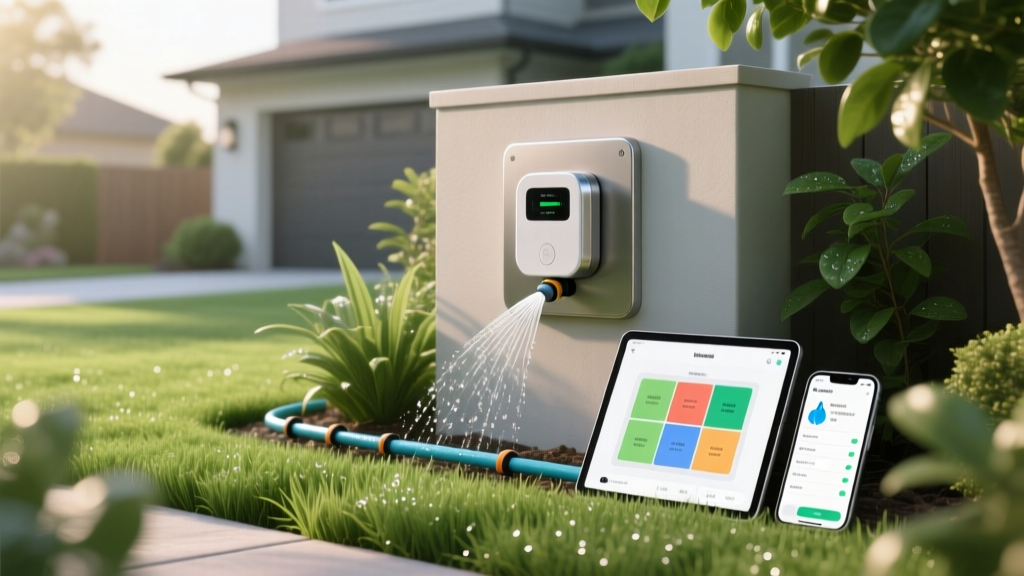
Smart Sprinkler Controller Setup Mistakes and Fixes
James MillerPublished
The Promise vs. Reality of Smart Irrigation
Upgrading to a smart sprinkler controller is one of the most impactful home and garden improvements you can make. By leveraging local weather data, evapotranspiration (ET) rates, and seasonal shifts, these devices promise to take the guesswork out of lawn care. According to the EPA WaterSense program, smart irrigation controllers can save the average home up to 8,800 gallons of water annually. Furthermore, the EPA notes that outdoor water use accounts for nearly 30% of total household water consumption, making efficiency a critical priority for both your wallet and the environment.
However, simply mounting a Wi-Fi-enabled controller to your garage wall and connecting it to your network is not a silver bullet. The technology is only as effective as the data and parameters you feed it. Many homeowners fall into the trap of assuming the device will magically figure out their yard's unique needs out of the box. Below, we break down the most common smart sprinkler controller setup mistakes and provide actionable, technical fixes to optimize your landscape irrigation.
Mistake 1: Treating Your Yard as a Single Hydrozone
The most frequent error occurs during the initial zone configuration. Many users simply map their physical valve boxes to the controller zones without considering the biological and environmental needs of the plants in those zones. A zone that contains both full-sun Kentucky Bluegrass and heavily shaded fern beds will never be watered correctly by a single schedule.
The Fix: Implement Strict Hydrozoning
Hydrozoning is the practice of grouping plants with similar water, sun, and soil requirements together on the same irrigation valve. If your current physical plumbing does not support this, you must adjust your controller settings to compensate as best as possible, or plan for a plumbing retrofit.
- Turf vs. Ornamentals: Never mix spray heads (turf) with drip emitters (shrub beds) on the same zone. Drip lines require longer run times at lower flow rates.
- Sun vs. Shade: If a single zone covers both, use the controller's 'zone multiplier' or 'efficiency' settings to reduce watering time for the shaded areas, or physically cap the sprinkler heads in the deeply shaded sections.
- Cost to Fix: Re-piping a zone to separate drip and spray heads typically costs between $300 and $600 if hiring a professional, or about $100 in PVC and poly tubing for a DIY weekend project.
Mistake 2: Ignoring Soil Type and Infiltration Rates
Smart controllers calculate how much water your lawn needs, but they do not inherently know how fast your soil can absorb it. If you have heavy clay soil and you command the system to deliver 1 inch of water in a single 20-minute cycle, the ground will reach its infiltration capacity within 10 minutes. The remaining 10 minutes will result in surface runoff, wasting water and carrying fertilizers into storm drains.
The Fix: Utilize the 'Cycle and Soak' Method
Almost all premium smart controllers (such as the Rachio 3 or Rain Bird ESP-Me) feature a 'Cycle and Soak' or 'Smart Cycle' setting. This feature divides your total watering time into shorter bursts with resting periods in between, allowing the water to penetrate the soil profile.
- Clay Soils: Set maximum run times to 10–12 minutes per cycle, followed by a 30 to 45-minute soak period. Target a total of 0.5 inches per watering day.
- Sandy Soils: Sand drains rapidly and holds fewer nutrients. Increase watering frequency to 3–4 times a week, but reduce the total daily volume to prevent leaching.
- Loam Soils: Standard infiltration rates apply; a single 20-minute cycle is usually sufficient to deliver 0.5 inches of water without runoff.
Mistake 3: Overlooking Precipitation Rate (PR) Mismatches
Precipitation Rate (PR) is the measurement of how many inches of water a sprinkler head applies per hour. A standard fixed-spray head might apply 1.5 to 2.0 inches per hour, while a gear-driven rotor head applies only 0.4 to 0.6 inches per hour. If your smart controller schedules a rotor zone and a spray zone for the exact same duration, the spray zone will be drowning while the rotor zone remains parched.
The Fix: Match Nozzles and Adjust Zone Multipliers
The ideal fix is to ensure all heads on a single zone have matched precipitation rates. If you are mixing rotors and sprays on the same zone due to legacy plumbing, you must use the controller's 'Custom Nozzle' or 'Zone Multiplier' feature to manually adjust the runtime.
- Upgrade to Rotary Nozzles: Replace standard spray nozzles with matched-precipitation rotary nozzles like the Hunter MP Rotator or Rain Bird R-VAN. These apply water at a much slower rate (approx. 0.4 inches per hour), drastically reducing runoff and matching the PR of traditional rotors. Cost: $6 to $10 per nozzle.
- Controller Adjustment: If upgrading isn't immediately possible, set the rotor zones to run 2.5 to 3 times longer than the fixed spray zones within the smart app.
Mistake 4: Skipping Soil Moisture or Rain Sensors
While weather-based smart controllers use local meteorological data to adjust schedules, microclimates can fool them. A weather station five miles away might register a light drizzle, but your specific yard under a dense tree canopy might remain completely dry. Relying solely on Wi-Fi weather data can lead to under-watering or over-watering.
The Fix: Integrate On-Site Sensors
Pairing your smart controller with physical, on-site sensors creates a closed-loop feedback system that the Irrigation Association highly recommends for maximum efficiency.
- Wireless Rain Sensors: Devices like the Rain Bird WR2 ($40-$60) physically halt irrigation when a set amount of rainfall (e.g., 1/4 inch) is detected on your property.
- Soil Moisture Sensors: For ultimate precision, bury a soil moisture sensor (like the Toro Precision or Irri-sen) at the root depth of your primary turf (typically 6 inches). This overrides the smart schedule if the soil already holds adequate moisture, regardless of what the weather forecast predicts.
Smart Controller and Sensor Compatibility Chart
Not all smart controllers play nicely with third-party sensors. Before purchasing add-ons, consult this compatibility matrix to ensure your hardware will communicate correctly.
| Smart Controller Model | Weather-Based (Wi-Fi) | Wired Rain Sensor | Wireless Rain Sensor | Soil Moisture Sensor |
|---|---|---|---|---|
| Rachio 3 | Yes (Built-in) | Yes (Normally Closed) | Yes (via Universal Adapter) | Yes (via Wireless Soil Sensor add-on) |
| Rain Bird ESP-Me (w/ LNK2) | Yes (via LNK2 Module) | Yes (Built-in Terminals) | Yes (WR2 Compatible) | Yes (SMRT-Y Compatible) |
| Orbit B-hyve | Yes (Built-in) | Yes (Built-in Terminals) | Limited (Proprietary Orbit only) | No (Software does not support) |
Mistake 5: 'Set It and Forget It' Seasonal Neglect
Many homeowners install a smart controller in April, verify the Wi-Fi connection, and never open the app again until October. While the controller automatically adjusts daily run times based on ET data, it cannot physically protect your system from freezing temperatures, nor can it account for a broken sprinkler head that has been geysing for three weeks.
The Fix: Seasonal Audits and Winterization Protocols
Smart technology requires smart maintenance. You must integrate physical system checks into your seasonal home maintenance calendar.
- Spring Startup (March/April): Manually run every zone through the app to check for sunken heads, clogged nozzles, and misaligned spray patterns. Update your app's plant types and root depths if you have reseeded or added new garden beds.
- Summer Audit (July): Check your water bill. If usage spikes unexpectedly, use the controller's 'Water Usage' tracking tab to identify which zone is over-watering, which often indicates a hidden leak in the lateral line.
- Fall Winterization (October/November): Smart controllers do not blow out their own pipes. You must hire a professional to perform an air compressor blowout (typically $75–$150) to clear residual water from the PVC pipes and valve manifolds before the first hard freeze. Turn the controller to 'Off' or 'Rain Delay' mode, but leave it plugged in so it can receive over-the-air firmware updates during the winter.
Final Thoughts on Smart Watering
A smart sprinkler controller is a powerful tool that bridges the gap between outdoor landscaping and indoor smart home integration. However, it is not a replacement for fundamental horticultural knowledge. By properly hydrozoning your yard, respecting soil infiltration rates, matching precipitation nozzles, and integrating physical soil sensors, you transform your irrigation system from a basic timer into a truly intelligent, water-saving asset. Take an hour this weekend to audit your app settings against the physical realities of your garden, and watch your lawn thrive while your water bill shrinks.
