Pest Control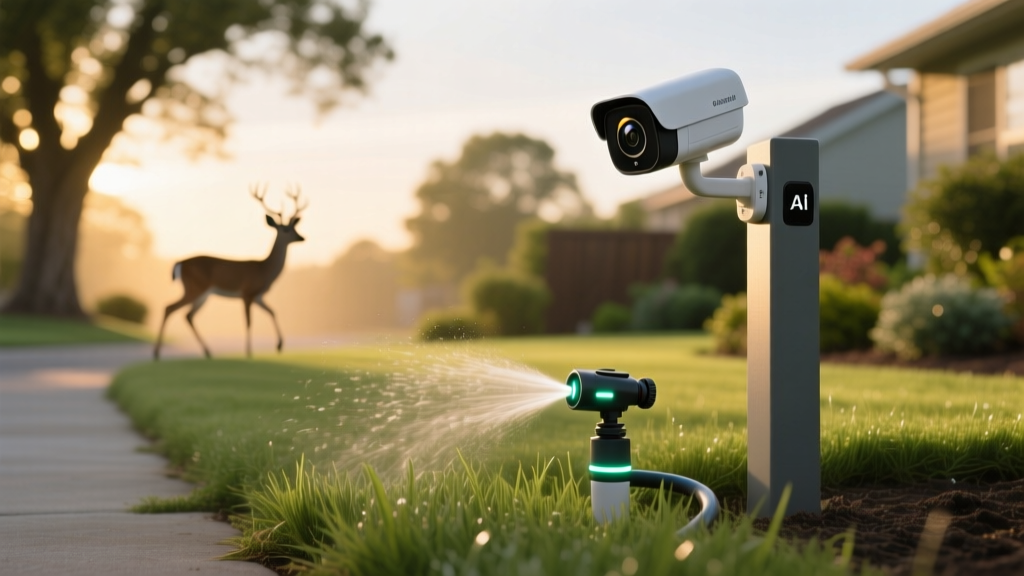
Automate Yard Pest Control With Smart Sprinklers and AI
James MillerPublished
The IPM Approach to Vertebrate Lawn Pests
Maintaining a pristine lawn and lush garden is a labor of love, but vertebrate pests like deer, raccoons, groundhogs, and stray cats can undo months of hard work in a single night. Deer will strip hostas and daylilies to the stem, raccoons are notorious for rolling back fresh sod to hunt for grubs, and groundhogs can undermine patios and retaining walls. Traditional pest control methods often rely on harsh chemical repellents that wash away in the rain, physical fencing that obstructs your landscape design, or ineffective ultrasonic devices that pests quickly learn to ignore.
However, the rise of smart home technology has introduced a highly effective, humane, and automated solution to outdoor pest management. By integrating AI-powered outdoor security cameras with smart irrigation valves and motion-activated sprinklers, homeowners can create an invisible, automated defense system that protects their turf and garden beds without harming local wildlife.
According to the Environmental Protection Agency (EPA), Integrated Pest Management (IPM) emphasizes the use of non-chemical, mechanical, and biological controls before resorting to pesticides. For vertebrate pests, physical and mechanical deterrents are the gold standard. The University of California Statewide Integrated Pest Management Program notes that startling pests with sudden environmental changes—such as a burst of water or noise—conditions them to avoid specific areas. Automated smart sprinklers leverage this exact IPM principle, delivering a harmless but highly effective startle response that trains animals to bypass your property entirely.
Top Smart Cameras for AI Pest Detection
To automate this process, you first need the 'eyes' of the system: AI-enabled outdoor cameras. Modern smart cameras utilize machine learning to differentiate between swaying branches, humans, vehicles, and animals. This AI filtering is crucial; without it, your sprinkler would activate every time a car drove past or the wind blew through your oak trees.
- Wyze Cam v3 (approx. $35): With a Cam Plus subscription ($2-$3/month), Wyze’s AI can specifically tag 'Pet' or 'Animal' motion. Its starlight sensor provides color night vision, which is crucial for identifying nocturnal pests like raccoons and skunks.
- Ring Spotlight Cam Pro (approx. $229): Features 3D Motion Detection and Bird’s Eye View, allowing you to draw highly precise motion zones over specific garden beds while ignoring the sidewalk where neighborhood dogs walk on leashes.
- Eufy SoloCam S230 (approx. $149): A solar-powered option with on-device AI processing. It requires no subscription fees for animal detection and eliminates the need to run outdoor power cables, making it perfect for remote garden borders.
Smart Water Valves and Motion-Activated Deterrents
While standalone motion-activated sprinklers like the Orbit 62100 Yard Enforcer (approx. $65) are excellent, they operate independently of your smart home ecosystem. They rely on basic infrared sensors, which can be triggered by heat signatures from hot cars or even large dogs passing by. To achieve true automation, remote monitoring, and precise targeting, smart home enthusiasts utilize Wi-Fi-enabled smart hose timers and irrigation valves.
- Orbit B-hyve Smart Hose Faucet Timer (approx. $45): Connects to your Wi-Fi and allows you to trigger watering events via smart home routines or geofencing.
- Rachio Smart Hose Timer (approx. $70): Offers robust IFTTT (If This Then That) integration, making it incredibly easy to link with third-party camera alerts and weather APIs.
Step-by-Step Automation: Linking Cameras to Sprinklers
How do you link the camera to the sprinkler? This is where smart home platforms like Amazon Alexa, Google Home, or IFTTT bridge the gap. By creating a custom routine, you can turn your security camera into an automated pest-deterrent trigger.
- Position your AI camera overlooking the primary entry point for pests (e.g., a gap in the fence, a favorite hosta bed, or the edge of the woods).
- Attach a smart hose timer to your exterior spigot and connect a standard oscillating or impact sprinkler. Aim the sprinkler so its spray radius covers the camera's detection zone.
- Create the Automation Routine: In the Alexa app, create a Routine: 'When [Camera Name] detects Animals, turn on [Smart Hose Timer Name] for 2 minutes.'
- Set Schedule Restrictions: Restrict the routine so it only triggers between 9:00 PM and 6:00 AM. This prevents the sprinkler from soaking you, your family, or your guests during daytime hours while targeting the exact window when nocturnal pests are active.
Consistency is the cornerstone of wildlife deterrence. An automated system ensures the deterrent fires every single time a pest enters the zone, preventing the animals from realizing the threat is a 'fake' or intermittent danger.
The Internet Center for Wildlife Damage Management emphasizes that habituation is the biggest hurdle in wildlife control. If a deer realizes a motion sensor only clicks but doesn't spray water, it will ignore it. By linking a visual AI confirmation to a physical water deterrent, you maintain the element of surprise indefinitely.
Comparison Chart: Smart Pest Deterrent Setups
| Setup Tier | Camera Model | Valve / Sprinkler | Estimated Cost | Best For |
|---|---|---|---|---|
| Budget | Wyze Cam v3 | Orbit B-hyve Timer | $85 + Sub | Small urban yards, budget-conscious |
| Premium | Ring Spotlight Pro | Rachio Hose Timer | $300 | Large estates, precise zone mapping |
| Off-Grid | Eufy SoloCam S230 | Standalone Yard Enforcer | $215 | Remote garden beds, no Wi-Fi spigots |
Strategic Placement and Timing
Strategic placement is critical for the success of your automated IPM system. Do not aim cameras or sprinklers at public sidewalks or neighbor's properties, as this will trigger false positives, waste water, and cause neighborhood disputes. Instead, create 'choke points.' If deer frequently enter through a specific side gate or a low spot in the terrain, position the camera to monitor that 10-foot corridor. Adjust the sprinkler head to cover the immediate landing zone just inside the perimeter.
Timing is equally important. Nocturnal pests like raccoons, skunks, and groundhogs are most active between midnight and 4:00 AM. Utilizing your smart home app to restrict the automation to nighttime hours saves water and prevents daytime nuisance triggers. For diurnal pests like deer or groundhogs that may browse in the early morning, you can set a secondary 'dawn' window from 5:00 AM to 7:00 AM.
Water Usage and Environmental Benefits
A common concern among eco-conscious gardeners is water waste. However, a 2-minute burst from a standard impact sprinkler uses roughly 10 to 15 gallons of water. Compared to the hundreds of dollars spent annually on chemical repellents, replacement plants, and lawn reseeding, the water cost is negligible. Furthermore, this method aligns perfectly with organic lawn care philosophies. You are not introducing toxic compounds or predator urine into your soil or local watershed. This preserves the health of your turf's microbiome and protects beneficial insects like earthworms, ladybugs, and native pollinators.
Winterization and Maintenance
Smart home outdoor devices require seasonal maintenance to survive harsh winters. Before the first hard freeze, you must winterize your smart hose timers and sprinklers. Water expands when it freezes, which will crack the internal solenoid valves of your smart timer, permanently ruining the device. Detach all timers and sprinklers, drain them completely, and store them indoors in a dry location.
You can leave your AI cameras mounted, as devices like the Wyze Cam v3 and Ring Pro are rated for sub-zero temperatures. However, you should ensure you wipe the lenses periodically to remove winter condensation, frost, and spider webs. Spider webs blowing in the wind can easily trigger false AI motion alerts, causing your smart system to activate unnecessarily.
Conclusion
By merging the principles of Integrated Pest Management with modern smart home automation, you can reclaim your lawn from destructive vertebrate pests. AI cameras and smart irrigation valves work in tandem to provide a humane, chemical-free, and highly effective deterrent system. Not only does this save you time and money, but it also ensures your garden remains a safe, thriving ecosystem for your family and beneficial wildlife alike. Embrace the power of automation, and let your smart home do the heavy lifting of pest control while you enjoy a flawless, untouched landscape.