Home & Garden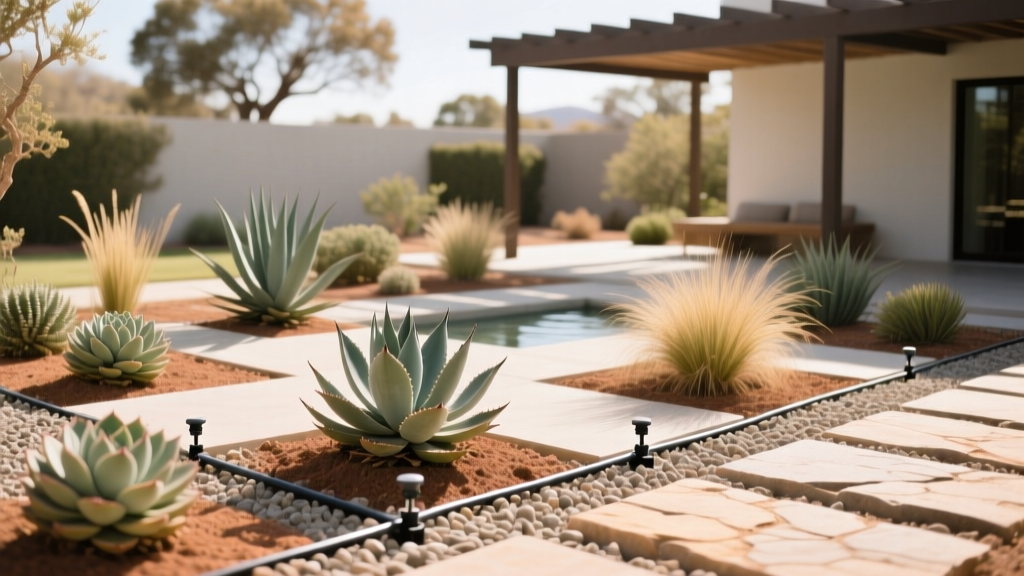
Planning a Smart Xeriscape Garden With Drip Irrigation
Sarah ChenPublished
The Evolution of Outdoor Living: Smart Xeriscaping
Turning your yard into a sustainable, low-maintenance outdoor space means more than just choosing drought-tolerant plants. It’s about thoughtful design, smart water use, and bringing in technology where it helps. Smart xeriscaping builds on classic xeriscape principles—like using native plants and reducing turf—but adds automated drip irrigation and smart controllers to make watering easier and more efficient. This guide walks you through designing, zoning, and installing a smart xeriscape that fits your yard’s microclimate.
The Foundation of Xeriscape: Hydrozoning
Before you dig or buy a single plant, start with hydrozoning. Developed in the early 1980s by Denver Water and studied widely since—including by Colorado State University—xeriscaping isn’t just cacti and gravel. It’s a practical way to shape your landscape around how water actually moves and how plants really grow.
According to the Colorado State University Extension, a well-designed and maintained xeriscape can cut landscape water use by 60 percent or more compared to traditional turfgrass lawns, without hurting curb appeal or property value.
Hydrozoning means grouping plants with similar needs—water, sun, and soil—together. That way, you’re not overwatering a lavender bush just because it shares an irrigation line with a thirsty fern.
Defining Your Hydrozones
When laying out your garden, think in terms of three main zones:
- The Oasis Zone: Usually near patios, entryways, or outdoor kitchens—places where people gather and look closely. Here, you can use moderate-water plants, containers, and features like recirculating fountains.
- The Transition Zone: This sits between the Oasis Zone and the outer edges of your yard. It holds tough, low-water shrubs and ornamental grasses that need only occasional deep watering.
- The Arid Zone: Found at property edges or spots that get intense reflected heat—like near south-facing walls or driveways. Once established, this zone relies on rain alone, using native succulents, deep-rooted groundcovers, and hardscaping.
Engineering the Smart Drip Irrigation Layout
Overhead sprinklers waste water—up to half can be lost to wind and evaporation. A smart xeriscape uses drip irrigation instead, delivering water right to the roots.
Selecting the Right Components
For most home setups, use 1/2-inch blank polyethylene tubing as your mainline, then branch off with 1/4-inch micro-tubing to feed individual emitters. Brands like Netafim and Rain Bird make UV-resistant tubing that lasts for years.
- Emitters: Pressure-compensating (PC) emitters keep flow steady on slopes. Use 0.5 GPH for small perennials, 1.0 GPH for medium shrubs, and 2.0 GPH for mature trees.
- Dripperlines: For dense groundcover areas, try inline drip tubing with emitters spaced every 12 inches. In sandy soil, lay rows 18 inches apart; in clay, space them 24 inches apart to let water spread sideways.
Integrating Smart Weather Intelligence
Your irrigation controller is the system’s brain. Devices like the Rachio 3 or Orbit B-hyve connect to Wi-Fi and pull local weather data to adjust watering based on actual conditions—not just a fixed schedule. They’ll skip watering if rain’s coming or shorten run times when temperatures drop. Mount the controller in a weatherproof box outdoors or in your garage, making sure it gets a solid 2.4GHz Wi-Fi signal.
Hardscaping and Permeable Surface Design
A good xeriscape blends plants with hardscaping that works—both functionally and visually. But concrete patios send rainwater straight into storm drains, washing away soil and overloading city systems.
Choosing Permeable Materials
For walkways and seating areas, choose surfaces that let rain soak back into the ground. That helps recharge local water supplies and gives deep-rooted plants a slow drink.
- Decomposed Granite (DG): Costs $4–$8 per square foot. It has a natural, rustic feel underfoot. With a resin binder, it firms up enough for patio furniture but stays porous.
- Permeable Pavers: Installed, they run $12–$20 per square foot. They sit on crushed gravel, so water flows through the gaps between pavers.
- River Rock and Gravel Mulch: In your Arid and Transition Zones, swap wood mulch for 3/4-inch crushed gravel. Wood mulch dries out soil in dry climates and blows away easily. Gravel holds soil temperature, blocks weeds, and lets water through right away.
Plant Selection and Spacing Chart
Spacing matters. Crowding plants leads to competition for water and poor air flow, which raises the risk of fungal problems. Below is a planting guide for a mixed-hydrozone garden in semi-arid climates (USDA Zones 7–9).
| Plant Name | Hydrozone | Mature Size | Spacing | Emitter Type |
|---|---|---|---|---|
| Agave parryi | Arid | 2' x 3' | 36 inches | 1.0 GPH (x2) |
| Salvia greggii | Transition | 3' x 3' | 24 inches | 0.5 GPH (x2) |
| Muhlenbergia capillaris | Transition | 3' x 3' | 30 inches | 1.0 GPH (x2) |
| Lantana camara | Oasis | 4' x 5' | 48 inches | 2.0 GPH (x3) |
Integrating Smart Low-Voltage Lighting
If you want to use your yard after dark, plan lighting early. Running wires and conduit is much easier before hardscaping and planting are done.
Lighting Techniques and Smart Controls
A 12-volt LED system with a smart transformer—like the Kichler Design Pro LED Smart Transformer—lets you control lights from your phone or with voice commands through Alexa or Google Home.
- Moonlighting: Mount warm-white (2700K) LED fixtures high in the branches of shade trees in your Oasis Zone, pointing down through the leaves to cast soft, dappled light on the patio.
- Path Lighting: Place low-glare LED path lights along walkways in your Transition Zone, spacing them 8 to 10 feet apart for gentle guidance—not a runway effect.
- Hardscape Lighting: Tuck LED strip lights under built-in seating ledges or beneath outdoor kitchen counter overhangs for subtle, safe ambient light.
Finalizing Your Implementation Timeline
Building a smart xeriscape takes time and steps. Start mapping your site and hydrozones in late winter. Order smart controllers, drip tubing, and hardscape materials in early spring. Put in hardscaping and mainline irrigation before summer heat hits. Then plant in early fall—cooler temps and autumn rains help roots settle in before next summer’s dry spell.
