Lawn Care
2026 Snow Mold Prevention & Edible Lawn Spring Recovery
The Rise of the Edible Lawn in 2026
As we move through the 2026 growing season, the transition from traditional turfgrass to edible landscaping and foodscaping has never been more prominent. Homeowners are increasingly replacing resource-heavy Kentucky bluegrass with productive, low-maintenance edible groundcovers like white clover, creeping thyme, Roman chamomile, and alpine strawberries. However, integrating food-producing plants into your lawn introduces unique challenges, particularly when dealing with overwintering fungal diseases. Snow mold remains one of the most destructive early-spring pathogens for both traditional and edible lawns.
Snow mold, which manifests primarily as gray snow mold (Typhula blight) or pink snow mold (Microdochium patch), thrives under prolonged snow cover. When the snow melts in early spring, the fungal mycelium is left behind on the foliage of your edible groundcovers, causing severe matting, tissue death, and reduced yields. Because you are cultivating plants intended for human consumption, the standard synthetic fungicides and aggressive chemical recovery protocols used on traditional golf courses and suburban lawns are entirely off-limits. According to Penn State Extension, managing snow mold requires a delicate balance of cultural practices and, when necessary, carefully selected biological controls.
Identifying Snow Mold in Foodscaping Beds
Before you can treat the issue, you must accurately identify which strain of snow mold is attacking your edible landscape. Gray snow mold typically appears as circular, straw-colored patches ranging from a few inches to several feet in diameter. You will often notice tiny, hard, spherical structures called sclerotia embedded in the dead leaves. Pink snow mold, on the other hand, can develop even without heavy snow cover if the weather is consistently cold and wet. It presents with a distinctive pinkish-white webbing at the margins of the damaged patches. For shallow-rooted edibles like alpine strawberries and creeping thyme, pink snow mold can be particularly devastating, as it often attacks the crown of the plant, leading to permanent die-off rather than just foliar damage.
Food-Safe Prevention Strategies for Late Fall
The most effective snow mold prevention begins long before the first snowflake falls. In late autumn, preparing your edible lawn requires a different approach than traditional turf.
Pre-Winter Mowing and Trimming
Traditional lawn care dictates mowing your grass down to about 2 inches before winter to prevent the blades from matting under the snow. However, edible groundcovers have different structural needs. Creeping thyme and Roman chamomile should be sheared lightly to remove excessive top growth, but you must avoid cutting into the woody base of the stems. White clover should be allowed to remain slightly taller (around 3 inches) to protect its delicate stolons from freeze-thaw cycles. Removing fallen autumn leaves is non-negotiable; leaf litter traps moisture and creates the perfect microclimate for fungal spores to overwinter.
Biological Controls and OMRI-Listed Fungicides
If your region is prone to heavy, persistent snowpack, preventative applications of biological fungicides are highly recommended. Products containing Bacillus subtilis (such as Serenade Garden) or Trichoderma harzianum are excellent, food-safe options that colonize the leaf surface and outcompete snow mold pathogens. These biologicals are fully approved for use in organic foodscaping. Always verify that any product you apply to your edible lawn is listed by the Organic Materials Review Institute (OMRI) to ensure it is safe for human consumption and will not leave toxic residues on your spring harvests.
| Edible Groundcover | Ideal Pre-Winter Height | Snow Mold Susceptibility | Spring Recovery Rate |
|---|---|---|---|
| White Clover | 3 inches | Moderate | Fast (via stolons) |
| Creeping Thyme | 2 inches | Low | Moderate (woody base) |
| Alpine Strawberry | 2.5 inches | High | Slow (crown dependent) |
| Roman Chamomile | 2 inches | Low | Fast (self-seeding) |
Spring Recovery: Reviving Your Edible Landscape
Once the snow melts and the ground begins to thaw, immediate action is required to help your edible lawn recover. The University of Minnesota Extension emphasizes that promoting rapid drying of the turf canopy is the single most important step in halting snow mold progression.
Gentle Raking and Aeration
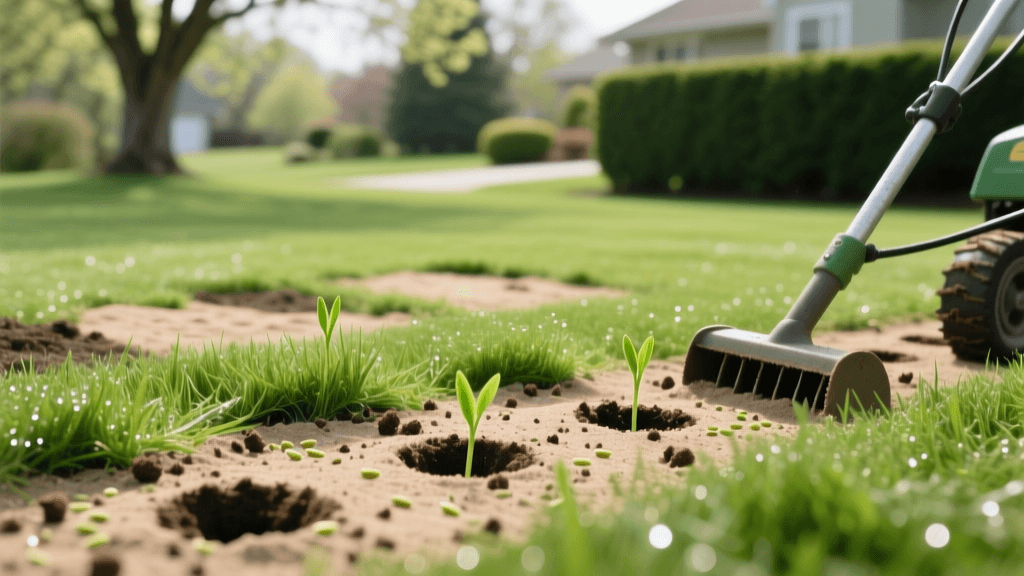
For traditional lawns, aggressive raking with a metal thatch rake is standard practice. In an edible landscape, this will destroy your crop. Instead, use a flexible bamboo leaf rake or even your hands (wearing gloves) to gently lift the matted foliage of your clover and strawberries. The goal is to introduce air circulation to the crown of the plants without tearing the shallow root systems. If soil compaction is an issue, use a broadfork or a hand aerator to gently relieve pressure around the root zones of larger foodscaping elements like integrated fruit tree guilds or perennial artichokes, avoiding the delicate stolons of your groundcovers.
Food-Safe Spring Fertilization
Recovering edible lawns need a nutrient boost to push out new, healthy growth and outgrow the fungal damage. Avoid high-nitrogen synthetic fertilizers, which can cause a rapid, weak flush of growth that is highly susceptible to secondary fungal infections. Instead, rely on slow-release, organic amendments. Liquid kelp extracts provide a wealth of trace minerals and natural growth hormones that stimulate root recovery and reduce plant stress. Alfalfa meal is another fantastic food-safe option that provides a gentle nitrogen release while introducing triacontanol, a natural growth stimulant that works wonders for recovering edible groundcovers.
Replanting and Overseeding Edible Patches
Inevitably, some patches of your edible lawn may not survive the winter, especially if pink snow mold attacked the plant crowns. Spring is the ideal time to repair these bare spots. For white clover lawns, overseeding is straightforward: lightly scarify the bare soil, broadcast the clover seed, and keep the area consistently moist until germination occurs. For creeping thyme and alpine strawberries, it is often more effective to transplant small plugs from a nursery or divide healthy, established sections from other parts of your yard to fill in the gaps. This ensures immediate ground coverage and reduces the window of opportunity for spring weeds to colonize the bare soil.
Maintaining an edible lawn in 2026 requires a paradigm shift from conventional turf management. By understanding the specific vulnerabilities of your foodscaping plants, utilizing safe biological controls, and employing gentle spring recovery techniques, you can ensure your landscape remains both beautiful and bountiful. Snow mold may be a persistent spring nuisance, but with the right organic strategies, your edible groundcovers will bounce back vigorously, providing you with a lush, productive landscape for the rest of the growing season.